
Friday, May 30, 2008
Mediafire Problems
It's been cutting off file extensions lately, but you can still open the files with your regular zip program just fine, or even just add ".zip" to the end. I'll get to some re-ups later.

Big Star-THIRD/SISTER LOVERS (1974)

A shambling wreck of an album, Big Star's Third/Sister Lovers ranks among the most harrowing experiences in pop music; impassioned, erratic, and stark, it's the slow, sinking sound of a band falling apart. Recorded with their label, Stax, poised on the verge of bankruptcy, the album finds Alex Chilton at the end of his rope, sabotaging his own music long before it can ever reach the wrecking crew of poor distribution, indifferent marketing, and disinterested pop radio; his songs are haphazardly brilliant, a head-on collision between inspiration and frustration.

The album is a kind of self-fulfilling prophecy, each song smacking of utter defeat and desperation; the result is either one of the most vividly emotional experiences in pop music or a completely wasted opportunity, and while the truth probably lies somewhere in between, there's no denying Third's magnetic pull -- it's like an undertow. Although previously issued on a variety of different labels, Rykodisc's 1992 release is the initially definitive edition of this unfinished masterpiece, its 19 tracks most closely approximating the original planned running order while restoring the music's intended impact; in addition to unearthing a blistering cover of the Kinks' "At the End of the Day" and a haunting rendition of Nat King Cole's "Nature Boy," it also appends the disturbing "Dream Lover," which distills the album's messiest themes into less than four minutes of psychic torment.
by Jason Ankeny, allmusic.com
DOWNLOAD:
Big Star-THIRD/SISTER LOVERS (1974)
192kbps MP3
Gary Numan-THE PLEASURE PRINCIPLE (1979)
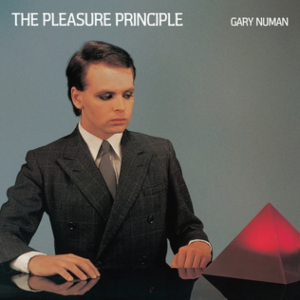
The Pleasure Principle was Gary Numan's commercial supernova. The album's worldwide success exploded him into rock's stratosphere, blinding the world with synth-pop science. This reissue, in a sense, is every bit as prescient as its original 1979 release. Here we have some of Numan's best known and most influential techno- rock inventions-- analog masterpieces that became blueprints for much of today's digitally- wrought electronic music. Numan seemed to put an elegant Brit-pop spin on the gritty American synth-punk sound Martin Rev and Alan Vega helped innovate. Of course, Numan covers familiar lyrical territory: songs that speak of alienation, distrust of humanity, the frighteningly close relationship between man and machine, and general existential paranoia.
Proof of Numan's odd genius is best captured on "Films." Evident are his patented two-tiered keyboard textures: those thick, sinister, basso drones overlapped by a light, high- register Moog blanketing, as a sinuous electric viola thread winds its way through. Nimble bass lines groove along nicely, getting a kick from behind by some heavy- duty funk- inflected drumming. Carrying such a strong rhythmic undertow, songs like "Films," "Airlane," "Conversation" and "M.E." fuse the driving force of rock and roll with a comfortable measure of disco danceability.

"Oceans" presages the more ambient, orchestral turn Numan took on 1980's brilliant Telekon. On the instrumental "Asylum," Numan's nightmarish piano/ synth dissonance perfectly compliments the title. And yes, there's the hugely popular and mildly ironic take on humanity's fanatical dependence on mechanized transportation, "Cars." This reissue also features live versions of "Me, I Disconnect From You," "Bombers" and "Remember I Was Vapour." Numan also performs a humorous reconstruction of "On Broadway," recasting the classic song as a curious tongue- in- cheek abstraction.
Even by today's standards, The Pleasure Principle can rightfully take its place along the outer limits of modern techno-rock. Gary Numan continues to be one of the few signs of truly intelligent life in that charlatan- filled universe now known as electronica.
-Michael Sandlin, pitchforkmedia.com
DOWNLOAD:
Gary Numan-THE PLEASURE PRINCIPLE (1979)
256kbps MP3
Mark Sultan-THE SULTANIC VERSES (2007)

That Mark Sultan considered it a fine idea to dub his first solo LP The Sultanic Verses might seem stupid and/or cloying to anyone otherwise unfamiliar with the garage rock vet (and his fondness for wicked nomenclature): Sultan's first band was christened Powersquat, his last band was called Spaceshits (featuring Skid Marks on drums!), and he's performed under a spectrum of outrageous guises, from Needles to Von Needles to Creepy to Bridge Mixture to BBQ to Noammnn Rummnyunn to Blortz to Celeb Prenup. To supplement his solo work, Sultan also performs as half of the King Khan & BBQ Show, and in a newly reformed version of Spaceshits, known now as Les Sexareenos; comparatively speaking, The Sultanic Verses is just plain charming.
The Sultanic Verses' 12 tracks are part-rockabilly, part-garage rock, and soaked in late 50s fuzz; Sultan runs Sultan Records from his hometown of Montreal-- he's released a handful of garage rock masterpieces from bands like the Deadly Snakes and the Daylight Lovers-- and he's clearly well-versed in both the limitations and potential euphoria of his chosen genre. Here, Sutlan plays pretty much everything himself, and the clamor consists of jangly, distorted guitar and thick, scratchy vocals. While it all starts to sound a tiny bit familiar after awhile, it's still a glorious mess (the fact that only two songs ever manage to break the three-minute mark certainly helps). "Something Wrong" is a vaguely off-kilter homage to imperfection ("There's something wrong/ No matter what I do/ I'm much too civilized/ There's something wrong with you," Sultan cackles) with a weirdly lilting chorus and a bouncy guitar melody. "Warpath" is a slightly less friendly offering: the track sounds like it was written to accompany a pocketknife throwdown at the drive-in soda fountain-- think black leather jackets and blue jeans tangling into each other, girls slipping in puddles of pomade and strawberry milkshake. "Unicorn Rainbow Odyssey" (which has already been covered by Atlas Sound, the alias of Deerhunter frontman Bradford Cox) channels Phil Spector's early work with girlgroups like the Ronettes and the Crystals; "100 Little Women" is a spare-- if echoing-- singalong ("100 little women/ let's rock!").
Aesthetically-speaking, Sultan falls somewhere between the sock-hop, aw-shucks rockabilly of Buddy Holly (see also: Carl Perkins, early Elvis, Art Adams, Bobby Lee Trammell) and the darker, more perverse side of late 50s pop (see: Kip Tyler, whose 1958 flop "She's My Witch" wouldn't feel so out of place on The Sultanic Verses). There's something playful and ominous about Sultan's sound, a gentle creepiness which manages to perfectly encapsulate the whirr of teenagerdom-- much as rockabilly did a half-century ago.
-Amanda Petrusich, October 12, 2007, pitchforkmedia.com
DOWNLOAD:
Mark Sultan-THE SULTANIC VERSES (2007)
256kbps MP3
Robert Pollard-NOT IN MY AIRFORCE (1996)

It always seems to happen. As soon as you start seeing solo LPs, expect the band in question to split up soon. Sure enough, just as this LP and Tobin Sprout's simultaneously released Carnival Boy appeared, there came the news that Sprout was departing the ultra-prolific, Robert Pollard-led Guided by Voices to pursue his own projects. (Pollard never let him compose and sing more than a couple of pop gems per GBV album.) While this development really stinks, the good news is that Not in My Airforce (and Carnival Boy as well) suggests that the sound, style, and spirit of this uniquely talented outfit will continue unmolested. Pollard's first solo LP, which includes Kevin Fennell on drums, is the equal of the previous few GBV LPs. The tracks are as consistently enjoyable as those on Under the Bushes Under the Stars. In addition, Pollard ushers back in the little snippets that enlivened Bee Thousand, yet he keeps the LP from seeming too hodgepodge and incoherent, as was the case with the otherwise brilliant but spotty Alien Lanes. The opening "Maggie Turns to Flies" goes to the head of the class as the most exciting, killer Pollard track ever (just ahead of Alien Lanes' "My Son Cool" and Propeller's epic "Under the Neptune/Mesh Gear Fox"). And so many others, such as "Girl Named Captain," "I've Owned You for Centuries," the reverse-field "King of Arthur Avenue," the spry "Get Under It," and the ringing, acoustic numbers "The Ash Gray Proclamation" and "Roofer's Union Fight Song," immediately satisfy. Pollard has clearly penned a GBV LP -- and a minor classic, at that!
by Jack Rabid, The Big Takeover
DOWNLOAD:
Robert Pollard-NOT IN MY AIRFORCE (1996)
320kbps MP3
Thursday, May 29, 2008
David Byrne-REI MOMO (1989)

Rei Momo,' David Byrne's first solo album, is essentially a survey of Afro-Brazilian and other Latin rhythms, and while it is perhaps the most self-conscious of Byrne's plunderings of the world's musics, it is also the most genial and easygoing. Unlike Remain in Light, the African excursion Byrne took with Talking Heads, Rei Momo does not include a bibliography in its press package. This album's message is in its music – a percussive, highly danceable set of songs that showcases its various sources while retaining many of the distinctive qualities of Byrne's own work.
"Now and then I get horny/At night you do/At night you do," Byrne warbles over the lilting rhythm of "Independence Day," the album's opening song, and his loopy eroticism sets the tone for the record. Byrne's singing throughout the album is smoother and more relaxed than it typically has been in the past, and the offhand surrealism of his non sequitur lyrics ("Money doesn't matter/Babies never lie/I'm going in the out door/I'm doing all right") bobs along nicely atop the momentum of Rei Momo's fifteen songs. The songs themselves are often extended by lengthy instrumental passages, and horns, strings, percussion and a wide variety of Latin instruments interweave in driving rhythmic patterns.
Dozens of musicians – tellingly, none of them Talking Heads, whose future would seem to be somewhat in doubt – perform on the album, and Byrne calls on the best. Salsa singer Celia Cruz duets with Byrne on the amusing "Loco de Amor," which originally appeared on the soundtrack for Something Wild, and Willie Colon and Johnny Pacheco both play on the album and co-write songs with Byrne. Members of bands headed by Cruz, Rubén Blades, Tito Puente and Wilfredo Vargas appear throughout. The production by Byrne and Steve Lillywhite is bright and impeccable; each of the many instruments is presented in pristine detail without ever distracting from the overall ensemble effect.
While Remain in Light laced its polyrhythms with lyrics that explored mythology, third world politics and the relationship between tribal and contemporary ways of life, Rei Momo is a party record, a playful fantasy about life in the carefree tropics.
Byrne frequently hints at more serious concerns on the record – notably on "The Dream Police," "Dirty Old Town" and "Don't Want to Be Part of Your World" – but they are only clouds momentarily darkening the brilliant equatorial skies. Only "Women vs. Men," with its depiction of the sexes battling to a violent draw, suggests that all may not be well in the sunny lands below – or in our own land. A harder perspective might have made Rei Momo an artistic triumph, rather than the perfectly enjoyable, entirely worthy latest carrying of the progressive white man's burden. (RS 566)
By ANTHONY DECURTIS, Rollingstone.com
DOWNLOAD:
David Byrne-REI MOMO (1989)
320kbps MP3
The Meters-REJUVENATION (1974)

The title is a tip-off, as is the garish, blaxploitation-chic photo on the cover -- Rejuvenation, the Meters' second album for Reprise, should be seen as a bit of a new beginning for the quintessential New Orleans funk group. It's not a clean beginning, since they were pointing in this direction on Cabbage Alley, but this is where their glistening, clear production, crisp performances, rock influences, and hard-edged funk coalesce into a sound distinct from their Josie recordings -- not better, just different. As such, this is the definitive Reprise album from the Meters, not just because the material is stronger (which admittedly is true), but because the performances are continually inspired and the production is professional but hits at a gut level, resulting in a first-class funk album.
by Stephen Thomas Erlewine, allmusic.com
DOWNLOAD:
The Meters-REJUVENATION (1974)
320kbps MP3
Throbbing Gristle-D.O.A.:THE THIRD AND FINAL REPORT OF THROBBING GRISTLE (1978)

You don't have to tell me how creepy that artwork is, I know it. -Ian
Abrasive, aggressive, and antagonistic, Britain's Throbbing Gristle pioneered industrial music; exploring death, mutilation, fascism, and degradation amid a thunderous cacophony of mechanical noise, tape loops, extremist anti-melodies, and bludgeoning beats, the group's cultural terrorism -- the "wreckers of civilization," one tabloid called them -- raised the stakes of artistic confrontation to new heights, combating all notions of commerciality and good taste with a maniacal fervor.

Breaking from the live sound of the previous Second Annual Report, D.O.A. finds the group assembling collages of computer noise (before connecting to the internet sounded almost friendly), cassette tapes on fast forward, looped feedback and tape hiss, surreptitiously recorded conversation, threatening phone calls, and much more, all to a grand alienating effect, the sound of a gray day in a British tower block after all the drugs have run out. Of course, this was the intended effect and the band succeed well enough. "Weeping," Genesis P-Orridge's version of a love ballad, loses itself among delayed strings and drones, a barely enunciated vocal, and a violin like a squeaky door. "Hamburger Lady" (about a burn victim) is even more repellent, but in a good way -- a genuinely scary listen. "AB/7A," on the other hand, approaches the pulsing electronics of Kraftwerk or early Yello.
by Ted Mills, allmusic.com
DOWNLOAD:
Throbbing Gristle-D.O.A.:THE THIRD AND FINAL REPORT OF THROBBING GRISTLE (1978)
256kbps MP3
Tuesday, May 27, 2008
Credit where credit is due.
I've mentioned this blog before, but it deserves another round.
http://chrisgoesrocks.blogspot.com
This guy does his own rips of just the best rock albums, from classic to downright obscure unheard of 60s, 70s, prog, etc. I've come to absolutely trust it in a time when all these blogspots seem to just be in a race to post that new hip Band X leak of dubious quality. Out of probably ten different mixes of the mono version of THE WHO SELL OUT I've heard over the years, his ends up being the best hands down.
Check it out, but beware: you're going to lose a few hours.
Monday, May 26, 2008
Bill Holt-DREAMIES (1974, 2006 reissue)

A readers poll by Mojo Music Magazine, ranks this remarkable album up there with Sgt. Pepper and Dark Side Of The Moon as one of the top 50 most "out there" albums of all time. Dreamies 2006 Special Edition is a meticulous re-master, restoring previously lost audio detail, offering the best ever CD reproduction of Bill Holt’s 1974 psychedelic masterpiece. Deluxe package includes an eight-page insert and vintage vinyl look CD.
In 1973, Bill Holt hung up his ten year Fortune 500 career to make music. With an acoustic guitar, an early Moog synth, and a four track recorder, he created what many consider a sonic masterpiece. The album has two 25 minute long tracks titled simply Program Ten and Program Eleven. Each is a rich aural collage of song and found sounds. (This new 2006 release offers indexed sub-tracks).
-Amazon.com
DOWNLOAD
Bill Holt-DREAMIES (1974, 2006 reissue)
320kbps MP3
Sunday, May 25, 2008
The Embarrassment-HEYDAY 1979-83 (1995 compilation)

Referred to by fans as "the best band you never heard of," the Embarrassment also holds the distinction of being Wichita, KS' most influential band. The group's eclectic yet distinctive sound wrapped a post-punk approach and a deadpan sense of humor around pop, country, disco, and metal elements, crafting songs that rivaled the work of better-known contemporaries like Gang of Four, Mission of Burma, and the Feelies. Though they toured and recorded consistently from their formation in 1979 till their breakup in 1983, the Embarrassment won only a small -- but intensely devoted -- following while they were an active outfit. However, the group's cult grew over the years, culminating in a reunion in the late '80s and the release of two anthologies in the '90s.
Vocalist/guitarist Bill Goffrier, vocalist/organist John Nichols, and drummer Brent "Woody" Geissman were childhood friends who played together in several groups during their school years. When Geissman met bassist Ron Klaus at college, the quartet became the Embarrassment, a reference to Kurt Vonnegut's novel Bluebeard in which a character notes that "embarrassment" is the one word that sums up the human existence. Late in 1979, the group debuted with the Patio Set/Sex Drive single, which introduced the Embarrassment's angular, multi-guitar attack and paved the way for appearances on compilations from Bomp and the Kansas-based label Fresh Sounds.
Though the band's reunion album God Help Us had happily been available on CD since release, nearly everything from its early-'80s years had long gone out of print or was hard to find, a situation the double-disc Heyday rectified in full a few years later. Right from the start Heyday shows its worth thanks to the inclusion of the quartet's wonderful, rocking debut, the "Sex Drive/Patio Set" single. "Sex Drive" itself almost comes across as a Midwest response to similarly minded landmarks of punk and post-punk like the Buzzcocks' "Orgasm Addict" and the Gun Club's "Sex Beat." The production is thin, perhaps, but the delivery is nervous, wired to the max, jerky riffs, and Giessmann's quick drumming increasing the weird paranoia even as Nichols' singing exudes amusing, boring cool. "Patio Set," meanwhile, sounds only a touch more relaxed, a weird metaphor combining love and outdoor furniture dryly delivered over the exuberant crunch. The remainder of the first disc pulls together the contents of The Embarrassment and Death Travels West albums, plus "Two Cars," which surfaced previously on the odds and ends Retrospective cassette. The second disc, meanwhile, gets stuffed full of treats from Retrospective, various compilations, and otherwise unreleased sessions, split between studio and live recordings both. The live recordings are a particular revelation, confirming what the studio work always suggested -- that the four members were barnburners, ripping with precise energy through their work. Two covers pop up, both of which are pretty funny as well as rather well performed: Michael Jackson's disco hit "Don't Stop 'Til You Get Enough" and Led Zeppelin's proto-metal stomp "Immigrant Song." It's a pity the version of the Seeds' "Pushin' Too Hard," originally on a Bomp! compilation, didn't make it, but that's about the only thing missing here. A complete discography, a reprinted essay from 1988 about the group, and fun liner notes from Nichols and Goffrier complete this fantastic, long-overdue compilation.
by Ned Raggett, allmusic.com
DOWNLOAD
The Embarrassment-HEYDAY 1979-83 (1995 compilation)
V0 MP3
Night Recordings From Bali

The island of Bali is Indonesia's most popular place. With the modern beach resorts at Kuta and Legian, the lovely, tropic interior of palm-covered hills and rice paddies, and a rich variety of art, dance and music, it is a destination of choice for travelers around the world. But, regardless of their increasing role of servicing an ever-demanding tourist industry, the Balinese are a strong-willed and tight-knit society. The island is a tiny enclave of Hinduism within a massive nation of Islam, yet, their Gamelan music is faster, tighter, and louder than their mighty neighbors to the west, the Javanese. Balinese Gamelan stylings and the Ketchak dance are legendary throughout the world and have been immortalized in sound recordings and on film for decades. But, beneath the creeping exterior of a pseudo-western culture slowly overtaking an amazing tradition of unique human expression, the moods of the island are governed by magic and superstition. The hills, forests, rivers, and crossroads are alive with tales of demons (Leyaks) and a flesh-eating Ogress (Rangda). A lesser-known darker side of Balinese life secretly balances the lighter side "tropical paradise" of tourist brochures. This CD is composed of field recordings from August and September of 1989. The majority of the recordings were made at night in and around the villages of Peliatan and Ubud. Amidst the excerpts from Gamelan performances, rehearsals, and Ketchak, are sounds of the surrounding forests and mysterious crossroads where packs of dogs seem to take on forms of angry demons. Also encountered here are odd folk stylings for flute and drum, outdoor village theatre, and other various sound anomalies from the Balinese interior.
DOWNLOAD:
Night Recordings From Bali
192kbps MP3
Saturday, May 24, 2008
Radio Algeria

Radio Algeria is a multi-dimensional assembly of audio culture from the Mediterranean coast to the undefined border areas of the Sahara Desert and beyond. This is perhaps the most diverse collection of the Algerian listening experience ever presented featuring raw Berber folk, modern Arabic pop, sacred Islamic traditional, Andalusian orchestral, Guesba (the origin of Rai), classic early Rai, Khabyle, Tuareg, Saharaui, and hybrid music styles influenced by Europeans to the north and sub-Saharan Africa to the south. The presence of French culture is a relevant factor in some of these tracks as modern history would suggest and the language is still spoken by a large portion of the population. No English is spoken on Algerian-produced radio. Collected, assembled and edited in 2005 from AM, FM, and Shortwave broadcasts recorded in Algeria, there are radio finds here that defy categorization. Excerpts of bumper music, DJ announcements, advertisements, and radio station Id’s reinforce the transitions between the musical segments throughout this production.
DOWNLOAD:
Radio Algeria
V0 MP3
Friday, May 23, 2008
Radio Sumatra: The Indonesian FM Experience

The music and production encountered here represents a cross-section of Sumatran FM radio and to a greater extent, what’s happening now in Indonesian culture. From the signature sounds of Sumatra (Melayu, Minang Pop, the Batak ballad) to the widespread Indonesian phenomenon of Dangdut, this exclusive “FM only” Radio Collage will leave your skull shattered, wondering why it’s taken so long to be turned-on to the modern pulse of the world’s fourth largest country. Some of these selections come from Java and other parts of Indonesia via the FM airwaves of Sumatra’s major cities. Islamic Folk, Gambus Rock, and gorgeous anomalies are also placed in the mix amidst brief news reports, advertisements, prayers, and karaoke call-in shows. Many of the station ID’s could be mistaken for American or European networks and much of the music is highly influenced by western pop/rock/punk/metal/rap/etc. But beyond these obvious comparisons is an explosive musical kaleidoscope; still fresh, somewhat sincere and naive, and a bit resistant to the grasp of the world’s cultural export Moguls. This is an essential listening experience. There is undeniable evidence here of how Indonesians have crafted some of the world’s most thrilling popular music….yet the rest of this world somehow refuses to recognize it….that is, until now!
DOWNLOAD
Radio Sumatra: The Indonesian FM Experience
192kbps MP3
Radio Pyongyang: Commie Funk and Agit Pop from the Hermit Kingdom

Schmaltzy synthpop, Revolutionary rock, Cheeky child rap, and a healthy dose of hagiography for Dear Leader Kim Jong-il, this is the now NOW sound of North Korea! A hermit kingdom with a rich folk history and an even richer tradition in over-the-top praise for the ruling House of Kim, the Democratic People’s Republic of Korea remains a diplomatic thorn and a culture never Neverland. Boasting a heady mix of Stalin opera, Tokyo karaoke and brooding impressionism, the sound of present-day Pyongyang distills into warped agit-pop and lost-in-time commie funk. If you’ve ever wondered what goes on in North Korean music, this is your vehicle for exploration. Christiaan Virant has visited this mysterious land and has assembled this amazing audio collage. Captured within are rare live recordings from various performances and mass games demonstrations, sounds lifted from People’s Army television dramas, samples from hard-to-find CD releases obtained in the capital, and of course, news reports from the “real” Radio Pyongyang, which continues to broadcast to this day, albeit under the new, strikingly anodyne moniker “Voice of Korea”.
DOWNLOAD:
Radio Pyongyang: Commie Funk and Agit Pop from the Hermit Kingdom
192kbps MP3
Group Doueh: Guitar Music From The Western Sahara

If you think you’ve heard all the great electric guitar styles in the world, think again. This Saharan sand-blizzard of fine-crushed glass will grind your face to a bloody pulp. Group Doueh play raw and unfiltered Saharawi music from the former colonial Spanish outpost of the Western Sahara. Doueh (pronounced “Doo-way”) is their leader and a master of the electric guitar. He’s been performing since he was a child playing in many groups before finally creating his own in the 1980’s. Doueh says he’s Influenced by western pop and rock music especially Jimi Hendrix and James Brown. His sound is distorted, loud and unhinged with an impressive display of virtuosity and style only known in this part of the world. His wife Halima and friend Bashiri are the two vocalists in the group. Saharawi songs are from the sung poetry of the Hassania language. The music is based on the same modal structure as Mauritanian music, however, Doueh’s style is a looser appropriation infused with a western guitar scope, one that relies, in his words, as much on Hendrix as it does traditional Sahrawi music. It also adds a playful pop element that rarely filters through in this region. Doueh has turned down countless offers from Morocco and Europe to release his music but he decided to offer us access to his homemade recordings and photo archive for this amazing debut release.
DOWNLOAD:
Group Doueh: Guitar Music From The Western Sahara
192kbps MP3
Thursday, May 22, 2008
David Bowie-STATION TO STATION (1976)

Taking the detached plastic soul of Young Americans to an elegant, robotic extreme, Station to Station is a transitional album that creates its own distinctive style. Abandoning any pretense of being a soulman, yet keeping rhythmic elements of soul, David Bowie positions himself as a cold, clinical crooner and explores a variety of styles. Everything from epic ballads and disco to synthesized avant pop is present on Station to Station, but what ties it together is Bowie's cocaine-induced paranoia and detached musical persona.

At its heart, Station to Station is an avant-garde art-rock album, most explicitly on "TVC 15" and the epic sprawl of the title track, but also on the cool crooning of "Wild Is the Wind" and "Word on a Wing," as well as the disco stylings of "Golden Years." It's not an easy album to warm to, but its epic structure and clinical sound were an impressive, individualistic achievement, as well as a style that would prove enormously influential on post-punk.
-by Stephen Thomas Erlewine, allmusic.com
DOWNLOAD:
David Bowie-STATION TO STATION (1976)
320kbps MP3
T Rex-TANX (1973)

Get this one for the bonus tracks, which include the brutal "Jitterbug Love", "20th Century Boy" and of course "Children Of The Revolution", the defining T Rex song. -Ian
By 1973's Tanx, the T. Rex hit-making machine was beginning to show some wear and tear, but Marc Bolan still had more than a few winners up his sleeve. It was also admirable that Bolan was attempting to broaden the T. Rex sound -- soulful backup singers and horns are heard throughout, a full two years before David Bowie used the same formula for his mega-seller Young Americans. However, Tanx did not contain any instantly recognizable hits, as their past couple of releases had, and the performances were not quite as vibrant, due to non-stop touring and drug use. Despite an era of transition looming on the horizon for the band, tracks such as "Rapids," "Highway Knees," "The Street & Babe Shadow," and "Born to Boogie" contain the expected classic T. Rex sound. The leadoff track, "Tenement Lady," is an interesting Beatlesque epic, while "Shock Rock" criticizes the early-'70s glam scene, which T. Rex played a prominent role in creating. Other highlights include one of Bolan's most gorgeous and heartfelt ballads, "Broken Hearted Blues," as well as the brief, explosive rocker "Country Honey." Tanx marked the close of what many consider T. Rex's golden era; unfortunately, the bandmembers would drift off one by one soon after, until Bolan was the only one remaining by the mid-'70s.
by Greg Prato, allmusic.com
DOWNLOAD:
T Rex-TANX (1973)
256kbps MP3
T Rex-THE SLIDER (1972)

Buoyed by two U.K. number one singles in "Telegram Sam" and "Metal Guru," The Slider became T. Rex's most popular record on both sides of the Atlantic, despite the fact that it produced no hits in the U.S. The Slider essentially replicates all the virtues of Electric Warrior, crammed with effortless hooks and trashy fun. All of Bolan's signatures are here -- mystical folk-tinged ballads, overt sexual come-ons crooned over sleazy, bopping boogies, loopy nonsense poetry, and a mastery of the three-minute pop song form. The main difference is that the trippy mix of Electric Warrior is replaced by a fuller, more immediate-sounding production. Bolan's guitar has a harder bite, the backing choruses are more up-front, and the arrangements are thicker-sounding, even introducing a string section on some cuts (both ballads and rockers). Even with the beefier production, T. Rex still doesn't sound nearly as heavy as many of the bands it influenced (and even a few of its glam contemporaries), but that's partly intentional -- Bolan's love of a good groove takes precedence over fast tempos or high-volume crunch. Lyrically, Bolan's flair for the sublimely ridiculous is fully intact, but he has way too much style for The Slider to sound truly stupid, especially given the playful, knowing wink in his delivery. It's nearly impossible not to get caught up in the irresistible rush of melodies and cheery good times. Even if it treads largely the same ground as Electric Warrior, The Slider is flawlessly executed, and every bit the classic that its predecessor is.
by Steve Huey, allmusic.com
DOWNLOAD:
T Rex-THE SLIDER (1972)
Vo MP3
The Move-SHAZAM (1970)

Compared to the Move's long-gestating 1968 eponymous debut, their 1970 sophomore effort Shazam is unified. It was not culled from sessions from a period of 14 months but instead largely made at one time...but that doesn't necessarily mean that it's any easier to get a handle on the album. The Move changed greatly in the period between their first albums, with original bassist Chris "Ace" Kefford leaving in a cloud of acid in 1968. In his absence, rhythm guitarist Trevor Burton jumped over to bass, beginning an odd period where the group was cutting songs, most penned by Roy Wood but a few written by David Morgan, a fellow Birmingham-based songwriter signed to the publishing company of Move lead singer Carl Wayne. Pulled between these two camps, the Move finally had a true hit single with Wood's gorgeous, watery psychedelic epic "Blackberry Way," not long after Burton left the band and Richard Price was pulled in as his replacement so the band could earn money by touring cabarets in Europe.
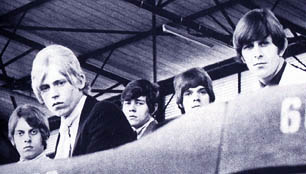
Here, the band grew muscular and weirder, traits that are showcased on the short-yet-sprawling Shazam. Throwing out the concise constructions and meticulous miniatures of their psychedelic singles, the Move concentrate on heavy progressive rock on Shazam. With the exception of the gentle, string-laden "Beautiful Daughter" -- quite clearly a holdover from previous sessions due to both its sweetness and brevity -- none of the six songs here clock in under five minutes, with two sprawling over seven and "Fields of People" inching toward the 11-minute mark. To what extent this was an intentional experiment or a way of coping with a lack of material is hard to tell; of these six, only the thunderous opener "Hello Susie" truly qualifies as a new Wood original, as "Beautiful Daughter" dates earlier and "Cherry Blossom Clinic Revisited" itself is a reworked, expanded version of a song from the debut. "Hello Susie" also points the way to the heavy, hooky rock & roll the Move would patent on Message from the Country, and it does feel different than either this new "Cherry Blossom Clinic Revisited" or the three covers that make up the second side of Shazam. All these four songs are arranged so the band can dabble in color and texture, shifting from guitars as heavy as their Brummie cohorts Black Sabbath to fragile harmonies. It's wildly inventive music and, as pure sound, the Move may never have been better than they are here, as there are more ideas in each of these long, languid jams than most bands have in a career. Once again, the sheer number of ideas can be intimidating upon first listen and there may be so many that some listeners may never get past this rush of invention, but Shazam rewards repeated spins many times over.
by Stephen Thomas Erlewine, allmusic.com
DOWNLOAD:
The Move-SHAZAM (1970)
320kbps MP3
Pink Floyd-THE PIPER AT THE GATES OF DAWN (1967, 2004 MONO REMASTER)

The title of Pink Floyd's debut album is taken from a chapter in Syd Barrett's favorite children's book, The Wind in the Willows, and the lyrical imagery of The Piper at the Gates of Dawn is indeed full of colorful, childlike, distinctly British whimsy, albeit filtered through the perceptive lens of LSD. Barrett's catchy, melodic acid pop songs are balanced with longer, more experimental pieces showcasing the group's instrumental freak-outs, often using themes of space travel as metaphors for hallucinogenic experiences -- "Astronomy Domine" is a poppier number in this vein, but tracks like "Interstellar Overdrive" are some of the earliest forays into what has been tagged space rock. But even though Barrett's lyrics and melodies are mostly playful and humorous, the band's music doesn't always bear out those sentiments -- in addition to Rick Wright's eerie organ work, dissonance, chromaticism, weird noises, and vocal sound effects are all employed at various instances, giving the impression of chaos and confusion lurking beneath the bright surface. The Piper at the Gates of Dawn successfully captures both sides of psychedelic experimentation -- the pleasures of expanding one's mind and perception, and an underlying threat of mental disorder and even lunacy; this duality makes Piper all the more compelling in light of Barrett's subsequent breakdown, and ranks it as one of the best psychedelic albums of all time.
-by Steve Huey, allmusic.com
DOWNLOAD:
Pink Floyd-THE PIPER AT THE GATES OF DAWN (1967, 2004 MONO REMASTER)
320kbps MP3
Guided By Voices Stuff Vol. III

I know, I'll get to the SUBLIME FREQUENCIES requests soon.
DOWNLOAD:
DAYTON OHIO 19 SOMETHING AND 5 (2000)
HOLD ON HOPE EP (2000)
ISOLATION DRILLS (2001)
THE PIPE DREAMS OF INSTANT PRINCE WHIPPET (2002)
UNIVERSAL TRUTHS & CYCLES (2002)
EDISON'S DEMOS (EARTHQUAKE GLUE DEMO) (2002)
EARTHQUAKE GLUE (2003)
BEE THOUSAND: DIRECTOR'S CUT (OUTTAKES, VINYL RIP) (2004)
HALF SMILES OF THE DECOMPOSED (2004)
All range from 192-320kbps MP3
Monday, May 19, 2008
Kangding Ray - AUTOMNE FOLD (2008)

following his highly successful debut "stabil" (r-n 73), kangding ray releases his second full length record on raster-noton, entitled "automne fold".
with "automne fold", david letellier has evolved from the quiet, pristine flow of his debut record to sounds that are raw, dark and organic on this second release.
pulsating rhythms become lost in within walls of saturated strings, words are spoken over bowed acoustic guitars, and analog synths collide with urban field recordings. vocals are a central theme through the record. treated as raw materials, like any other sound, the voice operates as beat, speaks melodies or sets themes.
in some moments, "automne fold" retains the emotional simplicity of traditional song structures, where message and images come together, but also manages radical abstract textures, when tracks morph in closed forms of static sounds.
"automne fold" is an instrumental record, an album of 14 "folded" tracks, and a cinematic journey between groove and the senses.
- raster-noton

DOWNLOAD:
Kangding Ray - AUTOMNE FOLD (2008)
V0 MP3
Some SUBLIME FREQUENCIES stuff
I actually have the entire catalogue, so if you see something else you want drop a line and I'll upload it. Here's some highly recommended stuff, though. All blurbs written from the accompanying press releases.

PROIBIDÃO C.V: Forbidden Gang Funk From Rio de Janeiro CD SF038
PROIBIDÃO is the name given to a certain kind of electronic funk music produced in Brazilian favelas, especially in Rio de Janeiro where it started to appear in the beginning of the 90’s as a parallel phenomenon to the growth of drug gangs along the city’s more than 600 slums. A raw mix of live funk vocals and Miami bass structures, these anonymous funk tracks are spread illegally by DJs and gang sponsored parties. Proibidão is a raw musical genre that captures the dark side of Brazilian favelas. The explicit lyrics of apology to drug gangs and the violent content makes themillegal to broadcast through radio or as live public events. Proibidão can only be heard in the bailes or dances that the gangs organize and that run every day of the week in different locations in the slums around Rio. The production of a Proibidão occurs in different ways. A DJ spins Miami bass rhythms straight from sample CDs, and an MC talks on top of it, mainly live in street bailes and then recorded through a simple multichannel to a minidisk or simply straight. No mix is done and only sometimes an extra production is done. The gang leaders, to spread the respect and love for the gang as well as hate to the other gangs, finance the bailes and hire the DJs and sound systems. At most parties this is recorded live and spread then as an mp3 or CD to different other DJs and bailes. Its life runs a minimum of 6 months and depending on it’s popularity it can go on for more than one year. The selection featured on this CD compiles music recorded live during the beginning of 2003 in different favelas from Zona Sul, South Rio de Janeiro, a zone once controlled by the drug gang called Comando Vermelho, mainly responsible for the city’s growing rates of homicides and power corruption, as well as Rio’s and Brazil’s growing drug consumption. C.V Comando Vermelho (Red Command) is a criminal organization that was founded in 1979 in the prison Cândido Mendes, on the island Ilha Grande (RJ), as a connection of common prisoners and militants of the Falange Vermelha (Red Phalanx), which fought the military dictatorship. During the entire 1990's the criminal organization was the strongest in all of Rio de Janeiro, but today the principal leaders have been arrested or are dead, and the organization is not as strong. The Comando Vermelho still control parts of the city and seeing streets tagged with "CV" is common in many favelas in Rio de Janeiro. This CD is in no way an apology for these groups but a document to portray a moment in time in Rio de Janeiro musical and social history. All audio imperfections are left as they were when collected as these tracks are the only remaining documents of this music. Recorded and assembled by filmmaker Carlos Casas courtesy of some anonymous MCs and DJs in different bailes along the favelas of Zona Sul, Rio de Janeiro during March-April 2003.[/quote]
DOWNLOAD:
PROIBIDÃO C.V: Forbidden Gang Funk From Rio de Janeiro
V0 MP3
Oh, these tracks really are untitled originally. So, you know, heads up.

Cambodian Cassette Archives: Khmer Folk & Pop music Vol. 1 CD SF011
An unbelievable collection of dynamic Cambodian music recorded between the 1960s and the 1990s, both in Cambodia and in the United States. A truly Khmer blend of folk and pop stylings - Cha-Cha Psychedelia, Phase-shifting Rock, sultry circle dance standards, pulsing Cambodian new wave, haunted ballads, musical comedy sketches, Easy-Listening numbers and raw instrumental grooves presented in an eclectic variety of production techniques. Male and female vocalists share the spotlight, embellished by roller rink organ solos, raunchy guitar leads and MIDI defying synthesizers. Culled from over 150 ageing cassettes found at the Asian Branch of the Oakland Public Library in California, these recordings showcase a pre and post holocaust Cambodian musical lineage that can't be ignored.
DOWNLOAD:
Cambodian Cassette Archives: Khmer Folk & Pop music Vol. 1
V0 MP3

Princess Nicotine: Folk and Pop Music of Myanmar (Burma) CD SF006
How do they do it? Are they smarter? Are they better? How can it be ignored or denied? How is it possible that one of the most unique, perfectly composed and performed, intense and awe-inspiring musical legacies the world has ever known is looming north of the equator physically tucked-between world cultural giants India, China, and Thailand, without more than a whisper from ethnomusicologists or those who define themselves as "purveyors of world music"? Not only are the roots of this music unique, but so are the results after incorporating outside instrumentation from modern colonial and (unavoidable) international influence. What the Burmese have done with a piano is so precise in its adaptation to existing form and melody that one would think they invented it. Burmese music has a very distinct sound and whatever instrument is assimilated into its core only seems to magnify its original intent without depending upon outside ideas as they relate to each component of it.
This collection will immediately bring you up to speed to what you have been missing all along. I'll leave the over-analyzation to those who undoubtedly will suffocate the world music community with praise for this music in the future because the time is NOW to dig it and to put the REAL music of Myanmar on the map ONCE and for ALL. This is the first TRUE compilation of this phenomenal scene from Yangon to Mandalay and beyond. Here are some of the greatest names from the past 50 years of Burmese musical history from the original recordings featuring Mar Mar Aye, Bo Sein, and the incomparable Tonte Theintan. Listen, and be amazed!
DOWNLOAD:
Princess Nicotine: Folk and Pop Music of Myanmar (Burma)
192kbps MP3

Choubi Choubi! Folk and Pop Sounds from Iraq CD SF025
Meticulously selected from Iraqi cassettes and LPs found in Syria, Europe and the Iraqi neighborhoods of Detroit, Michigan, this unique collection of folk and pop styles displays a wealth of outstanding music that is exclusive to Iraq and has rarely been showcased abroad. There are many reasons why Iraqi music stands alone in the dynamic world of Arabic music: one example is the unbelievable rapid fire machine-gun rhythms fluttering atop the main tempo. This is the work of a unique nomadic hand drum called the Khishba –also known as the Zanbour (Arabic for wasp). A style prominently featured here is the infamous Iraqi CHOUBI -a driving rhythmic style that can include fiddles, double reeded instruments, percussion, bass, keyboards and oud over its signature beat. Other styles featured are the BASTA (an urban Baghdadi style), the BEZIKH, and the pulsating HECHA. Also heard is the MAWAL- a vocal improv that sets the tone of a song, regardless of the style. Additionally there are three cuts from Ja’afar Hassan’s 1970s record, "Let’s Sing Together". Being a folk-rock record, it’s a true anomaly for Iraq. Hassan was a mouthpiece for the Iraqi Socialist movement just a few years before Saddam Hussein. But most of the music in this collection was produced during the Saddam period– between the 1980s and 2002. Since the 2003 invasion and the wholesale disassembly of the country, classic tracks like these may already be part of a disappeared past.
DOWNLOAD:
Choubi Choubi! Folk and Pop Sounds from Iraq
192kbps MP3

Latinamericarpet: Exploring the Vinyl Warp of Latin American Psychedelia Vol 1 CD SF039
Historically Latin America was the part of the “new world” that Christopher Columbus “discovered” in 1492, which soon was brutally conquered by the Spanish and Portuguese. Obviously it was only a “discovery” from a Eurocentric perspective because, in fact, on these vast lands there were hundreds of advanced native cultures living for centuries. However after countless years of violent colonization and internal wars, the independence emerged on the whole continent launching a group of new countries with their own and unique identities. But what is Latin America nowadays? A complex answer for a complex puzzle: some people would say it’s a huge cocktail that combines -in a more or less chaotic way- the rests (or ruins) of Pre-Columbus Cultures and diverse European traditions mixed with a high dose of pseudo-tropical weathers, Latin manners and unstable economies... although that’s also a simplification: Latin America is just Latin America and it deserves to be “rediscovered”... But let’s go straight to the record.
Latinamericarpet is a non-stop collage of vinyl artifacts culled from stacks of forgotten LPs of the 1960’s and 1970’s from Argentina, Brazil, Mexico, Peru, Chile, and Isle de Pascua (Easter Island). This compilation brings together some glittering sounds from LPs that have been somehow forgotten over the years. Although most of the tracks presented here were recorded during the peak of the psychedelic era in the late 60’s and early 70’s, this is not a collection packed with guitar group psychedelia although there are a few unknown gems here that qualify as such. There are also pop and folkloric songs, children’s songs, odd instructional record excerpts, and a few other anomalies from our neighbours to the south. For sure these selections are only brief samples of what was done in Latin America in those glorious years, but while we wait for further works that can bring to light more sounds from this “undiscovered” continent, just relax, turn on your stereo and keep this magic Latinamericarpet flying. (Compilation/Liner notes by Albano Costillares in Argentina)
DOWNLOAD:
Latinamericarpet: Exploring the Vinyl Warp of Latin American Psychedelia Vol 1
192kbps MP3
PROIBIDÃO C.V: Forbidden Gang Funk From Rio de Janeiro CD SF038
PROIBIDÃO is the name given to a certain kind of electronic funk music produced in Brazilian favelas, especially in Rio de Janeiro where it started to appear in the beginning of the 90’s as a parallel phenomenon to the growth of drug gangs along the city’s more than 600 slums. A raw mix of live funk vocals and Miami bass structures, these anonymous funk tracks are spread illegally by DJs and gang sponsored parties. Proibidão is a raw musical genre that captures the dark side of Brazilian favelas. The explicit lyrics of apology to drug gangs and the violent content makes themillegal to broadcast through radio or as live public events. Proibidão can only be heard in the bailes or dances that the gangs organize and that run every day of the week in different locations in the slums around Rio. The production of a Proibidão occurs in different ways. A DJ spins Miami bass rhythms straight from sample CDs, and an MC talks on top of it, mainly live in street bailes and then recorded through a simple multichannel to a minidisk or simply straight. No mix is done and only sometimes an extra production is done. The gang leaders, to spread the respect and love for the gang as well as hate to the other gangs, finance the bailes and hire the DJs and sound systems. At most parties this is recorded live and spread then as an mp3 or CD to different other DJs and bailes. Its life runs a minimum of 6 months and depending on it’s popularity it can go on for more than one year. The selection featured on this CD compiles music recorded live during the beginning of 2003 in different favelas from Zona Sul, South Rio de Janeiro, a zone once controlled by the drug gang called Comando Vermelho, mainly responsible for the city’s growing rates of homicides and power corruption, as well as Rio’s and Brazil’s growing drug consumption. C.V Comando Vermelho (Red Command) is a criminal organization that was founded in 1979 in the prison Cândido Mendes, on the island Ilha Grande (RJ), as a connection of common prisoners and militants of the Falange Vermelha (Red Phalanx), which fought the military dictatorship. During the entire 1990's the criminal organization was the strongest in all of Rio de Janeiro, but today the principal leaders have been arrested or are dead, and the organization is not as strong. The Comando Vermelho still control parts of the city and seeing streets tagged with "CV" is common in many favelas in Rio de Janeiro. This CD is in no way an apology for these groups but a document to portray a moment in time in Rio de Janeiro musical and social history. All audio imperfections are left as they were when collected as these tracks are the only remaining documents of this music. Recorded and assembled by filmmaker Carlos Casas courtesy of some anonymous MCs and DJs in different bailes along the favelas of Zona Sul, Rio de Janeiro during March-April 2003.[/quote]
DOWNLOAD:
PROIBIDÃO C.V: Forbidden Gang Funk From Rio de Janeiro
V0 MP3
Oh, these tracks really are untitled originally. So, you know, heads up.
Cambodian Cassette Archives: Khmer Folk & Pop music Vol. 1 CD SF011
An unbelievable collection of dynamic Cambodian music recorded between the 1960s and the 1990s, both in Cambodia and in the United States. A truly Khmer blend of folk and pop stylings - Cha-Cha Psychedelia, Phase-shifting Rock, sultry circle dance standards, pulsing Cambodian new wave, haunted ballads, musical comedy sketches, Easy-Listening numbers and raw instrumental grooves presented in an eclectic variety of production techniques. Male and female vocalists share the spotlight, embellished by roller rink organ solos, raunchy guitar leads and MIDI defying synthesizers. Culled from over 150 ageing cassettes found at the Asian Branch of the Oakland Public Library in California, these recordings showcase a pre and post holocaust Cambodian musical lineage that can't be ignored.
DOWNLOAD:
Cambodian Cassette Archives: Khmer Folk & Pop music Vol. 1
V0 MP3
Princess Nicotine: Folk and Pop Music of Myanmar (Burma) CD SF006
How do they do it? Are they smarter? Are they better? How can it be ignored or denied? How is it possible that one of the most unique, perfectly composed and performed, intense and awe-inspiring musical legacies the world has ever known is looming north of the equator physically tucked-between world cultural giants India, China, and Thailand, without more than a whisper from ethnomusicologists or those who define themselves as "purveyors of world music"? Not only are the roots of this music unique, but so are the results after incorporating outside instrumentation from modern colonial and (unavoidable) international influence. What the Burmese have done with a piano is so precise in its adaptation to existing form and melody that one would think they invented it. Burmese music has a very distinct sound and whatever instrument is assimilated into its core only seems to magnify its original intent without depending upon outside ideas as they relate to each component of it.
This collection will immediately bring you up to speed to what you have been missing all along. I'll leave the over-analyzation to those who undoubtedly will suffocate the world music community with praise for this music in the future because the time is NOW to dig it and to put the REAL music of Myanmar on the map ONCE and for ALL. This is the first TRUE compilation of this phenomenal scene from Yangon to Mandalay and beyond. Here are some of the greatest names from the past 50 years of Burmese musical history from the original recordings featuring Mar Mar Aye, Bo Sein, and the incomparable Tonte Theintan. Listen, and be amazed!
DOWNLOAD:
Princess Nicotine: Folk and Pop Music of Myanmar (Burma)
192kbps MP3
Choubi Choubi! Folk and Pop Sounds from Iraq CD SF025
Meticulously selected from Iraqi cassettes and LPs found in Syria, Europe and the Iraqi neighborhoods of Detroit, Michigan, this unique collection of folk and pop styles displays a wealth of outstanding music that is exclusive to Iraq and has rarely been showcased abroad. There are many reasons why Iraqi music stands alone in the dynamic world of Arabic music: one example is the unbelievable rapid fire machine-gun rhythms fluttering atop the main tempo. This is the work of a unique nomadic hand drum called the Khishba –also known as the Zanbour (Arabic for wasp). A style prominently featured here is the infamous Iraqi CHOUBI -a driving rhythmic style that can include fiddles, double reeded instruments, percussion, bass, keyboards and oud over its signature beat. Other styles featured are the BASTA (an urban Baghdadi style), the BEZIKH, and the pulsating HECHA. Also heard is the MAWAL- a vocal improv that sets the tone of a song, regardless of the style. Additionally there are three cuts from Ja’afar Hassan’s 1970s record, "Let’s Sing Together". Being a folk-rock record, it’s a true anomaly for Iraq. Hassan was a mouthpiece for the Iraqi Socialist movement just a few years before Saddam Hussein. But most of the music in this collection was produced during the Saddam period– between the 1980s and 2002. Since the 2003 invasion and the wholesale disassembly of the country, classic tracks like these may already be part of a disappeared past.
DOWNLOAD:
Choubi Choubi! Folk and Pop Sounds from Iraq
192kbps MP3
Latinamericarpet: Exploring the Vinyl Warp of Latin American Psychedelia Vol 1 CD SF039
Historically Latin America was the part of the “new world” that Christopher Columbus “discovered” in 1492, which soon was brutally conquered by the Spanish and Portuguese. Obviously it was only a “discovery” from a Eurocentric perspective because, in fact, on these vast lands there were hundreds of advanced native cultures living for centuries. However after countless years of violent colonization and internal wars, the independence emerged on the whole continent launching a group of new countries with their own and unique identities. But what is Latin America nowadays? A complex answer for a complex puzzle: some people would say it’s a huge cocktail that combines -in a more or less chaotic way- the rests (or ruins) of Pre-Columbus Cultures and diverse European traditions mixed with a high dose of pseudo-tropical weathers, Latin manners and unstable economies... although that’s also a simplification: Latin America is just Latin America and it deserves to be “rediscovered”... But let’s go straight to the record.
Latinamericarpet is a non-stop collage of vinyl artifacts culled from stacks of forgotten LPs of the 1960’s and 1970’s from Argentina, Brazil, Mexico, Peru, Chile, and Isle de Pascua (Easter Island). This compilation brings together some glittering sounds from LPs that have been somehow forgotten over the years. Although most of the tracks presented here were recorded during the peak of the psychedelic era in the late 60’s and early 70’s, this is not a collection packed with guitar group psychedelia although there are a few unknown gems here that qualify as such. There are also pop and folkloric songs, children’s songs, odd instructional record excerpts, and a few other anomalies from our neighbours to the south. For sure these selections are only brief samples of what was done in Latin America in those glorious years, but while we wait for further works that can bring to light more sounds from this “undiscovered” continent, just relax, turn on your stereo and keep this magic Latinamericarpet flying. (Compilation/Liner notes by Albano Costillares in Argentina)
DOWNLOAD:
Latinamericarpet: Exploring the Vinyl Warp of Latin American Psychedelia Vol 1
192kbps MP3
Friday, May 16, 2008
Arp-IN LIGHT (2007)

Alexis Georgopoulos, the sole member of Arp, used to be in the instrumental funk outfit Tussle. His former band, who are still going strong, made their name channeling the lean, driving sound of early 1980s New York outfits like Liquid Liquid and ESG; Arp, though a very different animal, is just as heavily indebted to the music of a specific time and place. The most obvious inspiration for this project is West Germany in the first half of the 70s, when the artistically inclined kids who came of age just after the WWII began to hit their stride creatively. Think early Kraftwerk on Phillips, Cluster, Popol Vuh, Tangerine Dream; though each has a hugely varied body of work, all were electronic music pioneers with their eyes and ears trained on the future.
To Georgopoulos' credit, In Light doesn't come across as a retro exercise so much as an attempt to capture a certain spirit. Titles allude to his forbearers (hard to see a track called "St. Tropez" without thinking of Pink Floyd's 1971 LP Meddle, "Premonition of the Sculptor Steiner" references a Werner Herzog film and, by extension, an accompanying Popol Vuh score) and vintage synths abound, but the overall mood doesn't feel overly tethered to the era. What Georgopoulos capturers most of the age is an approach to sound that made electronics seem warm, friendly, natural, perhaps inevitable, and above all optimistic.
The post-moonshot days of the early 70s-- like the 50s and the 90s-- were a time when it seemed as though technology might save us yet. In Light reflects a grounded, idealistic mindset; the music is not especially psychedelic, and clarity is prized over drugginess. The percolating "Potentialities" is the spaciest track, its fat, sequenced bass made for either stargazing or a show at the planetarium, but it still has an innocent cast. Even further in this direction is the clean, bright pulse of "St. Tropez", which brings to mind Raymond Scott trying to engineer the ultimate aural environment in which to raise babies. Only the 15-minute drone piece "Odyssey (For Bas Jan Ader)", its midrange-heavy synths burred with distortion, flirts with an unsettling atmosphere, but even here it's more a sense of anticipation than dread. All tracks are simple, effective, and easy to grasp, letting a few elements and subtle changes do loads of work.
Most subtle of all is "The Rising Sun", which is perhaps the best example of Georgopoulos hearing the music of the past in a fresh way. Sometimes overlooked in discussion of the kosmisch pioneers is that they unwittingly invented new age. These acts weren't above teasing out a pure mood piece, something placid and meditative that was unashamedly in tune with Aquarian-age spirituality. "The Rising Sun", built with resonant piano clusters that seem to tumble down waterfall-style and a soothing whistle-like tone that brings to mind Florian Schneider's flute, strikes me as sort of brave in its delicacy. It flirts with a sphere of music many consider verboten and then, eventually, Georgopoulos brings through a bassy drone to shake up the calm and give the track some bite. The track's free use of acoustic instruments and familiar textures shows a pragmatic side also in evidence back in the day. Georgopoulos has a very specific vibe in mind for Arp, and he uses whatever works; though a small, simple record on the one hand, In Light, on its own terms, is a big success.
-Mark Richardson, April 09, 2008, pitchforkmedia.com
DOWNLOAD:
Arp-IN LIGHT (2007)
320kbps MP3
Tuesday, May 13, 2008
Mediafire Problems
I've noticed it too and I'm thinking about switching to sharebee or something else.
If there's anything you can't seem to download here, let me know in the comments or chatbox to the right. I'll mirror whatever it is. Ok.
If there's anything you can't seem to download here, let me know in the comments or chatbox to the right. I'll mirror whatever it is. Ok.
Monday, May 12, 2008
Guided By Voices Stuff, Vol. II

Again, I know some EPs/singles/etc are missing, if you have them at 192+kbps please feel free to upload them in the comments!
DOWNLOAD:
GET OUT OF MY STATIONS (1994)
I AM A SCIENTIST EP (1994)
KING SHIT AND THE GOLDEN BOYS (1995)
UNDER THE BUSHES, UNDER THE STARS (1995)
BBC JOHN PEEL SESSION (1996)
SUNSHINE HOLY BREAKFAST (1996)
THE OFFICIAL IRONMEN RALLY SONG (1996)
TONICS AND TWISTED CHASERS (1996)
MAG EARWHIG! (1997)
DO THE COLLAPSE (1999)
all 192-320kbps
King Khan & The BBQ Show-S/T (2004)

This record can be summed up in five words: “Motherfuck! This is so good!”
My own laziness astounds me sometimes. I’ve had this record for like three months and am only writing this review now. I don’t know why I waited so long, I love it and can’t say enough good things about the King Khan and BBQ Show (nee’ Mark Sultan) and their assorted side projects (well, I’m not so fond of the Shrines).
This is a re-release of their first album (originally on Goner Records) but this version has a swank gatefold cover, board game on the inside and a second, one-sided LP of the boys’ original demo. If you don’t know, the King Khan and BBQ Show are a minimalist garage/rock and roll/punk duo, but unlike many other of their ilk, they aren’t just influenced by 60s garage punk, but instead pay homage to 1950s doo-wop. I can’t NOT dance when I listen to ‘em. The first two songs are absolutely killer (”Waddlin’ Around” and “Fishfight”) but there are no dull songs. I may like this more than their second LP What’s for Dinner? but that’s debatable.

In the Red and Goner Records are definitely where it’s at these days. True, both labels have been around forever but it seems like both are really hitting their respective strides. It’s almost like when I first discovered Crypt or Sympathy for the Record Industry, when anything either put out was gold. With the questionable status of SFTRI and Crypt’s sporadic release schedule (well, they did just put out a King Khan and BBQ Show 7″) I kind of lost hope that dirty rock and roll would have a home. Buy this!
-Sal Lucci, lifeinabungalo.com
DOWNLOAD:
King Khan & The BBQ Show-S/T (2004)
sendspace MIRROR
V0 MP3
King Khan & The Shrines-WHAT IS?! (2007)

If there's any doubt in your mind that King Khan's got a smirk on his face throughout the entirety of What Is?!, take a listen to the lyrics of its final track, "The Ballad of Lady Godiva": "The sex was so simple/ I swear I saw God/ On the top of white mountains/ On the top of my rod." Even then, with a breath of relief that sounds more like early hiss-soaked Sebadoh than the gods of rock and soul Khan exhaustively pays tribute to throughout the record, it retains its musty vintage charm and spiky sense of humor.
There's a reason Atlanta upstarts Black Lips cited Montreal's King Khan's other band, the BBQ Show, as recent favorites, and it's not just their shared affinity for Nuggets box sets and Eric Burdon. Both bands are more than just revivalists, but pranksters too, from their tongue-in-cheek lyrics, unpredictable live shows, impenetrable self-mythologizing press, and "live" albums (yeah, ok, you got me). Buying into the act isn't just a question of suspending disbelief and taking their hand for a magic carpet ride; it's being willing to smile after the shock of the hand buzzer.

Thing is, the gritty production of this latest Shrines record might beat Black Lips in the painstaking reproduction department, and underneath that analog hiss is a clever pastiche that hits those nostalgia buttons while sneaking in moments of cacophony and synthesis. "69 Faces of Love" adds strings and brass to cool "Love Potion No. 9"-style rock before a layered and bewildering bridge that's like a middle-school marching band taking on Steve Reich. Elsewhere, Khan plays a bizarro-world James Brown who demands only bum notes from his band on the breakdown of "Land of the Freak", and "In Your Grave", with its bubbling wah-wah over a simmering rhythm section, is another sly nod to the future (or at least the early 1970s).
No need to underline those moments, though, when you've got pitch-perfect 60s pop like "Welfare Bread" and "I See Lights" and horn-laden hard-rock like "(How Can I Keep You) Outta Harms Way". Innovation's just as important here as finding the right second to shout "guitar!" before the solo (check "No Regrets"). The retro shtick almost becomes a spoonful of sugar to make their cross-pollination go down, with the only explicitly adventurous moments being the Eastern-nodding psychedelic globe-boner of "Cosmic Serenade" and the French-sung "Le Fils de Jacques Dutronc", their tribute to a similarly scornful garage rocker and maybe the only hint that this band is Canadian. Rather than making the audience the butt of their prank, What Is?! becomes a joke that anyone can enjoy without necessarily being in on. There's no reason you should take this record more seriously than the King himself, and no reason you can't embrace it: What Is?! is goofy, affecting, nostalgic, and cathartic all at once, at every moment.
-Jason Crock, July 03, 2007, pitchforkmedia.com
DOWNLOAD:
King Khan & The Shrines-WHAT IS?!
V0 MP3
Thursday, May 8, 2008
Witch-PARALYZED (2008)

Whatever J Mascis turns his hand to at the moment, great things result. Witch is something on the side from Dinosaur Jr (although the phrase 'side project' is frowned upon), and sees him pounding drums instead of melting lead guitar amplifiers. With Dave Sweetapple on bass and vocals, and Kyle Thomas on guitar, Witch come across like the ADHD child of Black Sabbath and the Smashing Pumpkins - there is no subtlety to anything - the drums are thrashed to within an inch of their lives, the bass is fuzzed up and punky, the guitar shreds like a raging 70s dinosaur.
The sound is determinedly lo-fi - it's almost as if the engineer threw in one microphone to the rehearsal room and stood back to protect his ears - but that adds to the live, raw feel. Paralyzed doesn't sound like an album that was polished, or even over-rehearsed, and that fits its vibe. It is organic in its hostility - these elder gentlemen play like angry 17-year olds in a garage. If a fuzzed-til-it-screams sonic wall is what you're looking for, Paralyzed delivers in spades.
-Mike Rea, www.contactmusic.com
DOWNLOAD:
Witch-PARALYZED (2008)
320kbps MP3
Wednesday, May 7, 2008
Various Artists-THANK YOU FRIENDS: THE ARDENT RECORDS STORY (2008 compilation)

Remember those days in 1991-2 when Teenage Fanclub’s Bandwagonesque was a ubiquitous hit and everyone paid homage to Alex Chilton and Big Star? I interviewed Chilton at Maxwell’s in Hoboken during that period. He probably wished he had a pound for every time the word “influential” came up in conversation. Battle-scarred, pale as chalk, he dismissed my Big Star eulogies as absurd. Chilton was a veteran of the British Invasion, a purist. In his world, music died in 1967. I looked into his eyes, his disappointed eyes, and he meant it.
A degree of hard-nosed Anglophilia, coupled with a bittersweet sense of what might have been, are the prevailing themes of Thank You Friends: The Ardent Records Story. A two-CD anthology of the small Memphis label that put out Big Star’s first two albums (#1 Record, 1972; Radio City, 1974), it’s a poignant tale to immerse oneself in, not least because a key protagonist, Big Star’s co-founder Chris Bell, was sent into a mortal depression by his band’s commercial failure and lost his life in a car-crash at the age of 27. It’s a story of valiant endeavour and broken hearts. As Ardent’s founder John Fry said to me recently: “So much optimism – and then, boy, downhill.”

Thank You Friends… celebrates three distinct eras of the Ardent label, which has released local Memphis product, on and off, for nearly 50 years. Our first glimpse of Ardent comes in 1961. It is run from Fry’s parents’ house, and is knocking out quirky, and completely obscure, tunes such as “Geraldine” by The Ole Miss Downbeats. A rugby club’s idea of a Bo Diddley rumble, with a heavily featured duck-call, “Geraldine” is like a cry from a lost civilisation.
By 1966, garage-rock was sweeping the States and Ardent was a proper professional studio. Maverick producer Jim Dickinson oversaw a series of blistering sessions at Ardent involving bands like The Bitter Ind, The 1st Century and The Wallabies. Although these productions, in hindsight, are the equal of anything on Nuggets, many went unissued at the time because America wasn’t looking to Memphis for new developments in garage or psychedelia. A real pity, but we can certainly appreciate Dickinson’s ingenuity now. The Wallabies’ “White Doors” is a delicious marriage of Lewis Carroll and twisted Merseybeat. And on The Bitter Ind’s “Hands Are Only To See”, the producer creates a hallucinogenic soundworld by juxtaposing fuzz bass, ghostly harmonies (“Walls are lost when you think you’ve found them”) and an erratically plucked viola.
With Dickinson gone by 1969, and the pop-minded Terry Manning installed as house producer, a change in approach is discernible in the latter half of the anthology’s first disc. Compiler Alec Palao’s informative sleevenotes paint a vivid account of young middle-class Memphis music-makers, still enchanted by The Beatles and The Yardbirds, aesthetically disengaging themselves from Memphis’s R&B and soul traditions in search of their own identity. Out of time, out of the cultural loop, this coterie of hip teenagers enjoyed free use of Ardent Studios, where John Fry encouraged Chris Bell and like-minded friends to experiment at their leisure on top-of-the-range recording equipment. Imagine Abbey Road throwing open its doors to unknown kids from north London.

Thus began the evolution of Big Star. Long-lost or rare tracks by Christmas Future, The Badgers and Rock City – all featuring Chris Bell – show us how the quintessential Big Star style was carefully assembled, even before Alex Chilton returned to Memphis from his whirlwind spell with The Box Tops. Rock City’s “Lovely Lady” is (itals)almost(itals) the finished article: palpably influenced by Badfinger, it has that marvellous chunk-and-jangle sound that would grace #1 Record.
The second disc of Thank You Friends… is dominated by Big Star. Illustrating how significant they were to Ardent’s push for national recognition in 1972–4, Big Star account for 15 of these 24 tracks, most of them demos or alternate mixes. “Mod Lang”, for example, was recorded at a late-night session directed by an audibly gin-soaked Chilton, during a time when Big Star had briefly split up. Later cleaned up for inclusion on Radio City, this version has Chilton adding “… Just like John Mitchell” after the line “I wanna witness, I want to testify”. The remark leaps out of the speakers. It’s bizarre to think of Big Star existing in the same time-frame as the former Attorney General’s Watergate grand jury testimony.
Having started on a high note with Big Star’s early promise and a fantastic power-pop single by Cargoe (“Feel Alright”), disc two descends into abject disillusion with the collapse of Ardent’s distribution deal with Stax in 1975. The notorious Chilton/Dickinson sessions for Big Star’s third album, full of desolate thought patterns and unhinged arrangements, wrench us out of a Rickenbacker pop dream and lower us into a grim, pinprick-eyeballed abyss. The most haunting line of all, perhaps, in this ultimately sad story of dashed hopes and missed opportunities is left to Chris Bell. “Plans fail every day,” he sings in a cracked voice on his solo tune “You And Your Sister”. The bright, clean acoustic guitars of Big Star’s “Thirteen” have been bent out of shape by terrible luck.
Meanwhile, as a recording facility, Ardent continues to have a worldwide reputation, and has attracted artists as diverse as Isaac Hayes, ZZ Top, Cat Power and The White Stripes.
-David Cavanaugh, UNCUT Magazine
DOWNLOAD:
Various Artists-THANK YOU FRIENDS: THE ARDENT RECORDS STORY (2008 compilation)
320kbps MP3
Gary Numan & Tubeway Army-REPLICAS (1979)

By the release of their second album, Replicas, Gary Numan was the undisputed focal point and leader of icy electro-punkers Tubeway Army. And the move proved to be massively successful back home in the U.K., where both the album and the single "Are 'Friends' Electric?" topped the charts. The band had made a conscious effort to streamline the sound heard on their 1978 self-titled debut -- the distorted guitar riffs were played on Moog synthesizers instead, and Numan had perfected his faux-space-age persona. And the paranoia that is very evident in the lyrics and vocals on Numan's next release, The Pleasure Principle, can be detected on Replicas.

Another near-perfect album by the band, highlights are many -- "Me! I Disconnect from You," "The Machman," "You Are in My Vision," and one of the most underrated new wave/synth-driven compositions of the whole era, the chilling ballad "Down in the Park." And out of all the Gary Numan/Beggars Banquet reissues, Replicas contains the strongest bonus tracks, such as never heard outtakes from the recording sessions, including "The Crazies," "Only a Downstat," and the B-side to the original "Are 'Friends' Electric?" single, "We Are So Fragile."
by Greg Prato, allmusic.com
DOWNLOAD:
Gary Numan & Tubeway Army-REPLICAS (1979)
V0 MP3
Nathaniel Mayer-WHY DON'T YOU GIVE IT TO ME (2007)

Following his critically acclaimed comeback album "I Just Want To Be Held" (Fat Possum 2004), Detroit soul legend NATHANIEL MAYER's new album "Why Don't You Give It to Me?" sounds like the record he should have made in 1970. This time production was the team effort of Matthew Smith (Outrageous Cherry), Dan Auerbach (Black Keys), and Dave Shettler (SSM/The Sights), all simultaneously turning knobs, grabbing faders, and switching various boxes on and off. Troy Gregory (Dirtbombs) played bass. The result is soul music with a psychedelic rock n' roll heart that has as much in common with the Stooges, MC5 and The Seeds as it does with Nathaniel's R&B contemporaries like Jackie Wilson, Marvin Gaye, and the Miracles.
This son of Detroit has recorded what is easily the best album of his career and very possibly one of the best rock/blues/soul/psychedelic albums I've ever heard. Why Don't You Give It To Me? was born after the Black Keys, Dan Auerbach, and Mayer performed together at NYC's Knitting Factory and decided that they should take their scintillating steaming cauldron of music into the recording studio. Recorded in Mayer's hometown of Detroit and produced by Matthew Smith, Dan Auerbach, and Dave Shettler this album is so great, so interesting, and so difficult to categorize.

Mayer opens with the pure funk and his trademark howls in the title song, and then immediately moves the listener out of complacency and into the intense rockabilly inspired "White Dress". He pays homage to his blues roots with the classic sound of "Please Don't Drop the Bomb" and then surprises yet again with the opening jazzy riffs of "Doin' It". The reggae inspired island beat of "Dancing Move" is reminiscent of UB40. It's as though Hendrix, the Stooges, James Brown, RL Burnside, the Stray Cats, and UB40 all came together in a "best of" blend. This is an eclectic mix that works in the hands of this masterful vocalist. This Blows your mind off !!!
-http://chrisgoesrocks.blogspot.com
DOWNLOAD:
Nathaniel Mayer-WHY DON'T YOU GIVE IT TO ME (2007)
256kbps MP3
The Hospitals-HAIRDRYER PEACE LP (2008)

I have seen some of the best minds of my generation get downright dippy when they talk about this new lp by Hospitals entitled Hairdryer Peace. That said, some of these yappers would also say 'no' to a Kobi beef burger or Porterhouse steak cause they is scared of meat while others have confided they could eat nothin but confit of duck everyday for the rest of their life. So the lines is drawn. Which side is you on? All's I know is that this here lp ain't nothin like the previous 3 outings what bore the name Hospitals. Personally I think Mr Stonehouse's time in Sic Alps (or at least what he took from the Pleasures & Treasures lp) made an outstanding impression. The punk yap that always felt so unfocused (or raucous for the sake of raucousness, aka 'break shit & be somebody') has been given the boot on Hairdryer Peace. There's a trebly high end fuzz encircling this like an anxious halo which led me to suspect that it was more a solo work than a band effort. And I was sort've right, but I was also wrong at the same time. Two of the participants said they could hear no discernable contributions on their part, even though they agreed they was on there. The final verdict was that Mr. Stonehouse made this lp a personal catharsis & while there exist's a skeletal framework of how the album started, what come out in the finish was a completely different animal. Way too many folks nowadays set out to make (what they think is) weird lp's the results of which are almost always terrible, dilletantish, ego driven affairs.
Intending to use classic outsiders like 'Oar' or 'Twin Infinitives' as template's for your masterpiece in the making might seem like a good idea, but in the immortal words of Tony Baretta, 'Don't do it'. Take your 4 track down to the pawn shop, sell it & invest that money in a good lawn mower. I'm not kidding (you can thank me later). However, what if someone unintentionally fused the two works together, ventral & dorsal like, creating an awkward yet remarkably unique vertebrae of sound? You don't have to be Julian Cope (10 years from now) to know that's what's happened on Hairdryer Peace. It don't exactly sound like neither, yet I see both them apparition's drivin this buggy just as clear as day. As far as best of list's go, the year's still young but if your askin me about singular & detached, hell, the 'competiton' is but a cloud of dust in Stonehouse's rear view mirror. Give that man a beer. Or at least a hug. Reach out to http://www.hairdryerpeace.com & procure a copy.
-Siltblog
DOWNLOAD:
The Hospitals-HAIRDRYER PEACE LP (2008)
V0 MP3, vinyl rip
Subscribe to:
Posts (Atom)