Monday, June 23, 2008

Erin Tobey-ERIN TOBEY (2005)


If I were to describe Erin's music like a white coat wearing professor of musicology, I would say that the she creates songs that are sometimes beautiful, shy and fragile, and at other times are self-assured, powerful declarations on what it is to be alive. Erin does a great job conveying the emotion of love through well thought lyrics, and sparse, almost ghostly instrumentation. For the most part, the recording is just a space-echoed voice, and a cleanly fingerpicked Danelectro guitar.


But Erin adds many subtle touches like air organs, ukeleles, and the occasional sound of a distant, marching snare drum. Also, Rich Diem of Twelve Hour Turn plays slide guitar, and contributes a little singing to the album. People might know of Erin from her other bands, Abe Froman and Mt. Gigantic, or perhaps from Here It Is zine. She is a very talented person in art, music, and in life. I wish the best for Erin, and I hope that everyone loves this album as much as I do.

-Lenny Rutland (Bakery Outlet Records)

If you like this record even a little bit, you really need to purchase it from any of these sites:

http://www.plan-it-x.com
http://www.bakeryoutletrecords.com
http://noidearecords.com

-Ian

DOWNLOAD:

Erin Tobey-ERIN TOBEY (2005)
192kbps MP3

Saturday, June 21, 2008

Gas-NAH UND FERN (2008 compilation)


In 2000, the final album from German producer Wolfgang Voigt's Gas project, Pop, finished in the #12 position in Pitchfork's Top 20 albums of the year. Suffice to say that this website was a much smaller operation then, and there were far fewer writers; collectively, we also only had time for so much experimental electronic music. "IDM" as an idea still had plenty of currency, but many of the records falling under that banner were specialty items, something one would put on in a very specific time and place. And there were lots of them. In this landscape, when experimental electronic music was going in a hundred different directions at once-- considering only Gas' label, the Frankfurt imprint Mille Plateaux, you had the jagged sound of disrupted technology in Oval, the boldly politicized field recordings of Ultra Red, the filmic breakcore of Alec Empire, along with a smattering of post-rock and industrial-- Gas was something we could all agree on.

Wide appeal-- even amongst upstart music critics-- isn't something one would expect from this project. When working as Gas in the second half of the 1990s, Voigt's tracks usually featured an unflinching kick-drum pulsing at a mid-tempo BPM-- sometimes ping-ponging across the soundfield or encrusted with burrs of syncopation-- and they typically featured samples of stern and ominous Western classical music. The string and horn drones were sourced from vinyl and proud of it, with the corresponding pops and crackles figuring prominently in the mix. The Gas sound, so distinctive as to be instantly recognizable, seemed somewhat monochrome and tightly focused at the time. It was easy to come away with the idea that the project was an exercise in Fall-like consistency-- "Always different, always the same," as John Peel said about the latter. But it's clear now that each record was its own discrete chamber in Voigt's overall construction. The evidence is here, on this 4xCD box set, which collects the albums proper-- 1996's self-titled record, 1997's Zauberberg, 1999's Königsforst, and 2000's Pop (missing is the 1995 Modern EP as well as a couple of stray tracks)-- into a single set. These records have been out of print for years-- I saw a copy of Zauberberg going for $270 on Amazon not long ago-- but those refusing to pay outlandish prices have been handsomely rewarded. Gas in many ways sounds even more wondrous now, and certainly more wide-ranging.

The self-titled debut, originally released in 1996, is perhaps the most beautiful entry in the catalog. The rich, shimmery drones seem less earth-bound and heavy relative to what would come later; rather than evoking a dense, mossy arboreal feel-- Voigt has frequently acknowledged the sights and sounds of Germany's Black Forest as an inspiration-- Gas brings to mind images of a clear night sky, as pin-pricks of twinkling guitar samples, trails of distortion that swirl like a starry cloud dispersing into the void, and the bassy string tones all meet in a vast open space designed for contemplation. Though Gas is in some ways the most conventional of the project's records, with moments easily relatable to trends in post-acid house ambient, it also marks Voigt as a producer with a rare ear for texture.

The following year's Zauberberg was the solidification of quintessential Gas aesthetic. While overall the darkest and bleakest of these offerings, Zauberberg opens and closes with the deeply spiritual and uplifting organ drones one can imagine leaking from the cracked stained glass windows of a massive cathedral somewhere in the Bavarian Alps. Sandwiched between these drifting moments of blissful surrender are grim meditations on the physicality of tension. The bass drum throbs between the speakers, less a heartbeat than the icy, unremitting march of time, while Voigt's most dissonant string samples tug everything down into the black soil. It's a shopworn observation among Gas observers to say that the music on the individual albums closely mirrors the images record covers, but Zauberberg is as dark and menacing as the noir picture of red branches in darkness featured on its front.

Beginning precisely where Zauberberg leaves off, with rumbling strings and an unblinking kick, Königsforst eventually takes things to a far more complicated place. Where Gas had previously been defined by the sense of endlessness-- insistent repetition, lengthy tracks that could conceivably go on forever, a consistent mood-- Königsforst experiments with development, moving through timbres and emotional sensations with a definable dramatic arc. The album looks back and forward simultaneously as Voigt seems to be probing the limits of what the project could be. The same starry backward guitar bit that first appeared on the third track of the debut returns on the fourth track here, now yoked to a subtle double-time kick-drum that gives a sense of blood-rushing excitement. Then the album culminates in the 15-minute fifth track, an Escher-like climb through samples of orchestral horns that change almost imperceptibly with each passing bar, moving from a firm, almost militaristic growl to welcoming, optimistic swoon by the track's end. The beatless drone that closes is another masterpiece, one that hints at massive left-turn to come on 2000's Pop; Königsforst on its own is essentially perfect.

Pop is the best known and most admired of these discs, and it provides an obvious entry point. Which is somewhat ironic, since it's also the most divergent by a huge margin. Had it come out under another name, it would have been difficult to know that this was a Gas record at all. The first three tracks offer three subtly different views of the same sound-field, a warm, wet place populated with bubbles, fizz, and hisses, along with keyboard drones and the sort of basslines Angelo Badalamenti used in "Twin Peaks" to suggest a rural idyll whose dark secrets were yet to be revealed. Had the record continued to explore this one direction, it might have been understood as a contemporary variation on the new age meditation record, something listeners would return to in order to chill out and "center" and so on. But Voigt had something else in mind. By the fourth track he's returned the steady kick to the mix, and braided the percussion with a clanging repetitive bell that one imagines the Field's Axel Willner found inspiring. As the beats disappear for two tracks the album inflates with anxiety and dread until, with the return for the 15-minute closer, we're immersed in one of the most nervous-- bordering on malicious-- Gas tracks of all.

By this point, it seems, Voigt had said what he wanted to say with Gas and was ready to move onto something else, like helping to turn the Kompakt label he runs with Michael Mayer and Jürgen Paape into one of electronic music's premier imprints. Four Gas albums in five years turned out to be quite a lot to chew on; this phase of his career is comparable to Brian Eno's instrumental music between, say, his 1973 collaboration with Robert Fripp, No Pussyfooting, and 1978's Music for Airports. More than anyone since Eno with the exception of Aphex Twin, Wolfgang Voigt was able to reimagine how ambient music could transform space. But he did so in a grounded, accessible manner. There's something primal and intuitive about this stuff; as heady electronic music goes, it's like a loaf of hearty dark bread, an easy-to-grasp but deceptively intricate musical world with a strong sense of-- to stretch the metaphor-- nourishment. Wolfgang Voigt's musical interests have led him to create stark dancefloor minimalism, playful house, and trance-inducing dub-techno; but Gas was the name he gave to music that was foremost about immersive space. This is music you can lose yourself in; see you in four or five hours.

-Mark Richardson, June 05, 2008, pitchforkmedia.com

DOWNLOAD:

Gas-NAH UND FERN (2008 compilation)
V0 MP3

Thursday, June 19, 2008

Cheap Time-CHEAP TIME (2008)


Hailing from Henderson, Tennessee, Jeffrey Novak is a name already familiar to those who pay attention to the whole lo-fi-garage-punk underbelly of today's indie scene. He's released and handful of singles and at least one album on labels in the US and Europe as a one-man-band and with his former band, The Rat Traps. He's been at it for nearly five years and he's barely in his 20's. CHEAP TIME is his newest, and most serious, endeavor to date. Founded with Jemina Pearl and Nathan Vasquez of Be Your Own Pet, CHEAP TIME set out to recapture the essence of teenage schlock rock scuzz of such heroes as Redd Kross and The Runaways. Along the way members shifted as did the band's direction. As an obsession with 70's glam power pop ala Sparks, The Quick and Milk N' Cookies took over, the music took on a new twisted slant that had never been hinted at in any of his previous projects. The results are the current line up of CHEAP TIME and their debut album.

CHEAP TIME's self-titled debut album is twenty eight minutes of snotty punk pop perfection. From the New York Dolls via Germs screech of Tight Fit to the anglophile power pop of ìGinger Snapî to the bubblegum bounce of ìTrip To The Zooî, this debut has instant classic stamped all over it's bratty face.

BUY @ http://intheredrecords.com.

It's about time I started giving these guys some advertising. One of the best labels around nowadays. -Ian

DOWNLOAD:

Cheap Time-CHEAP TIME (2008)
V0 MP3

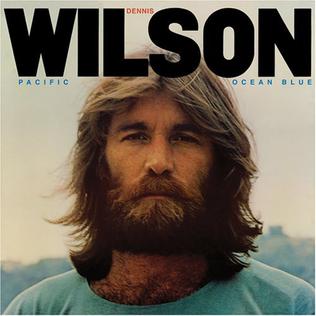
Dennis Wilson-PACIFIC OCEAN BLUE (1977, 2008 2xCD reissue)


When Dennis Wilson's solo debut, Pacific Ocean Blue, was released on James Guercio's CBS-distributed Caribou Records in 1977, few had high expectations for it. Dennis' brother Brian Wilson was, after all, the acknowledged genius and mastermind of the Beach Boys sound and his other brother Carl Wilson had the voice, so little was expected of Dennis, the pretty boy drummer and near-professional party animal. But Pacific Ocean Blue was a gorgeous masterpiece, full of a naked and affirming spirit, romantic (in the best sense of the word), lush, wise, patient, and even panoramic, almost avant-garde, and worlds past and beyond what any of the other Beach Boys were doing at the time. It was also, perhaps not surprisingly, a resounding commercial flop, although the critical reaction to the album was strong and positive. Wilson began work on a follow-up, tentatively entitled Bambu, mixing in some new New Orleans and Caribbean elements, but the project was never finished and by the time of Wilson's death in 1983, Bambu had been sitting untouched and unfinished for nearly five years. Boots taken from LP copies of Pacific Ocean Blue and leaked tapes of the Bambu material have been bouncing around among collectors ever since and Wilson's solo work has taken on the allure and status of lost treasure.


This wonderful two-disc set features a carefully restored and remastered version of the Pacific Ocean Blue LP and collects the remnants of Bambu along with other Wilson solo odds and ends to make a convincing case for Dennis Wilson as the other bona fide musical genius in the Beach Boys. It's difficult to describe Wilson's sound on these tracks, although "California gospel soul" might fit, since Wilson's raspy, wounded vocals carry more naked emotion and feeling than any of the other Beach Boys vocalists, even if Carl (and sometimes Brian) could sing like an angel. Dennis could sing like an angel, too, but an earthbound one who lost his wings yet never lost his love of the spiritual and romantic in the world. Highlights from this gorgeous, fascinating set include the majestic "River Song"; a chilling version of Carli Munoz's "It's Not Too Late"; the hauntingly tentative "Thoughts of You"; the personal, intimate, and self-autobiographical "He's a Bum"; and the two versions of "Holy Man," the first a beautiful, charming instrumental and the second, which closes things out here, featuring a newly recorded lead vocal from Foo Fighters drummer Taylor Hawkins. Beautiful, sprawling, peaceful, wise, and as tenderly romantic as the world is round, these Dennis Wilson gems are as revelatory as they are stunning. Dennis Wilson was a man in love with life, a man in love with love, and as this essential package shows, he had an achingly personal vision for it all.

by Steve Leggett, allmusic.com

DOWNLOAD:
DISC 1
DISC 2
V0 MP3

Wednesday, June 11, 2008

The Who-ODD & SODS (1974, 1998 remaster)


"Greatest hits albums are for housewives and little girls."
-Bruce McCulloch

Just so you know where I'm coming from, I'm gonna let you in on something: there is no denying the majesty of the Who. Don't even try, Slick. While they were together, Roger Daltrey, Pete Townshend, John Entwhistle, and Keith Moon were the working class Zeppelin with just as much (if not more) fury. After they broke up, they were "Quicksilver Lightning", tinnitus, invisible solo artist, and dead, respectively. Gloriously, we still have MCA Records treating us nice with all these boffo Who reissues. Odds and Sods is the anamoly in this rock and roll universe: it's the b-sides and rarities album that's more fun than the greatest hits album. If that's not enough, this reissue has nine bonus tracks. That's right. Nine.

The tunes run through the usual hoops of a b-sides set: covers (Eddie Cochran's "Summertime Blues," Stones' "Under My Thumb"), early versions of future classics ("Love Ain't For Keeping," "Pure and Easy"), a song recorded for an anti- smoking public service announcement ("Little Billy"), and a zany Entwhistle tune or two (my personal favorite being "Postcard," sort of like a weird cross between "Yellow Submarine" and a soul band on a smoke break.) It's all done up in Who-y goodness and served up with amazingly pristine sound quality, making it probably the best rock and roll reissue since Iggy and the Stooges' 1997 mix of Raw Power. You're a cretin if you miss the bus down to the record store to buy this puppy.

-Jason Josephes, pitchforkmedia.com

DOWNLOAD:
The Who-ODD & SODS (1974, 1998 remaster)
320kbps MP3

Aphex Twin-SELECTED AMBIENT WORKS '85-92 (1993, 2008 remaster)


Stop me if this gets sappy. And it might. Because Selected Ambient Works 85-92-- recently reissued by PIAS America-- was the very first electronic music I ever bought, and certainly the first I ever heard over and over again. Long ago, before I was old enough to drive, I would sit in a small, cluttered bedroom in my parents' suburban ranch house, absorbed for hours by the sounds contained on this disc. The creeping basslines, the constantly mutating drum patterns, the synth tones which moved with all the grace and fluidity of a professional dancer, the strange noises that I'd be unable to identify even if I tried. Back then, Aphex Twin was making music like nothing I'd ever heard before.

What's become apparent since is that I probably wasn't the only one affected. After the disappointing Drukqs, it's easy to forget that, back in the Warp Records heyday, Richard D. James was to this new breed of ambient and electronic music what Babe Ruth was to baseball. Sure, there were upstarts; U-Ziq, Squarepusher and Autechre were all on the scene by the time this collection hit shelves. But James was still the posterboy, the presumed ringmaster, single-handedly defining a style of music in the minds of many. Now, as a new wave of mostly twenty-somethings step to the forefront of IDM, redefining electronic music for the third time in a decade, it becomes more and more obvious just how far reaching James' influence was.

There's nothing new about this re-release, aside from improved availability and decreased cost. But then, improving on this package would be near impossible. Sure, the music on Selected Ambient Works 85-92 may sound a bit dated (as does, to be fair, most electronic music more than a few years old), but there's no denying it was the defining statement of Warp's early years, and the foundation for the careers of bands like Boards of Canada and Plaid.

The songs here are not ambient in the same way as those on this disc's sequel. Technically, most fall into Brian Eno's broad definition of the style-- it can be appreciated in small segments just as much as in its entirety. The music develops slowly, unafraid to linger on a particularly effective sound for as long as necessary-- the creeping keyboard loop of "Schottkey 7th Path," for example, is continually modified throughout the course of the song, but never once eliminated from the mix-- but James would never be content as a mere follower in anyone's footsteps. His work here serves a model for what would come to be known as traditional IDM. A simpler version of the style we've grown accustomed to, certainly, but IDM nonetheless.


James' early work is heavily indebted to early dance music, filled with beats so eminently danceable as to confuse those who only know him from the spastic drum patterns that came later. There's little of that here, though. Selected Ambient Works 85-92 is, rather, an album stretching back to the days before software allowed for heavy sampling or glitch technology. Drum machines serve as its backbone and synthesized bass and keyboard sounds provide the meat. Most of the songs follow a relatively basic formula as well. One element-- say, a synth melody-- is introduced and repeated, and as new elements are added with each go round, the song gradually builds to a dense, multi-layered swirl. This Ravel-esque approach flavors much of James' older material, and yet, despite the simplicity of his equipment and approach, the songs here are both interesting and varied, ranging from the dancefloor-friendly beats of "Pulsewidth" to the industrial clanks and whirs of "Green Calx."

Indeed, these early works do a fine job of showcasing James' ability to transform even the most seemingly mundane patterns into something unique and interesting. "Hedphelym," for instance, is built around a relentless headache-throb cliche of a house beat. But James surrounds the pulsation with an ethereal feedback that bleeds all over the track, leaving the percussion awash in a murky solution of synth tones, pairing dance music with ambience in ways the Orb never dreamed possible.

Slightly more structured (and equally enjoyable) is "We are the Music Makers," a track which follows a drumbeat and a bassline past a pair of intertwined synth loops and a repeated Willy Wonka vocal sample as simple keyboard melodies pour down from overhead. But the aforementioned "Green Calx" is the closest Selected Ambient Works 85-92 comes to the spastic trickery of which James would become such a pioneer. It matches pitchshifted tones and drum machines with a burbling bassline, assorted machine-gun synth interjections, the slightly effected tones of various pistons, motors, and machines, and even the occasional cartoon spring noise. Moments like these serve to foreshadow both James' later work, as well as the infinitely more complex twists and turns that IDM would make in the years that would follow.

They say next to no one heard the Velvet Underground's first album when it was released, but everyone who did went on to start a band. Listening to Selected Ambient Works 85-92, one can't help but imagine the seeds being planted in the imaginations of the lucky few who were there when it all began. Nestled in these simple, undeniably danceable tracks are the roots of contemporary IDM. And despite its somewhat primitive origins, the final product remains among the most interesting ever created with a keyboard and a computer.

-David M. Pecoraro, pitchforkmedia.com

DOWNLOAD:
Aphex Twin-SELECTED AMBIENT WORKS '85-92 (1993, 2008 remaster)
320kbps MP3

Saturday, June 7, 2008

David Bowie-THE MAN WHO SOLD THE WORLD (1970)


This album tends to get lost in the amazing run of perfect albums Bowie did from 1970-80. It's great. Sabbath-heavy arrangements by the oft-undercredited lead guitarist Mick Ronson. He's also the guy that did all the arrangements for Lou Reed's TRANSFORMER album and most Bowie from 1970-73. -Ian

Even though it contained no hits, The Man Who Sold the World, for most intents and purposes, is the beginning of David Bowie's classic period. Working with guitarist Mick Ronson and producer Tony Visconti for the first time, Bowie developed a tight, twisted heavy guitar rock that appears simple on the surface but sounds more gnarled upon each listen. The mix is off-center, with the fuzz-bass dominating the compressed, razor-thin guitars and Bowie's strangled, affected voice.


The sound of The Man Who Sold the World is odd, but the music is bizarre itself, with Bowie's bizarre, paranoid futuristic tales melded to Ronson's riffing and the band's relentless attack. Musically, there isn't much innovation on The Man Who Sold the World -- it is almost all hard blues-rock or psychedelic folk-rock -- but there's an unsettling edge to the band's performance, which makes the record one of Bowie's best albums. [Rykodisc's 1990 CD reissue includes four bonus tracks, including the previously unreleased "Lightning Frightening," and the single "Holy Holy," and both sides of the 1971 "Arnold Corns" single, "Moonage Daydream" and "Hang On to Yourself," which are early and inferior versions of songs that would later appear on Ziggy Stardust.]

-Ned Raggett, allmusic.com

DOWNLOAD:
David Bowie-THE MAN WHO SOLD THE WORLD (1970)
320kbps MP3

Michael Rother-KATZENMUSIK (1979)


Katzenmusik marked the third and final collaboration between multi-instrumentalist Michael Rother and producer Conny Planck, as well drummer Jaki Leibezeit, on loan from the group Can. Essentially a suite in two parts, Katzenmusik remains Rother's opus. It's an enchanting, entrancing, swirl of colors and simply pronounced melodies that's at once powerfully majestic and esthetically sublime. Rother's multi-tracked guitars ring from the plaintive to the screaming in the upper registers, layered around four different five-note melodies that recur either as single string statements triple-track or stark chords supporting them. Through it all, in a middling yet even-handed pace, is drummer Jaki Leibezeit, playing his version of the Motorik sound (the one created by Rother and Klaus Dinger in the band Neu! a few years before) in 4/4 time with little to no variation. Rother's re-harmonizing of his original melody throughout the piece in various segments has a mirroring effect over its 37 minutes; it's as if we are taken into the nether-side of his composition and feel its various spaces and textures from all angles.


Still, no matter how deeply wound the composition gets, its theme is very simple, and therefore always draws the listener closer to its euphoric chiming and whispering. Rother could very well have titled this album "Blue Sky Music," because despite the appearance of such on the cover, this music seems to be soaring there all on its own. If we just draw near, his glorious language of emotion and tenderness will carry us along too. Katzenmusik cannot be heard too many times. Artists usually get this close only once in a lifetime. Michael Rother has gotten close to this with many of his albums, but this one is singular in its achievement, a perfect melding of taste, dynamics, pace, melodic invention, and emotional and spiritual honesty, all woven into the spirit of rock & roll.

by Thom Jurek, allmusic.com

DOWNLOAD:
Michael Rother-KATZENMUSIK (1979)
192kbps MP3

Booker T & the MGs-MELTING POT (1971)


Melting Pot could be the most well-realized of all the albums by Booker T. & the M.G.'s, a smooth and soulful, yet expansive 35 minutes of all originals, the latter in sharp contrast to their exploration of the Beatles' Abbey Road album material on their preceding album. And the irony was that it was their swan song. Booker T. Jones, in particular, was increasingly unhappy working at Stax/Volt Records, owing his feelings to management and structural changes at the company, and also felt the need to change the group's formula somewhat. Steve Cropper was playing lots of session work that was keeping him from recording in Memphis as well, and the result was an album recorded mostly in New York City, far away from Stax/Volt and largely built on the group's (especially Jones') best impulses. That said, Melting Pot managed to be a sort of back-to-the-roots effort in the sense that they were back to doing originals, but was also a strikingly more expansive record, with Jones in particular playing with an almost demonic intensity and range, backed ably by Donald "Duck" Dunn's rocksteady bass in particular. There were a few other touches, such as the wordless chorus on "Kinda Easy Like" and extended running times, showing the group stretching out on much larger musical canvases.

by Bruce Eder, allmusic.com

DOWNLOAD:
Booker T & the MGs-MELTING POT (1971)
320kbps MP3

Thursday, June 5, 2008

The Green Arrows-4 TRACK RECORDING SESSION (2006 compilation)


Throw out that VAMPIRE WEEKEND record and listen to this instead, this is the real deal. -Ian

In 1979, Zexie Manatsa, the Green Arrows' mercurial bassist and lead singer, married his longtime girlfriend, Stella, at Zimbabwe's Rufaro Stadium. The ceremony was joyous, and the resulting celebration featured wild dancing, lots of (presumably great) music, and, almost certainly, the copious consumption of wha wha -- that's "beer" in Shona. In many ways it was a normal wedding. Except for one thing: Roughly sixty-thousand people were in attendance.

Such was the local popularity of The Green Arrows in the mid- to late-1970s. According to Samy Ben Redjeb's superb liner notes, the Arrows dominated the hearts, minds and hips of an entire generation of young Zimbabweans. The five-member, three-guitar band released the first-ever LP by a Zimbabwean group, 1976's Chipo Chiroorwa. The previous year, one of its singles went gold -- also a first in the country's history. Another one of the Green Arrows' singles, an absurdly catchy call-and-response number called "Musango Mune Hangaiwa," hit the top of the charts in Zimbabwe and stayed put for seventeen weeks.


And yet, I had never heard of them before, and it's likely that, unless you're a super-devoted Afro-pop fan or lived in Zimbabwe in the '70s, neither have you. Which is why this album is so exciting -- its twenty songs are consistently amusing, exciting, revelatory, even joyous. It's also certainly the most tuneful, pop-friendly African music I've ever heard. Most of the songs are honest-to-gosh verse-chorus-verse pop songs, rather than the extended polyrhythmic groove tracks you're probably used to; believe it or not, although the album's first song, "Mwana Waenda," clocks in at a mere three minutes and nineteen seconds, it's the longest one on the record. This was initially off-putting -- I mean, I really like extended polyrhythmic groove tracks -- and I feared that the album's compilers had wimped out and truncated the songs for a Western audience. I'm reasonably sure that isn't the case. The Arrows just play short because they're a pop band at heart, simple as that.

Like all pop bands, the Green Arrows' stock-in-trade is its danceable, hurry-up exuberance. The varied and massively appealing guitar riffs are on some songs twinkly and ethereal and perfectly arranged, like constellations; on others, they slide lugubriously across the rhythm section, fueled (almost certainly) by copious consumption of wha wha, as well as the wah-wah pedal that the Arrows' producer, West Nkosi, brought back with him from South Africa in 1974. And that aforementioned rhythm section -- the subtle, lean drumming of Raphael Mboweni over top Zexie's subtle, zexual bass work -- is always worth attending.

Like its title suggests, the sound quality of 4-Track Recording Session ain't always the best. Most of the songs were recorded on just two centrally located microphones. But since this music is so universal in its appeal, anyone with at least one good ear will be able to hear it loud and clear.

by Matthew Ozga, prefixmag.com

DOWNLOAD:
The Green Arrows-4 TRACK RECORDING SESSION (2006 compilation)
V0 MP3

Pebbles Trash Box (2004 compilation)


For the life of me, I can't find a decent review of this. This basically the Nuggets collections' freakier, distorted, fuzzed-out older brother. -Ian

If you are interested in finding out more about garage, psych and freakbeat but have hesitated over buying either of the excellent 4 CD 'Nuggets' compilations, the wonderful Past & Present 10 CD 'Rubble' sets or the 13 CD 'Mindrocker' box on the grounds of price, then this 5-star bargain is the one for you.

'Action Woman', 'Psychotic Reaction', 'Five Years Ahead of my Time', 'Green Fuzz', 'Voices Green and Purple', 'I'm a Living Sickness' are all cornerstones of the garage heritage, and you could DJ a very respectable club night using this 5 CD set alone.

Begin your search for the perfect garage scream here - you'll soon know one end of a Farfisa from a Teardrop, and rush out to get a bowl cut, an op art shirt, cuban heeled boots and a pair of wrap-round shades. Dig it!

-Amazon.com

DOWNLOAD:
DISC ONE
DISC TWO
DISC THREE
DISC FOUR
DISC FIVE
320kbps MP3

Sunday, June 1, 2008

Geinoh Yamashirogumi & Yamashiro Shoji-AKIRA OST (1990)


In one of those rare occasions of apt anime marketing in America, Akira Original Soundtrack managed to find its way to U.S. shores as a domestic release. Even more so than the film it originates from, this CD is as much a work of art as it is entertainment. As such there are some who will hail it as a masterpiece, and others who will simply wrinkle their nose and turn on the radio. I fall into the first category, although with some reservations.

This OST is unconventional by any standard. Performed by the Geinoh Yamashirogumi, the music consists mostly of percussion and chanting, along with a few diverse sound effects and - occasionally - more standard instrumentation like an electric guitar. The percussion definitely has an uncontemporary, ethnic sound. Various types of percussion commonly build upon each other persistently into a massive front of sound. As for the chanting, it is unlike anything else I've heard. In "Kaneda" it takes a slightly tribal sound, with the airy, mystical, almost whisperlike early chanting being joined by firmer, louder vocals that approach the level of shouting. Combined with the percussion, memorable melody, and its prominent place in the film, this track is one of the highlights of the CD.


The chanting in "Tetsuo" has an almost childlike quality, both in the nature of the performer's voices and the simplicity of the "lyrics". (In actuality the chanting is not lyrical at all in this track, but is rather a totally unique arrangement of human vocalization.) The childlike nature is contradicted by the sense of danger and sheer power with which it is performed, making for another unforgettable piece of music.

Tracks like Kaneda and Tetsuo leave me in awe of Akira OST's originality and emotional power. However, there are other tracks which, despite their amazing originality and artistic superiority, are just too odd and unmelodic to be desirable for common listening. Borderline tracks include "Battle Against Clown", with its intentionally revolting, exaggerated breathing sound effect, and "Dolls' Polyphony", with its use of bizarre, interweaving vocals that defy description in words. On the extreme side is "Illusion", which begins bearably enough but for the latter eight or so minutes contains almost intolerable "restrained human howling", for lack of a better term (although, to be fair, I believe the sound does have roots in ethnic Asian music).

Akira OST is an amazingly original work of art in its entirety. At its best, it is enrapturing and intense with emotion. At its worst, it is difficult for even more open-minded listeners to tolerate. While the music fits the film superbly, on its own I listen to it only occasionally and rarely in full. However, as a fan of the film and an admirer of the music's unconventionality, I wouldn't be without the CD.

by Adam Corn, soundtrackcentral.com

DOWNLOAD
Geinoh Yamashirogumi & Yamashiro Shoji-AKIRA OST (1990)
320kbps MP3