Friday, August 15, 2008

Charles Mingus-THE BLACK SAINT AND THE SINNER LADY (1963)


The Black Saint and the Sinner Lady is one of the greatest achievements in orchestration by any composer in jazz history. Charles Mingus consciously designed the six-part ballet as his magnum opus, and -- implied in his famous inclusion of liner notes by his psychologist -- it's as much an examination of his own tortured psyche as it is a conceptual piece about love and struggle. It veers between so many emotions that it defies easy encapsulation; for that matter, it can be difficult just to assimilate in the first place. Yet the work soon reveals itself as a masterpiece of rich, multi-layered texture and swirling tonal colors, manipulated with a painter's attention to detail. There are a few stylistic reference points -- Ellington, the contemporary avant-garde, several flamenco guitar breaks -- but the totality is quite unlike what came before it. Mingus relies heavily on the timbral contrasts between expressively vocal-like muted brass, a rumbling mass of low voices (including tuba and baritone sax), and achingly lyrical upper woodwinds, highlighted by altoist Charlie Mariano.

Within that framework, Mingus plays shifting rhythms, moaning dissonances, and multiple lines off one another in the most complex, interlaced fashion he'd ever attempted. Mingus was sometimes pigeonholed as a firebrand, but the personal exorcism of Black Saint deserves the reputation -- one needn't be able to follow the story line to hear the suffering, mourning, frustration, and caged fury pouring out of the music. The 11-piece group rehearsed the original score during a Village Vanguard engagement, where Mingus allowed the players to mold the music further; in the studio, however, his exacting perfectionism made The Black Saint and the Sinner Lady the first jazz album to rely on overdubbing technology. The result is one of the high-water marks for avant-garde jazz in the '60s and arguably Mingus' most brilliant moment.

by Steve Huey, allmusic.com

DOWNLOAD:
Charles Mingus-THE BLACK SAINT AND THE SINNER LADY (1963)
V0

Tony Williams Lifetime-EMERGENCY! (1969)


Tony Williams' Emergency was one of the first and most influential albums in late-'60s fusion, a record that shattered the boundaries between jazz and rock. Working with guitarist John McLaughlin and organist Larry Young, Williams pushed into new territory, creating dense, adventurous, unpredictable soundscapes. With Emergency, Tony Williams helped create the foundation of the style and sound of fusion.

by Leo Stanley, allmusic.com

DOWNLOAD:
Tony Williams Lifetime-EMERGENCY! (1969)
V0

Herbie Hancock-FAT ALBERT ROTUNDA (1970)


Centered around some soundtrack music that Herbie Hancock wrote for Bill Cosby's Fat Albert cartoon show, Fat Albert Rotunda was Hancock's first full-fledged venture into jazz-funk -- and his last until Head Hunters -- making it a prophetic release. At the same time, it was far different in sound from his later funk ventures, concentrating on a romping, late-'60s-vintage R&B-oriented sound. with frequent horn riffs and great rhythmic comping and complex solos from Hancock's Fender Rhodes electric piano. The syllables of the titles alone -- "Wiggle Waggle," "Fat Mama," "Oh! Oh! Here He Comes" -- have a rhythm and feeling that tell you exactly how this music saunters and swaggers along -- just like the jolly cartoon character.

But there is more to this record than fatback funk. There is the haunting, harmonically sophisticated "Tell Me a Bedtime Story" (which ought to become a jazz standard), and the similarly relaxed "Jessica." The sextet on hand is a star-studded bunch, with Joe Henderson in funky and free moods on tenor sax, Johnny Coles on trumpet, Garnett Brown on trombone, Buster Williams on bass, and Albert "Tootie" Heath on drums. Only Williams would remain for Hancock's 1977 electric V.S.O.P.: The Quintet album to come. In addition, trumpeter Joe Newman, saxophonist Joe Farrell, guitarist Eric Gale, and drummer Bernard Purdie make guest appearances on two tracks.

by Richard S. Ginell, allmusic.com

DOWNLOAD:
Herbie Hancock-FAT ALBERT ROTUNDA (1970)
320kbps

Monday, August 11, 2008

Break Over

Sorry about that, the dog days of summer. I got too lazy to even upload albums for ya. Shame on me.

I'm back on board.

Sublime Frequencies-THAI POP SPECTACULAR (1960's-1980's) CD SF032


Thai pop history has been largely ignored and neglected by the international musical community for far too long. By the late 20th century, Thai pop music had developed as many faces as localized roots music such as Molam or styles like Luk Thung or Luk Krung, (each with their own respective pop-sectors). Bangkok – always the hub of the Thai recording industry – attracted musicians and singers from across the country that were both informed by tradition and inspired by the wealth of international sounds entering the region via radio and phonograph. Jazz, for instance, had a profound influence on early Thai pop music, the King of Thailand himself being a noted Jazz composer.

This superb collection features modern Thai music styles combining with elements of surf, rock, funk, disco and comedy, revealing the use of clever instrumentation, brilliant vocals, great arrangements, twisted breaks, and resourceful production techniques. Discover the Queen of Luk Thung, the 1960s “Shadow Music” sound, classic tracks from Thai films, blazing examples of Bangkok disco from the 1970s, legendary Thai comedy Pop, and the most outrageous version of "The Night Chicago Died" you'll ever encounter. Thick horn sections, wah-wah guitars, tight drums, and funky organs help round out this astounding set which proves beyond a doubt that the Thai were a completely unique and powerful force during the 1960's, 70's & 80's global popular music explosion.

-sublimefrequencies.com

DOWNLOAD:
Sublime Frequencies-THAI POP SPECTACULAR (1960's-1980's) CD SF032
320kbps

Sublime Frequencies-RADIO MOROCCO CD SF007


It was the summer of 1983 in Morocco. The Polisario guerillas were operating in the Southern Sahara and the mood was tense in the Arab world. The Government of King Hassan was suspicious of anything out of the ordinary. Checkpoints were everywhere along the highways. Aids was the new disease. The American entertainment industry was grinding Michael Jackson's THRILLER into the world conciousness as US export culture supreme. Dr. J won his first and only NBA Championship ring. I knew all this from the small transistor radio I carried from Tangier to Marrakesh. I rented an apartment in Essouira on the Atlantic coast and began my swan dive into international radio collage. A songwriter by the name of Younes Megri had the number one hit during the summer of 1983 in Morocco. Radio Tangier International had the strongest signal in Northwest Africa.

They played everything from Euro-pop to Be-bop to Heavy Rock to Moroccan folk trance. Less-powerful stations played berber folk music late into the night. This collection is 20 years old and has grinded into my skull as Moroccan export culture supreme. This is some of the greatest music ever known displayed here amidst snippets of news, commercials, radio noise and a host of otherwordly transmissions. Arabic music is HIGH ART. At its best, it transcends western music even as it utilizes it as a display of emotion and celebration. The Moroccans are deep contributors to the high art of Arabic music. May this disc download into your mind as an anti-virus. It worked for me. I don't even remember THRILLER by Michael Jackson.

-sublimefrequencies.com

DOWNLOAD:
Sublime Frequencies-RADIO MOROCCO CD SF007
320kbps

Van Dyke Parks-MOONLIGHTING: LIVE AT THE ASH GROVE (1998)


Since Van Dyke Parks has never released a greatest hits album (okay, he's never had any hits) in the U.S., this long-overdue concert album, which draws on material from his studio recordings dating back to 1968's Song Cycle, is a welcome sampler of his stunning, if small, body of work from "The All Golden" (Song Cycle) to "Orange Crate Art" (the title track from his duet album with Brian Wilson). The melodic invention and masterful mixing of styles confirm Parks's hidden status as one of the great American composers, a status that has gone unremarked only because of his reclusiveness and tendency to operate only on the margins of the Los Angeles pop scene. He is a miniaturist, to be sure, and nothing if not quirky. His heavily -- and not always coherently -- edited stage remarks call to mind Truman Capote, and his reedy, earnest singing is only adequate. But the music is both steeped in tradition and wholly original, and it's a delight to listen to.

by William Ruhlmann, allmusic.com

DOWNLOAD:
Van Dyke Parks-MOONLIGHTING: LIVE AT THE ASH GROVE (1998)
192kbps

Chris Bell-I AM THE COSMOS (1978)


Chris Bell (of BIG STAR) was one of the unsung heroes of American pop music; despite a life marked by tragedy and a career crippled by commercial indifference, the singer/songwriter's slim body of recorded work proved massively influential on the generations of indie rockers who emerged in his wake. Born January 12, 1951 in Memphis, Tennessee, Bell grew up enveloped by the city's indigeneous soul sounds -- typified by the prodigious output of the Stax label -- but his first love was the music of the British Invasion; inspired by the Beatles, he took up the guitar in his early teens. Within a few years, Bell was writing and performing his own songs with friends Richard Rosebrough and Terry Manning, but his Anglo-pop leanings set him squarely outside of the Memphis musical community.

Unreleased for over 15 years, I Am the Cosmos is nevertheless an enduring testament to the brilliance of Chris Bell; lyrically poignant and melodically stunning, this lone solo album is proof positive of his underappreciated pop mastery. While cuts like "Get Away," "I Got Kinda Lost," and "Fight at the Table" recall the glowing, energetic power pop of Bell's earlier work, the majority of the songs on I Am the Cosmos are more reflective and deeply personal; the title track is a harrowingly schizophrenic tale of romantic despair, while other cuts like the lurching "Better Save Yourself" and the lovely "Look Up" are infused with a spiritual power largely missing from his Big Star material. The album's highlight, "You and Your Sister" -- which features backing vocals from none other than Bell's Big Star mate Alex Chilton -- is simply one of the great unknown love songs in the pop canon, a luminous and fragile ballad almost otherworldly in its beauty.

by Jason Ankeny, allmusic.com

DOWNLOAD:
Chris Bell-I AM THE COSMOS (1978)
192kbps

Reigning Sound-TIME BOMB HIGH SCHOOL (2002)


Time Bomb High School is much more than another garage tribute to soulful '60s Brit-rock. But the sophomore effort from the Reigning Sound is something less than the band's minimal, country-folk debut. During knockouts like the Rolling Stones-flavored "Straight Shooter" and "I'd Much Rather Be With the Boys," Greg Cartwright and his Memphis combo's sound is as pure, and as well-grounded, as anything since Exile on Main Street. With 14 tracks, however, the material and arrangements are spread just a little too thin, and too many average tunes are allowed in the mix. A bit of a stylistic return for former Oblivians member Cartwright, Time Bomb High School crackles with raucous garage energy. While nothing like the punk/soul primal scream of the musician/songwriter's earlier days, this disc surpasses any reasonable swagger quota. The Reigning Sound's moody, countrified debut had a relative wealth of riveting numbers, and more conceptual clarity, but this 2002 In The Red title will definitely satisfy Cartwright fans as well as listeners wary of the inevitable post-White Stripes garage posers.

by Vincent Jeffries, allmusic.com

DOWNLOAD:
Reigning Sound-TIME BOMB HIGH SCHOOL (2002)
192kbps

Wednesday, July 30, 2008

DRAMATIC FUNK THEMES VOL. 1: BRITISH RARE GROOVES FROM THE THEMES INTERNATIONAL LIBRARY


Dramatic Funk Themes Vol. 1 is another great library music compilation and showcases some cool (mostly previously unreleased) funky, jazzy, easy and groovy tracks from the archives of the Themes International Music Library.

The soundtrack for scenes that don't yet exist. Well produced, budget priced music in all styles, which were intended for use in backgrounds for radio, television, films and advertising. This music was never commercially available and was pressed in limited quantities from the 1950s onwards allowing samples to be sent to production houses and radio stations for use as and when required. Due to the fact that producers with a limited budget didn't have the funds available to commission a specially composed soundtrack, it made economical sense to license suitable "off the shelf" tracks from library archives.

Since library music was intended to convey specific moods and atmospheres, it wasn't uncommon for composers to switch between different styles such as jazz, rock, funk, easy listening, electronic, avant-garde or baroque in just one record. Although it only reflected the contemporary world of music, library seems to have a uniqueness which sets it apart from commercially available music. Perhaps this is because composers had the freedom to do whatever came in mind to create specific atmospheres. Miles away from the world of the pop charts, they only had to follow a tight production schedule to guarantee low production costs.

During the 70s library music era, some of Europe's leading jazz, classical and avant-garde musicians took part in composing and playing on those library recordings. While many were involved just once, others (like Alan Hawkshaw – our main featured composer in this compilation) penned thousands of usable themes for different library companies.

The strange appeal and mystique of library music is intensified by the anonymity of its musicians. There is no image or cult and library tracks were never played live or sold directly to the public (with the exception of the relatively small number of signature tunes which became popular due to their continued use and ended up appearing on compilation albums of television and film themes). The record sleeves usually stated mood descriptions for each track; e.g. "high-powered dramatic theme", "funky underscore with movement" or "medium beat". Most library tracks are instrumental themes. Only a very small number of recordings contained vocals.

In the mid 90s library music started to drawn the attention of hip-hop producers looking for samples, breaks and loops. The discovery of library records proved to be a goldmine providing an almost endless supply of breaks and beats. DJs and collectors alike started to dig through crates of cheap records in second hand shops as news of the library phenomenon began to spread. Nowadays however, one is only likely to find these rarities on websites such as Ebay as most items of interest have long since been snapped up.

The demand for library records was fuelled even further as library music compilations started to become available to the public. The prices for some funky items began to soar and most of the Themes library records, found in this compilation, usually fetch between 40 and 400 US Dollars. The most sought-after and highly recommended albums are "The All American Powerhouse", "The Voice of Soul" as well as Alan Tew's "Drama Suite Pt. I & II", which was used on the television series "The Hanged Man".

Now sit back and enjoy the first compilation to be compiled solely with rare grooves from the Themes International Music library. Furthermore, none of these tracks have ever been released before!

by Michael Schütz, Jon Vokes

DOWNLOAD:

DRAMATIC FUNK THEMES VOL. 1: BRITISH RARE GROOVES FROM THE THEMES INTERNATIONAL LIBRARY
320kbps MP3

Saturday, July 26, 2008

Sloan-ONE CHORD TO ANOTHER (1996)


Sloan was one of the most successful Canadian bands of the '90s, which was both a blessing and a curse. While they were well known in their homeland, where their Beatlesque power pop became a radio staple, they had a difficult time breaking into the American market, especially after their label, DGC, decided not to market their hooky pop in the wake of grunge. After spending several years fighting the label, and nearly breaking up, Sloan re-emerged in 1996 with One Chord to Another, a record that became an instant success in Canada and a critical sensation in the U.S. upon its American release in 1997, establishing the group as one of the leaders of the new wave of power pop groups in the late '90s.


Following the bungled American release of Twice Removed, it seemed unlikely that Sloan would survive, let alone record an album as wonderful as One Chord to Another. On the group's previous album, Sloan had refashioned itself as a power pop band, often with terrific results, but on One Chord to Another the songwriting blossoms. Filled with catchy, jangling riffs and memorable melodies, the record is a tour de force of hooks and harmonies, filled with exceptionally strong songs and forceful performances, which give the record a firm, rocking foundation. Few power pop records of the '90s are as infectious and memorable as One Chord to Another.

by Stephen Thomas Erlewine, allmusic.com

DOWNLOAD:

Sloan-ONE CHORD TO ANOTHER (1996)
320kbps MP3

The dB's-STANDS FOR DECIBELS & REPERCUSSION (1981/82, 2002 compilation)


Along with Let's Active, the dB's defined the Southern power pop/jangle pop movement of the early to mid-'80s. The band's music was a quirky blend of smart pop and psychedelia crossed with the more experimental side of new wave. Though they never received widespread recognition outside of critical acclaim, they provided a key link between Big Star and '80s alternative guitar acts such as R.E.M.

On their debut, the dB's combined a reverence for British pop and arty, post-punk leanings that alternate between minimalism and a love of quirky embellishment, odd sounds, and unexpected twists; Stands for Decibels is clearly a collegiate pop experiment, but rarely is experimentation so enjoyable and irresistibly catchy. Singing and songwriting duties are shared equally by Chris Stamey and Peter Holsapple -- Stamey, more quirky and psyc hedelic-leaning with a winsome, pure-pop whine, is nicely balanced by Holsapple's more earthy drawl and straightforward approach. The album stands not only as a landmark power-pop album, but also as a prototype for much of the Southern jangle that would follow.


Repercussion is very much of a piece with the debut, repeating much of the same formula that made Stands for Decibels great -- terrific harmonies, winning melodies, and catchy hooks with subtle quirks thrown into the mix. This time, they feature a fuller, more polished sound, but the impact of the songs isn't diminished. Stamey left shortly after Repercussion to pursue a solo career.

Although it has already been released once before by Line Records, this one CD version of the first two dB's albums is a wonderful collection of what is arguably the band's finest hour. Featuring some gorgeous hooks and wonderful playing, there are few lulls in this excellent package. Fans may complain about pairing two albums that are strong entities when separate, but this is an inexpensive way to purchase both releases and should be viewed as the alternative to hunting down rare, out-of-print vinyl.

by Chris Woodstra, allmusic.com

DOWNLOAD:
The dB's-STANDS FOR DECIBELS & REPERCUSSION (1981/82, 2002 compilation)
320kbps MP3

Mike & Rich-EXPERT KNOB TWIDDLERS (1996)


I really love this album, I just can't find a decent review. -Ian

The two most popular artists to record for Britain's Rephlex label -- label-founder Richard D. James (Aphex Twin) and Michael Paradinas (µ-Ziq) -- collaborated in 1996 for Expert Knob Twiddlers. Recalling the great Milton Bradley game boxes of the 1970s and '80s, the cover is a picture of James and Paradinas, in suitable low-res, chop-and-paste photos, playing a variant of Connect Four. Inside, the two techno auteurs' music mesh quite well; Paradinas' liquidy funk distortion smoothes out the calculated, almost sterile, experimentation of Aphex Twin. The style-blending, however, cancels out the particular attractions of both artists, and the listener is left with a somewhat bland album. Fans of Aphex and µ-Ziq will be excited, but newcomers should go elsewhere before they dig this deep.

by John Bush, allmusic.com

DOWNLOAD:
Mike & Rich-EXPERT KNOB TWIDDLERS (1996)
320kbps MP3

Friday, July 25, 2008

GROUP INERANE: GUITARS FROM AGADEZ, MUSIC OF NIGER (Sublime Frequencies 2005)


Group Inerane is the now sound of the Tuareg Guitar Revolution sweeping across the Sahara Desert and inspired by the rebel musicians that started this music as a political weapon used to communicate from the Libyan Refugee camps in the 1980s and 1990s. Spearheaded by the enigmatic guitar hero Bibi Ahmed, Group Inerane has been together for several years and carries the rich tradition of Tamachek guitar songs for another generation. These ten tracks are a combination of amplified roots rock, blues, and folk in the local Tuareg styles at times entering into full-on electric guitar psychedelia. This music is performed with two electric guitars, a drum kit and a chorus of vocalists. The recordings were captured live in the city of Agadez in the Republic of Niger. Group Inerane was also featured in the Sublime Frequencies DVD “Niger: Magic and Ecstasy in the Sahel”. Recorded by Hisham Mayet, this is the second Sublime Frequencies Vinyl Release. 180 gram vinyl, full-color gatefold jacket, and limited one-time pressing of 1000 copies.

DOWNLOAD:
GROUP INERANE: GUITARS FROM AGADEZ, MUSIC OF NIGER (Sublime Frequencies 2005)
320kbps MP3 (vinyl rip)

LEAF MUSIC, DRUNKS, DISTANT DRUMS (Sublime Frequencies/Anomalous 2004)


Ambient and Musical recordings from Laos, Thailand, Cambodia, and Burma recorded by Robert Millis in 2002. In a strange twist of fate, Sublime Frequencies has obtained the rights to distribute the remaining copies of this superb collection released on Anomalous Records in 2004.

Culled and carefully edited from many hours of field recordings made in Southeast Asia by Robert Millis, member of Climax Golden Twins (who are responsible for the OST of the film "Session Nine"). A mix of ambiance and music including a beguiling improvisation performed by an elephant mahout using only a leaf, ethereal temple orchestras, blind street musicians, insect choruses, stagecoach rides, singing cabbies, a drunken spirit orchestra performing a Leo Sayer song, naughty and nice children. This is an impressionistic ride from 21st century Thailand to the medieval corners of Myanmar -- strange meetings of natural and supernatural, East and West. Millis also worked on the recent Sublime Frequencies DVD "NAT PWE: Burma's Carnival of Spirit Soul" and some of this disc was recorded during the same trip.

DOWNLOAD:

LEAF MUSIC, DRUNKS, DISTANT DRUMS (Sublime Frequencies/Anomalous 2004)
192kbps MP3

Thursday, July 24, 2008

Crypt Records Presents: GARAGE PUNK UNKNOWNS Vol. 1&2 (1999 compilations)


Basically, everything on CRYPT RECORDS is amazing to me. Please drop a dime on them. -Ian

The subtitle, by the way, is "Full Monophonic Teenblast From America's Mid-60's Garage Explosion." The first CD in the Garage Punk Unknowns Series is crammed fulla mind-meltin' rock n roll magic. These 31 songs rock harder and louder than just about anything else you've ever heard- they're sloppy, exuberant, violent, brutal, and brilliant, more mercilessly fun than- oh, I don't know... heroin (I'm not speaking from experience). Songs of particular note include Fink-Muncx Nine's deranged "Coffee, Tea, or Me," the Teddy Boys' lean, mean, ominous "Jezebel," and the Hard Times' "I Can't Wait 'Til Friday Comes," which is both nasty and hilarious. And then there's the Temptations' (no, not THOSE Temptations) cover of "Hey! Bo Diddley," which starts out as a bit of punk rock a capella before launching into an amazingly catchy rock n roll pound-fest. The End reduce Buddy Holly's classic "Not Fade Away" to its most basic elements: A primal beat and some truly primitive vocals. The King Beez's groovin' "Now," is another highlight, as is the Ravens' schizophrenic "Don't Press Your Luck." There's also the Landels' surf-tinged cover of "The Witch," and the Big Beats' heavy, pummeling "Beware." These are only a few highlights of what is easily one of the best garage rock discs ever assembled. Pick it up and enjoy!

By Laszlo Matyas, amazon.com

DOWNLOAD:

Crypt Records Presents: GARAGE PUNK UNKNOWNS Vol. 1&2 (1999 compilations)
320kbps MP3

Monday, July 14, 2008

DAPTONE 7 INCH SINGLES COLLECTION: VOL. 1&2 (2006, 2008 compilations)


Once upon a time -- let's call them the pre-Winehouse years -- there was a little label that could pumping retro soul and funk out of a tiny label in Brooklyn. With the mainstream record industry centralizing power and CD sales on the rise, this tiny label faced seemingly insurmountable odds by pairing young musicians who were in love with the sounds of the '60s and '70s with older singers who were steeped in that era and then recording their modest little jams on seven-inch slabs of vinyl.


Daptone Studios, Bushwick

The core of their music is the Dap-Kings: Binky Griptite, Guitar, Emcee; David Guy, Trumpet; Bosco "Bass" Mann (AKA Gabriel Roth), Bass, Bandleader; Neal Sugarman, Tenor Saxophone; Tommy "TNT" Brenneck, Guitar; Homer "Funky-Foot" Steinweiss, Drums; Fernando "Bugaloo" Velez, Percussion; Ian Hendrickson-Smith, Baritone and Tenor Saxophone. The Sugarman 3 features Neal Sugarman, Saxophone; Adam Scone, Hammond Organ; Al Street, Guitar; Rudy Albin, Drums; Dave Guy, Trumpet. Legendary Soul Singer Lee Fields often sings with the Sugarman 3 as well as flautist Daisy Sugarman. Daptone built their own studios in Brooklyn where they have recorded most of their releases. The unique quality of their sound is a product of the studio acoustics, recording only on analog tape -- no digital --, and mixing by Gabriel Roth.

Then Winehouse came. And everything changed.

Of course, this story is blown slightly out of proportion. Even while Ronson, Carter and even the Reverend Green were drafting the label's many talents, Daptone quietly continued to release these little gems for its devoted fans.


Sharon Jones and the Dap-Kings

So, consider these two volumes of Daptone 7-Inch Singles Collection a reminder of the label's humble, yet no less raucous, roots. Collecting the esteemed (and limited pressings) of seven-inch singles from its roster stars, such as Sharon Jones and Lee Fields, from the last few years, the compilation serves up an even broader menu of retrophilia. From the gutbucket funk of the Mighty Impreials' "The Matador" and the Otis-style balladeering of Lee Fields' "Could Have Been" to Sharon Jones' groovy reinterpretation of the de facto Lebowski theme "I Just Dropped in to See What Condition My Condition Is In" and Antibalas Afrobeat Orchestra's subtle reading of Hector Lavoe's anthem "Che Che Cole," the collection demonstrates how the label attracted such mass appeal: by casting a wide and thoroughly ass-shaking net.

By Dan Nishimoto, prefixmag.com

DOWNLOAD:

DAPTONE 7 INCH SINGLES COLLECTION: VOL. 1&2 (2006, 2008 compilations)
V0 MP3

Harlan T Bobo-I'M YOUR MAN (2007)


Even after his debut release, too much love, captured the imagination of Memphis' music lovers, Harlan T. Bobo still remains a mystery. Arriving in Memphis nine years ago after traveling a route as circuitous as that of any fugitive, Harlan has been busy endearing himself to local fans and soaking up as much of the city's rich musical history as possible. Instead of shedding light on the man behind the music, his intensely personal lyrics have actually served to help perpetuate his enigmatic persona. However, with the release of his second album, I'm Your Man, one thing about Harlan T. Bobo can no longer remain an uncertainty -- his musical talent is the real thing. It's true, the man with a name that could've come straight from A Confederacy of Dunces can write classic heartbreaker songs with the best of 'em.

Whereas too much love was about a relationship's soul-wrenching dissolution, I'm Your Man is the post-breakup album- dealing with a wide array of emotions -- from fits of false confidence to the comforts of self-delusion to the relapses of despair. In terms of George Jones albums, too much love is Memories of Us and I'm Your Man is The Battle. Accordingly, the musical styles on I'm Your Man are more varied than on his debut. The playful whimsy of the opener, "I'm Your Man," is immediately offset by the unhinged heaviness of "God's Lamb," a powerful, propulsive number that could stand alongside Nick Cave's Book-of-Relevations-styled stompers. The aggressive, distorted voice on "Sick of It" surely can't belong to the same guy who is practically whispering on such fragile, gentle songs as "Baptist Memorial" and "Pretty Foolish Things."

The songs on I'm Your Man were definitely written by Harlan with performance in mind and it shows. There is a theatrical nature to the songs, most noticeable on the monologues and dark cabaret style of "My Life." Fans of the first album should not fear, however, that Harlan has completely changed his style. The majority of the songs on I'm Your Man undeniably contain his signature elements -- tuneful country-fied, nocturnal laments and articulate, discomforting lyrics in the confessional vein. What listener could remain unaffected when Harlan sings remorsefully of babies unborn in "So Bad?" or when he desperately tells an ex-paramour, "you'll wish you'd stayed," on "One of These Days," arguably one of his best songs yet.

The Memphis influence stands out most on the white soul stirrer, "Last Step," which could have been pilfered from Dan Penn's back catalog. It's impossible to be a musician in Memphis and not be inspired by the fascinatingly diverse tradition of the city's musical output. Though his debts are occasionally discernible, his newest ultimately reveals that Harlan is finding his own unique voice. He's already won the collective heart of Memphis, it's time for the rest of the country to discover him. He's too good to be a secret any longer.

http://www.goner-records.com/harlantbobo

DOWNLOAD:

Harlan T Bobo-I'M YOUR MAN (2007)
320kbps MP3

Saturday, July 12, 2008

David Bowie-LIVE IN SANTA MONICA '72 (2008)


Among Bowie aficionados, the live recording from the Santa Monica Civic Center in 1972 ranks as perhaps the best document of the Spiders from Mars at their peak, certainly outranking the Ziggy Stardust: The Motion Picture soundtrack, which may have documented the band's fabled final gig, but didn't capture the band at full flight. This recording -- frequently bootlegged, often popping up on semi-official releases, finally released officially by EMI in 2008 -- does just that. Here, the Spiders sound otherworldly, lean yet monstrous, simple and lethal on "Hang on to Yourself" but majestic and dramatic on a ten-minute "The Width of a Circle," flipping a hat to Jacques Brel via Scott Walker on "My Death," then stripping down such grandiose Hunky Dory tunes as "Life on Mars?" to the essentials. The grand thing about Live in Santa Monica '72 is that it doesn't feel like a special gig: it may have been Bowie's first American radio broadcast, but that's secondary to how it feels like a snapshot of the band during its prime. It's tantalizing to think that this is just how the band was in 1972 and that there may be plenty of other great performances never recorded. What's special about this is that a night like this was indeed captured -- and with each passing year this seems more and more like the best Bowie live album.

by Stephen Thomas Erlewine, allmusic.com

DOWNLOAD:

David Bowie-LIVE IN SANTA MONICA '72 (2008)
320kbps MP3

Friday, July 11, 2008

WELL HUNG: 20 FUNK ROCK ERUPTIONS FROM BENEATH COMMUNIST HUNGARY VOl. 1 (2008 compilation)


Finders Keepers break yet more ground with this, 22 stomping selections from the vaults of Eastern Europe's best kept secret, Hungaraton / Qualiton Records. This first ever compendium piles heavy psych, jazz, glam and funk onto a heaped spoonful dripping with the cream of the 60s/70s Hungarian rock scene - Omega, Metro, Locomotiv GT, Skorpio as well as Finders Keepers' very own jet-set fit-bit Sarolta Zalatnay.

The unique ways in which Hungarian rockers interpreted such sporadic and disparate influences and unknowingly mirrored embryonic developments in Western rock from behind a political blindfold is truly unique. The national pride of Hungary's pre-war musical heritage ensured that the state-owned label Supraphon's in-house studio was designed to immaculate classical standards with acoustic specifications that would put its surrounding Eastern European labels to shame. The quality of phonograph records, from a part of the world that was usually notorious for low quality pressings and repeatedly recycled vinyl, would surpass the European standards ensuring that the hand crafted sound of Hungary's futuristic pop music was light years ahead of its time and would stand the test of time for many (delayed) years to come.

The introduction of electronic instruments penetrated Hungary like a double-edged sword and polarised progressive pop aficionados over night. Where the introduction of Czechoslovakian electric guitars unified Eastern Europe's rock 'n' roll fantasists and spawned the rock in opposition movement in the mid 60's the spurious arrival of synthesizers ten years later spawned a host of new streams of hybrid rock which embraced funk, soul and disco.

The restrictions of communism coupled with the silver-spooned Westerners musical xenophobia, however, as good as guaranteed that no matter how close Hungarians got to the authentic rock 'n roll sound their music would still never safely make the journey over the language barrier. In recent years, as much as 15 years since the collapse of the iron curtain, the interjection of many forms of latter day communist era art into popular western culture has become apparent and increasingly well documented. Hopefully at some stage discerning palettes will develop a taste for Hungarian rock music in the same way that we have come to accept, champion and be inspired by Polish poster art and Czech cinema.

-Finders Keepers Records

BUY:
http://www.finderskeepersrecords.com

IVG VOL. 1: FUTUR ANTERIEUR FRANCE 75-85 (2008 compilation)


Totally fantastic and timely compilation that aims to mop-up all of the post-punk/DIY/synth/Industrial/garage moves that were happening way the hell under the radar in France between the years of 1975 and 1985. One of the main attractions is an alternate version of Ruth’s incredible “Mon Pote” – a band led by Thierry Muller of Ilitch that exploded post-Velvets jams with SF punk confusion and a classic motorik NZ feel. Alongside that monster there are bombs that give the nod to Jacques Berrocal’s usurping avant garde doofs, wild psych-garage destroyers, moody apocalyptic synth warps, ultra-queasy DIY and primitive two-chord punk refusals. The full track listing runs: Theatre Commercial, D.D.A.A, Atom Cristal, Ruth, C.O.M.A., Nini Raviolette, Crise de Nerf, Stabat Stable, Proroky, Warum Joe, Dead Meat, Spotch Forcey and Alesia Cosmos.

The whole deal comes with an insert that includes sleeve repros and informative liners. This plays better than most Killed By Death/Bloodstains sides and works as fantastic way-in to this under-documented scene. Highly recommended, one of the heaviest VT HQ spins this week.

Can't find source for the blurb, I got this album from a message board. Let me know if you find it. -Ian

DOWNLOAD:

IVG VOL. 1: FUTUR ANTERIEUR FRANCE 75-85 (2008 compilation)
V0 MP3

Tuesday, July 8, 2008

Soon...

I'm still here. Expect an uploading spree this weekend/through next week. I'll have a block of free time then.

I have a lot of foreign compilations/scores and fuzzy lo-fi stuff for ya.

Monday, June 23, 2008

Erin Tobey-ERIN TOBEY (2005)


If I were to describe Erin's music like a white coat wearing professor of musicology, I would say that the she creates songs that are sometimes beautiful, shy and fragile, and at other times are self-assured, powerful declarations on what it is to be alive. Erin does a great job conveying the emotion of love through well thought lyrics, and sparse, almost ghostly instrumentation. For the most part, the recording is just a space-echoed voice, and a cleanly fingerpicked Danelectro guitar.


But Erin adds many subtle touches like air organs, ukeleles, and the occasional sound of a distant, marching snare drum. Also, Rich Diem of Twelve Hour Turn plays slide guitar, and contributes a little singing to the album. People might know of Erin from her other bands, Abe Froman and Mt. Gigantic, or perhaps from Here It Is zine. She is a very talented person in art, music, and in life. I wish the best for Erin, and I hope that everyone loves this album as much as I do.

-Lenny Rutland (Bakery Outlet Records)

If you like this record even a little bit, you really need to purchase it from any of these sites:

http://www.plan-it-x.com
http://www.bakeryoutletrecords.com
http://noidearecords.com

-Ian

DOWNLOAD:

Erin Tobey-ERIN TOBEY (2005)
192kbps MP3

Saturday, June 21, 2008

Gas-NAH UND FERN (2008 compilation)


In 2000, the final album from German producer Wolfgang Voigt's Gas project, Pop, finished in the #12 position in Pitchfork's Top 20 albums of the year. Suffice to say that this website was a much smaller operation then, and there were far fewer writers; collectively, we also only had time for so much experimental electronic music. "IDM" as an idea still had plenty of currency, but many of the records falling under that banner were specialty items, something one would put on in a very specific time and place. And there were lots of them. In this landscape, when experimental electronic music was going in a hundred different directions at once-- considering only Gas' label, the Frankfurt imprint Mille Plateaux, you had the jagged sound of disrupted technology in Oval, the boldly politicized field recordings of Ultra Red, the filmic breakcore of Alec Empire, along with a smattering of post-rock and industrial-- Gas was something we could all agree on.

Wide appeal-- even amongst upstart music critics-- isn't something one would expect from this project. When working as Gas in the second half of the 1990s, Voigt's tracks usually featured an unflinching kick-drum pulsing at a mid-tempo BPM-- sometimes ping-ponging across the soundfield or encrusted with burrs of syncopation-- and they typically featured samples of stern and ominous Western classical music. The string and horn drones were sourced from vinyl and proud of it, with the corresponding pops and crackles figuring prominently in the mix. The Gas sound, so distinctive as to be instantly recognizable, seemed somewhat monochrome and tightly focused at the time. It was easy to come away with the idea that the project was an exercise in Fall-like consistency-- "Always different, always the same," as John Peel said about the latter. But it's clear now that each record was its own discrete chamber in Voigt's overall construction. The evidence is here, on this 4xCD box set, which collects the albums proper-- 1996's self-titled record, 1997's Zauberberg, 1999's Königsforst, and 2000's Pop (missing is the 1995 Modern EP as well as a couple of stray tracks)-- into a single set. These records have been out of print for years-- I saw a copy of Zauberberg going for $270 on Amazon not long ago-- but those refusing to pay outlandish prices have been handsomely rewarded. Gas in many ways sounds even more wondrous now, and certainly more wide-ranging.

The self-titled debut, originally released in 1996, is perhaps the most beautiful entry in the catalog. The rich, shimmery drones seem less earth-bound and heavy relative to what would come later; rather than evoking a dense, mossy arboreal feel-- Voigt has frequently acknowledged the sights and sounds of Germany's Black Forest as an inspiration-- Gas brings to mind images of a clear night sky, as pin-pricks of twinkling guitar samples, trails of distortion that swirl like a starry cloud dispersing into the void, and the bassy string tones all meet in a vast open space designed for contemplation. Though Gas is in some ways the most conventional of the project's records, with moments easily relatable to trends in post-acid house ambient, it also marks Voigt as a producer with a rare ear for texture.

The following year's Zauberberg was the solidification of quintessential Gas aesthetic. While overall the darkest and bleakest of these offerings, Zauberberg opens and closes with the deeply spiritual and uplifting organ drones one can imagine leaking from the cracked stained glass windows of a massive cathedral somewhere in the Bavarian Alps. Sandwiched between these drifting moments of blissful surrender are grim meditations on the physicality of tension. The bass drum throbs between the speakers, less a heartbeat than the icy, unremitting march of time, while Voigt's most dissonant string samples tug everything down into the black soil. It's a shopworn observation among Gas observers to say that the music on the individual albums closely mirrors the images record covers, but Zauberberg is as dark and menacing as the noir picture of red branches in darkness featured on its front.

Beginning precisely where Zauberberg leaves off, with rumbling strings and an unblinking kick, Königsforst eventually takes things to a far more complicated place. Where Gas had previously been defined by the sense of endlessness-- insistent repetition, lengthy tracks that could conceivably go on forever, a consistent mood-- Königsforst experiments with development, moving through timbres and emotional sensations with a definable dramatic arc. The album looks back and forward simultaneously as Voigt seems to be probing the limits of what the project could be. The same starry backward guitar bit that first appeared on the third track of the debut returns on the fourth track here, now yoked to a subtle double-time kick-drum that gives a sense of blood-rushing excitement. Then the album culminates in the 15-minute fifth track, an Escher-like climb through samples of orchestral horns that change almost imperceptibly with each passing bar, moving from a firm, almost militaristic growl to welcoming, optimistic swoon by the track's end. The beatless drone that closes is another masterpiece, one that hints at massive left-turn to come on 2000's Pop; Königsforst on its own is essentially perfect.

Pop is the best known and most admired of these discs, and it provides an obvious entry point. Which is somewhat ironic, since it's also the most divergent by a huge margin. Had it come out under another name, it would have been difficult to know that this was a Gas record at all. The first three tracks offer three subtly different views of the same sound-field, a warm, wet place populated with bubbles, fizz, and hisses, along with keyboard drones and the sort of basslines Angelo Badalamenti used in "Twin Peaks" to suggest a rural idyll whose dark secrets were yet to be revealed. Had the record continued to explore this one direction, it might have been understood as a contemporary variation on the new age meditation record, something listeners would return to in order to chill out and "center" and so on. But Voigt had something else in mind. By the fourth track he's returned the steady kick to the mix, and braided the percussion with a clanging repetitive bell that one imagines the Field's Axel Willner found inspiring. As the beats disappear for two tracks the album inflates with anxiety and dread until, with the return for the 15-minute closer, we're immersed in one of the most nervous-- bordering on malicious-- Gas tracks of all.

By this point, it seems, Voigt had said what he wanted to say with Gas and was ready to move onto something else, like helping to turn the Kompakt label he runs with Michael Mayer and Jürgen Paape into one of electronic music's premier imprints. Four Gas albums in five years turned out to be quite a lot to chew on; this phase of his career is comparable to Brian Eno's instrumental music between, say, his 1973 collaboration with Robert Fripp, No Pussyfooting, and 1978's Music for Airports. More than anyone since Eno with the exception of Aphex Twin, Wolfgang Voigt was able to reimagine how ambient music could transform space. But he did so in a grounded, accessible manner. There's something primal and intuitive about this stuff; as heady electronic music goes, it's like a loaf of hearty dark bread, an easy-to-grasp but deceptively intricate musical world with a strong sense of-- to stretch the metaphor-- nourishment. Wolfgang Voigt's musical interests have led him to create stark dancefloor minimalism, playful house, and trance-inducing dub-techno; but Gas was the name he gave to music that was foremost about immersive space. This is music you can lose yourself in; see you in four or five hours.

-Mark Richardson, June 05, 2008, pitchforkmedia.com

DOWNLOAD:

Gas-NAH UND FERN (2008 compilation)
V0 MP3

Thursday, June 19, 2008

Cheap Time-CHEAP TIME (2008)


Hailing from Henderson, Tennessee, Jeffrey Novak is a name already familiar to those who pay attention to the whole lo-fi-garage-punk underbelly of today's indie scene. He's released and handful of singles and at least one album on labels in the US and Europe as a one-man-band and with his former band, The Rat Traps. He's been at it for nearly five years and he's barely in his 20's. CHEAP TIME is his newest, and most serious, endeavor to date. Founded with Jemina Pearl and Nathan Vasquez of Be Your Own Pet, CHEAP TIME set out to recapture the essence of teenage schlock rock scuzz of such heroes as Redd Kross and The Runaways. Along the way members shifted as did the band's direction. As an obsession with 70's glam power pop ala Sparks, The Quick and Milk N' Cookies took over, the music took on a new twisted slant that had never been hinted at in any of his previous projects. The results are the current line up of CHEAP TIME and their debut album.

CHEAP TIME's self-titled debut album is twenty eight minutes of snotty punk pop perfection. From the New York Dolls via Germs screech of Tight Fit to the anglophile power pop of ìGinger Snapî to the bubblegum bounce of ìTrip To The Zooî, this debut has instant classic stamped all over it's bratty face.

BUY @ http://intheredrecords.com.

It's about time I started giving these guys some advertising. One of the best labels around nowadays. -Ian

DOWNLOAD:

Cheap Time-CHEAP TIME (2008)
V0 MP3

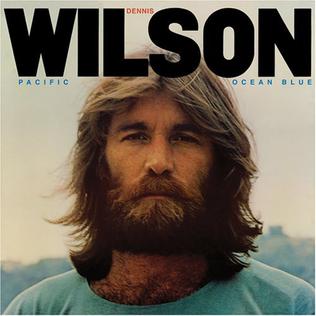
Dennis Wilson-PACIFIC OCEAN BLUE (1977, 2008 2xCD reissue)


When Dennis Wilson's solo debut, Pacific Ocean Blue, was released on James Guercio's CBS-distributed Caribou Records in 1977, few had high expectations for it. Dennis' brother Brian Wilson was, after all, the acknowledged genius and mastermind of the Beach Boys sound and his other brother Carl Wilson had the voice, so little was expected of Dennis, the pretty boy drummer and near-professional party animal. But Pacific Ocean Blue was a gorgeous masterpiece, full of a naked and affirming spirit, romantic (in the best sense of the word), lush, wise, patient, and even panoramic, almost avant-garde, and worlds past and beyond what any of the other Beach Boys were doing at the time. It was also, perhaps not surprisingly, a resounding commercial flop, although the critical reaction to the album was strong and positive. Wilson began work on a follow-up, tentatively entitled Bambu, mixing in some new New Orleans and Caribbean elements, but the project was never finished and by the time of Wilson's death in 1983, Bambu had been sitting untouched and unfinished for nearly five years. Boots taken from LP copies of Pacific Ocean Blue and leaked tapes of the Bambu material have been bouncing around among collectors ever since and Wilson's solo work has taken on the allure and status of lost treasure.


This wonderful two-disc set features a carefully restored and remastered version of the Pacific Ocean Blue LP and collects the remnants of Bambu along with other Wilson solo odds and ends to make a convincing case for Dennis Wilson as the other bona fide musical genius in the Beach Boys. It's difficult to describe Wilson's sound on these tracks, although "California gospel soul" might fit, since Wilson's raspy, wounded vocals carry more naked emotion and feeling than any of the other Beach Boys vocalists, even if Carl (and sometimes Brian) could sing like an angel. Dennis could sing like an angel, too, but an earthbound one who lost his wings yet never lost his love of the spiritual and romantic in the world. Highlights from this gorgeous, fascinating set include the majestic "River Song"; a chilling version of Carli Munoz's "It's Not Too Late"; the hauntingly tentative "Thoughts of You"; the personal, intimate, and self-autobiographical "He's a Bum"; and the two versions of "Holy Man," the first a beautiful, charming instrumental and the second, which closes things out here, featuring a newly recorded lead vocal from Foo Fighters drummer Taylor Hawkins. Beautiful, sprawling, peaceful, wise, and as tenderly romantic as the world is round, these Dennis Wilson gems are as revelatory as they are stunning. Dennis Wilson was a man in love with life, a man in love with love, and as this essential package shows, he had an achingly personal vision for it all.

by Steve Leggett, allmusic.com

DOWNLOAD:
DISC 1
DISC 2
V0 MP3

Wednesday, June 11, 2008

The Who-ODD & SODS (1974, 1998 remaster)


"Greatest hits albums are for housewives and little girls."
-Bruce McCulloch

Just so you know where I'm coming from, I'm gonna let you in on something: there is no denying the majesty of the Who. Don't even try, Slick. While they were together, Roger Daltrey, Pete Townshend, John Entwhistle, and Keith Moon were the working class Zeppelin with just as much (if not more) fury. After they broke up, they were "Quicksilver Lightning", tinnitus, invisible solo artist, and dead, respectively. Gloriously, we still have MCA Records treating us nice with all these boffo Who reissues. Odds and Sods is the anamoly in this rock and roll universe: it's the b-sides and rarities album that's more fun than the greatest hits album. If that's not enough, this reissue has nine bonus tracks. That's right. Nine.

The tunes run through the usual hoops of a b-sides set: covers (Eddie Cochran's "Summertime Blues," Stones' "Under My Thumb"), early versions of future classics ("Love Ain't For Keeping," "Pure and Easy"), a song recorded for an anti- smoking public service announcement ("Little Billy"), and a zany Entwhistle tune or two (my personal favorite being "Postcard," sort of like a weird cross between "Yellow Submarine" and a soul band on a smoke break.) It's all done up in Who-y goodness and served up with amazingly pristine sound quality, making it probably the best rock and roll reissue since Iggy and the Stooges' 1997 mix of Raw Power. You're a cretin if you miss the bus down to the record store to buy this puppy.

-Jason Josephes, pitchforkmedia.com

DOWNLOAD:
The Who-ODD & SODS (1974, 1998 remaster)
320kbps MP3

Aphex Twin-SELECTED AMBIENT WORKS '85-92 (1993, 2008 remaster)


Stop me if this gets sappy. And it might. Because Selected Ambient Works 85-92-- recently reissued by PIAS America-- was the very first electronic music I ever bought, and certainly the first I ever heard over and over again. Long ago, before I was old enough to drive, I would sit in a small, cluttered bedroom in my parents' suburban ranch house, absorbed for hours by the sounds contained on this disc. The creeping basslines, the constantly mutating drum patterns, the synth tones which moved with all the grace and fluidity of a professional dancer, the strange noises that I'd be unable to identify even if I tried. Back then, Aphex Twin was making music like nothing I'd ever heard before.

What's become apparent since is that I probably wasn't the only one affected. After the disappointing Drukqs, it's easy to forget that, back in the Warp Records heyday, Richard D. James was to this new breed of ambient and electronic music what Babe Ruth was to baseball. Sure, there were upstarts; U-Ziq, Squarepusher and Autechre were all on the scene by the time this collection hit shelves. But James was still the posterboy, the presumed ringmaster, single-handedly defining a style of music in the minds of many. Now, as a new wave of mostly twenty-somethings step to the forefront of IDM, redefining electronic music for the third time in a decade, it becomes more and more obvious just how far reaching James' influence was.

There's nothing new about this re-release, aside from improved availability and decreased cost. But then, improving on this package would be near impossible. Sure, the music on Selected Ambient Works 85-92 may sound a bit dated (as does, to be fair, most electronic music more than a few years old), but there's no denying it was the defining statement of Warp's early years, and the foundation for the careers of bands like Boards of Canada and Plaid.

The songs here are not ambient in the same way as those on this disc's sequel. Technically, most fall into Brian Eno's broad definition of the style-- it can be appreciated in small segments just as much as in its entirety. The music develops slowly, unafraid to linger on a particularly effective sound for as long as necessary-- the creeping keyboard loop of "Schottkey 7th Path," for example, is continually modified throughout the course of the song, but never once eliminated from the mix-- but James would never be content as a mere follower in anyone's footsteps. His work here serves a model for what would come to be known as traditional IDM. A simpler version of the style we've grown accustomed to, certainly, but IDM nonetheless.


James' early work is heavily indebted to early dance music, filled with beats so eminently danceable as to confuse those who only know him from the spastic drum patterns that came later. There's little of that here, though. Selected Ambient Works 85-92 is, rather, an album stretching back to the days before software allowed for heavy sampling or glitch technology. Drum machines serve as its backbone and synthesized bass and keyboard sounds provide the meat. Most of the songs follow a relatively basic formula as well. One element-- say, a synth melody-- is introduced and repeated, and as new elements are added with each go round, the song gradually builds to a dense, multi-layered swirl. This Ravel-esque approach flavors much of James' older material, and yet, despite the simplicity of his equipment and approach, the songs here are both interesting and varied, ranging from the dancefloor-friendly beats of "Pulsewidth" to the industrial clanks and whirs of "Green Calx."

Indeed, these early works do a fine job of showcasing James' ability to transform even the most seemingly mundane patterns into something unique and interesting. "Hedphelym," for instance, is built around a relentless headache-throb cliche of a house beat. But James surrounds the pulsation with an ethereal feedback that bleeds all over the track, leaving the percussion awash in a murky solution of synth tones, pairing dance music with ambience in ways the Orb never dreamed possible.

Slightly more structured (and equally enjoyable) is "We are the Music Makers," a track which follows a drumbeat and a bassline past a pair of intertwined synth loops and a repeated Willy Wonka vocal sample as simple keyboard melodies pour down from overhead. But the aforementioned "Green Calx" is the closest Selected Ambient Works 85-92 comes to the spastic trickery of which James would become such a pioneer. It matches pitchshifted tones and drum machines with a burbling bassline, assorted machine-gun synth interjections, the slightly effected tones of various pistons, motors, and machines, and even the occasional cartoon spring noise. Moments like these serve to foreshadow both James' later work, as well as the infinitely more complex twists and turns that IDM would make in the years that would follow.

They say next to no one heard the Velvet Underground's first album when it was released, but everyone who did went on to start a band. Listening to Selected Ambient Works 85-92, one can't help but imagine the seeds being planted in the imaginations of the lucky few who were there when it all began. Nestled in these simple, undeniably danceable tracks are the roots of contemporary IDM. And despite its somewhat primitive origins, the final product remains among the most interesting ever created with a keyboard and a computer.

-David M. Pecoraro, pitchforkmedia.com

DOWNLOAD:
Aphex Twin-SELECTED AMBIENT WORKS '85-92 (1993, 2008 remaster)
320kbps MP3

Saturday, June 7, 2008

David Bowie-THE MAN WHO SOLD THE WORLD (1970)


This album tends to get lost in the amazing run of perfect albums Bowie did from 1970-80. It's great. Sabbath-heavy arrangements by the oft-undercredited lead guitarist Mick Ronson. He's also the guy that did all the arrangements for Lou Reed's TRANSFORMER album and most Bowie from 1970-73. -Ian

Even though it contained no hits, The Man Who Sold the World, for most intents and purposes, is the beginning of David Bowie's classic period. Working with guitarist Mick Ronson and producer Tony Visconti for the first time, Bowie developed a tight, twisted heavy guitar rock that appears simple on the surface but sounds more gnarled upon each listen. The mix is off-center, with the fuzz-bass dominating the compressed, razor-thin guitars and Bowie's strangled, affected voice.


The sound of The Man Who Sold the World is odd, but the music is bizarre itself, with Bowie's bizarre, paranoid futuristic tales melded to Ronson's riffing and the band's relentless attack. Musically, there isn't much innovation on The Man Who Sold the World -- it is almost all hard blues-rock or psychedelic folk-rock -- but there's an unsettling edge to the band's performance, which makes the record one of Bowie's best albums. [Rykodisc's 1990 CD reissue includes four bonus tracks, including the previously unreleased "Lightning Frightening," and the single "Holy Holy," and both sides of the 1971 "Arnold Corns" single, "Moonage Daydream" and "Hang On to Yourself," which are early and inferior versions of songs that would later appear on Ziggy Stardust.]

-Ned Raggett, allmusic.com

DOWNLOAD:
David Bowie-THE MAN WHO SOLD THE WORLD (1970)
320kbps MP3

Michael Rother-KATZENMUSIK (1979)


Katzenmusik marked the third and final collaboration between multi-instrumentalist Michael Rother and producer Conny Planck, as well drummer Jaki Leibezeit, on loan from the group Can. Essentially a suite in two parts, Katzenmusik remains Rother's opus. It's an enchanting, entrancing, swirl of colors and simply pronounced melodies that's at once powerfully majestic and esthetically sublime. Rother's multi-tracked guitars ring from the plaintive to the screaming in the upper registers, layered around four different five-note melodies that recur either as single string statements triple-track or stark chords supporting them. Through it all, in a middling yet even-handed pace, is drummer Jaki Leibezeit, playing his version of the Motorik sound (the one created by Rother and Klaus Dinger in the band Neu! a few years before) in 4/4 time with little to no variation. Rother's re-harmonizing of his original melody throughout the piece in various segments has a mirroring effect over its 37 minutes; it's as if we are taken into the nether-side of his composition and feel its various spaces and textures from all angles.


Still, no matter how deeply wound the composition gets, its theme is very simple, and therefore always draws the listener closer to its euphoric chiming and whispering. Rother could very well have titled this album "Blue Sky Music," because despite the appearance of such on the cover, this music seems to be soaring there all on its own. If we just draw near, his glorious language of emotion and tenderness will carry us along too. Katzenmusik cannot be heard too many times. Artists usually get this close only once in a lifetime. Michael Rother has gotten close to this with many of his albums, but this one is singular in its achievement, a perfect melding of taste, dynamics, pace, melodic invention, and emotional and spiritual honesty, all woven into the spirit of rock & roll.

by Thom Jurek, allmusic.com

DOWNLOAD:
Michael Rother-KATZENMUSIK (1979)
192kbps MP3

Booker T & the MGs-MELTING POT (1971)


Melting Pot could be the most well-realized of all the albums by Booker T. & the M.G.'s, a smooth and soulful, yet expansive 35 minutes of all originals, the latter in sharp contrast to their exploration of the Beatles' Abbey Road album material on their preceding album. And the irony was that it was their swan song. Booker T. Jones, in particular, was increasingly unhappy working at Stax/Volt Records, owing his feelings to management and structural changes at the company, and also felt the need to change the group's formula somewhat. Steve Cropper was playing lots of session work that was keeping him from recording in Memphis as well, and the result was an album recorded mostly in New York City, far away from Stax/Volt and largely built on the group's (especially Jones') best impulses. That said, Melting Pot managed to be a sort of back-to-the-roots effort in the sense that they were back to doing originals, but was also a strikingly more expansive record, with Jones in particular playing with an almost demonic intensity and range, backed ably by Donald "Duck" Dunn's rocksteady bass in particular. There were a few other touches, such as the wordless chorus on "Kinda Easy Like" and extended running times, showing the group stretching out on much larger musical canvases.

by Bruce Eder, allmusic.com

DOWNLOAD:
Booker T & the MGs-MELTING POT (1971)
320kbps MP3

Thursday, June 5, 2008

The Green Arrows-4 TRACK RECORDING SESSION (2006 compilation)


Throw out that VAMPIRE WEEKEND record and listen to this instead, this is the real deal. -Ian

In 1979, Zexie Manatsa, the Green Arrows' mercurial bassist and lead singer, married his longtime girlfriend, Stella, at Zimbabwe's Rufaro Stadium. The ceremony was joyous, and the resulting celebration featured wild dancing, lots of (presumably great) music, and, almost certainly, the copious consumption of wha wha -- that's "beer" in Shona. In many ways it was a normal wedding. Except for one thing: Roughly sixty-thousand people were in attendance.

Such was the local popularity of The Green Arrows in the mid- to late-1970s. According to Samy Ben Redjeb's superb liner notes, the Arrows dominated the hearts, minds and hips of an entire generation of young Zimbabweans. The five-member, three-guitar band released the first-ever LP by a Zimbabwean group, 1976's Chipo Chiroorwa. The previous year, one of its singles went gold -- also a first in the country's history. Another one of the Green Arrows' singles, an absurdly catchy call-and-response number called "Musango Mune Hangaiwa," hit the top of the charts in Zimbabwe and stayed put for seventeen weeks.


And yet, I had never heard of them before, and it's likely that, unless you're a super-devoted Afro-pop fan or lived in Zimbabwe in the '70s, neither have you. Which is why this album is so exciting -- its twenty songs are consistently amusing, exciting, revelatory, even joyous. It's also certainly the most tuneful, pop-friendly African music I've ever heard. Most of the songs are honest-to-gosh verse-chorus-verse pop songs, rather than the extended polyrhythmic groove tracks you're probably used to; believe it or not, although the album's first song, "Mwana Waenda," clocks in at a mere three minutes and nineteen seconds, it's the longest one on the record. This was initially off-putting -- I mean, I really like extended polyrhythmic groove tracks -- and I feared that the album's compilers had wimped out and truncated the songs for a Western audience. I'm reasonably sure that isn't the case. The Arrows just play short because they're a pop band at heart, simple as that.

Like all pop bands, the Green Arrows' stock-in-trade is its danceable, hurry-up exuberance. The varied and massively appealing guitar riffs are on some songs twinkly and ethereal and perfectly arranged, like constellations; on others, they slide lugubriously across the rhythm section, fueled (almost certainly) by copious consumption of wha wha, as well as the wah-wah pedal that the Arrows' producer, West Nkosi, brought back with him from South Africa in 1974. And that aforementioned rhythm section -- the subtle, lean drumming of Raphael Mboweni over top Zexie's subtle, zexual bass work -- is always worth attending.

Like its title suggests, the sound quality of 4-Track Recording Session ain't always the best. Most of the songs were recorded on just two centrally located microphones. But since this music is so universal in its appeal, anyone with at least one good ear will be able to hear it loud and clear.

by Matthew Ozga, prefixmag.com

DOWNLOAD:
The Green Arrows-4 TRACK RECORDING SESSION (2006 compilation)
V0 MP3

Pebbles Trash Box (2004 compilation)


For the life of me, I can't find a decent review of this. This basically the Nuggets collections' freakier, distorted, fuzzed-out older brother. -Ian

If you are interested in finding out more about garage, psych and freakbeat but have hesitated over buying either of the excellent 4 CD 'Nuggets' compilations, the wonderful Past & Present 10 CD 'Rubble' sets or the 13 CD 'Mindrocker' box on the grounds of price, then this 5-star bargain is the one for you.

'Action Woman', 'Psychotic Reaction', 'Five Years Ahead of my Time', 'Green Fuzz', 'Voices Green and Purple', 'I'm a Living Sickness' are all cornerstones of the garage heritage, and you could DJ a very respectable club night using this 5 CD set alone.

Begin your search for the perfect garage scream here - you'll soon know one end of a Farfisa from a Teardrop, and rush out to get a bowl cut, an op art shirt, cuban heeled boots and a pair of wrap-round shades. Dig it!

-Amazon.com

DOWNLOAD:
DISC ONE
DISC TWO
DISC THREE
DISC FOUR
DISC FIVE
320kbps MP3

Sunday, June 1, 2008

Geinoh Yamashirogumi & Yamashiro Shoji-AKIRA OST (1990)


In one of those rare occasions of apt anime marketing in America, Akira Original Soundtrack managed to find its way to U.S. shores as a domestic release. Even more so than the film it originates from, this CD is as much a work of art as it is entertainment. As such there are some who will hail it as a masterpiece, and others who will simply wrinkle their nose and turn on the radio. I fall into the first category, although with some reservations.

This OST is unconventional by any standard. Performed by the Geinoh Yamashirogumi, the music consists mostly of percussion and chanting, along with a few diverse sound effects and - occasionally - more standard instrumentation like an electric guitar. The percussion definitely has an uncontemporary, ethnic sound. Various types of percussion commonly build upon each other persistently into a massive front of sound. As for the chanting, it is unlike anything else I've heard. In "Kaneda" it takes a slightly tribal sound, with the airy, mystical, almost whisperlike early chanting being joined by firmer, louder vocals that approach the level of shouting. Combined with the percussion, memorable melody, and its prominent place in the film, this track is one of the highlights of the CD.


The chanting in "Tetsuo" has an almost childlike quality, both in the nature of the performer's voices and the simplicity of the "lyrics". (In actuality the chanting is not lyrical at all in this track, but is rather a totally unique arrangement of human vocalization.) The childlike nature is contradicted by the sense of danger and sheer power with which it is performed, making for another unforgettable piece of music.

Tracks like Kaneda and Tetsuo leave me in awe of Akira OST's originality and emotional power. However, there are other tracks which, despite their amazing originality and artistic superiority, are just too odd and unmelodic to be desirable for common listening. Borderline tracks include "Battle Against Clown", with its intentionally revolting, exaggerated breathing sound effect, and "Dolls' Polyphony", with its use of bizarre, interweaving vocals that defy description in words. On the extreme side is "Illusion", which begins bearably enough but for the latter eight or so minutes contains almost intolerable "restrained human howling", for lack of a better term (although, to be fair, I believe the sound does have roots in ethnic Asian music).

Akira OST is an amazingly original work of art in its entirety. At its best, it is enrapturing and intense with emotion. At its worst, it is difficult for even more open-minded listeners to tolerate. While the music fits the film superbly, on its own I listen to it only occasionally and rarely in full. However, as a fan of the film and an admirer of the music's unconventionality, I wouldn't be without the CD.

by Adam Corn, soundtrackcentral.com

DOWNLOAD
Geinoh Yamashirogumi & Yamashiro Shoji-AKIRA OST (1990)
320kbps MP3