Speedy West, pedal steel master, and Jimmy Bryant the guitar wizard teamed up for these astonishing recordings and gave to posterity some of the most mind-annihilating music ever committed to tape.
Transcending all notions of genre (Western Swing, Rockabilly, Old Country) these two guys are masters if there ever was a use for such a term. As fast as Fanfare Ciocarlia, as precise as U. Srinivas, and as fun-loving, unpredictable and ridiculous as Perrey & Kingsley, you're not accustomed to hearing American musicians excel like this. Because they're all dead. But these 1951 recordings provide proof that once upon a time giants walked the earth, even here in Hell. There is nothing to compare this to. No overdubbing or studio-fuckery, there's no way this is possible. Yet there it is. And they're just laughing about it. They just shit these recordings out as a joke pretty much. How horrifying. The chemistry between these guys is priceless, and that alone obsoletes "shredding" in the current sense of so-called musicianship. Because the magic touch is there in every note — it's not just fast, it's supersonic, and yet unlike modern day speed demonism, it's totally listenable. Every note is arrived at through musical mastery.
Nowhere does anything sound calculated; there's spontaneity written all over these tracks. And even though it's lighthearted, it's still deeper than most of us can even imagine — like going to the house of some classical Indian masters and after dinner they break out the instruments to screw around just for laughs. Only these masters are white guys in Tennessee or something. Truth told, you'll return to this again and again. We heard this shit in a gas station in Texas once, so it's still appreciated and well loved & not just some "novelty" to a lot of people, which is sure nice to know.
But get ready to cry from laughing too hard. You can forget ever playing the guitar again...
Consider this a necessary companion piece to Rampautrouille:
During the 70s, socialist equivalents to Western Germany’s science-fiction series "Raumpatrouille Orion" or "Star Maidens" have seen the light of space. Now for the first time films like "Eolomea", "Signals" and "Stardust" are featured on this present album. The highlights from their original scores -spiced by exquisite titles from a long gone & obscure Amiga tribute to Sigmund Jaehn, the first German in Kosmos!(...) can be found here. Enjoy soundtrack-world-premieres featuring spacy music by the well-known composers Karl-Ernst Sasse & Guenther Fischer plus Amiga 1969 hit single "Kosmos" plus lots of dialogue highlights and sound effects! With the CD comes an additional medley of former GDR pioneer-hymns and more dialogue parts.
Believe it or not - the communists liked space-operas, too. Of course: The eastern bloc created milestones in science-fiction like the novels of Stanislaw Lem or the films by Andrej Tarkowskii ("Stalker", "Solaris") which – not at last – were responsible for the boom of this genre. But who knows about the DEFA-equivalents of Hollywood’s more entertaining sci-fi series or Western German tv-serials like "Star Maidens”? Well, here we go: This is exactly what "Kosmos!” is about!
Despite being determined anti-capitalistic, the DEFA science-fiction movies also (carefully) criticized the so called "real-existing socialism” in the former GDR. In contrast to the more action-orientated productions from outside the eastern bloc, the essence of these films could be summed up in the question of how socialist ideas can be realized in "space-communities” far away from earth.
With Karl-Ernst Sasse and Guenther Fischer (from their scores to the popular DEFA-western movies -> ASM 002 and ASM 008) the two most dominating composers of filmmusic in the GDR are responsible for the extraordinary soundtracks to these movies. Opposite to their western movie scores, their music for the science-fiction movies was pretty different from what you are used to hear in the "capitalistic” science-fiction movie. From strictly-avantgardistic orchestral sounds over electronic experiments to cosmic waltzes, beat guitars and influences of "Krautrock”. Thereby it sometimes sounds so fresh as if it has been produced in some new-electronic sound-laboratory right these days. Somehow strange sound the titles from the Amiga-LP "Die Erde dreht sich linksherum!" featuring e.g Stern-Combo Meißen and the Guenther-Fischer-Quintett.
Brown's early-'70s run of classic singles and good-to-great albums is still impressive. Hell was the double album released a year after the gold selling The Payback. To some, the title might put this effort in the realm of kitsch, but in many ways Hell was one of Brown's strongest albums. The album was the pinnacle of his work as the Minister of the Super New New Heavy Funk. From the tough and nimble Latin rhythms of "Coldblooded," and "Sayin' It and Doin' It" to the title track, all are prime pre-disco Brown. "My Thang" is probably as hard and unrelenting as he got without spontaneously combusting.
The biggest surprise of Hell is that no matter how odd the song choices seemed, practically everything worked, excluding a few key songs of course. Both "When the Saints Go Marching In" and "Stormy Monday" don't belong in James Brown's catalogue, let alone the same album. Ballad-wise, Brown fares better. "These Foolish Things Remind Me of You" has him getting all warm and fuzzy as he inexplicably throws in an "I'm hurt, I'm hurt" for good measure. That song, as well as the weepers "A Man Has to Go to the Cross Road Before He Finds Himself" and "Sometime," were produced by David Matthews who could always get good ragged yet poised vocals from Brown. Although Brown did roll snake eyes on all of side three, he did leave Hell on a good note. "Papa Don't Take No Mess" is laid-back, funky jazz that's worth each of its 13-plus minutes. Despite a few detours, Hell is worth listening to.
Aphex Twin's Selected Ambient Works Vol. II is the two-disc follow-up to the import-only Selected Ambient Works 85-92, the album that established the Cornwall, England, native as the pioneer of ambient techno, a musical style that converts the energized electrobeats and keyboard surges of dance-floor techno into slower, more tranquil sound washes.
While many of his disciples have done little more than propel New Age atmospheres into the computer age, producing comforting but often emotionless elevator music, James has used the medium to confront his shadowy demons, exploring realms of spooky, textured sound.
On Vol. II, James turns away from the glut of soulless techno by stripping away its base properties, focusing more intently on mood than on rhythm and melody. Most of the songs rely on eerie synth effects layered within sparsely repeated or sustained notes and blips that pulse like distant stars. Few use beats. Indeed, it's the absence of beats that makes the music so strange and haunting, and when beats do surface, they serve to accent a tone rather than sustain a tempo.
Drawing inspiration from the early ambient work of Brian Eno and the minimalism of John Cage, James has created a riveting, experimental record that demands listener interaction. Each of the 23 untitled songs outline such troubled emotions as melancholy, fear and confusion, but the music is too inchoate to paint a full picture.
Many of the tracks are so subdued that any incidental noises that drift into earshot (car horns, bird song, chatter) become unconsciously integrated into the mix, and the sound effects are so cryptic that like a Rorschach test, interpretations are entirely subjective. With a bit of imagination, the opening song could evoke a gurgling baby on a beach as the tide comes in, while the 22nd track might suggest a broken jack-in-the-box that opens to reveal a hideous, laughing troll.
Surreal, otherworldly and occasionally nightmarish, Selected Ambient Works Vol. II provides a visionary perspective on ambient electronic music. Close your eyes, drift to sleep, start to scream.
by Jon Weiderhorn, Rolling Stone Magazine
DOWNLOAD:
Aphex Twin-SELECTED AMBIENT WORKS VOL. II (1994) DISC 1 DISC 2 320kbps MP3 (includes the track "Stone In Focus" left off the CD version)
Released in January 1977, Low was the most potent and encompassing hybridization of pop music's many modes to that point, an album that continues to resonate as a syncretic masterpiece three decades later.
Still fascinated with the urban funk rhythms he'd employed less subtly for Young Americans and Station to Station, Bowie was increasingly drawn to the synthetic novelties Can, Neu!, and Eno were positing, particularly Eno's Discreet Music, which informs most of Low's second side. This gorgeous quartet of dramatic instrumental pieces started out as the soundtrack for The Man Who Fell to Earth, an 1975 film by Nicholas Roeg starring Bowie, at the apex of his cocaine addiction, as an extraterrestrial Übermensch. Unbelievably, Bowie's compositions were rejected; brought through to Low, they provide a grave emotional counterpoint to the record's self-exploratory A-side, proof positive that Bowie really was out to wipe the mirror clean in Berlin.
The kaleidoscopic opening salvo "Speed of Life" tests our willingness to come along, staring out like Johnny Rotten, but-- crucially-- not caring if anyone follows. "Sound + Vision" and "Breaking Glass" are our most immediate rewards, more familiar in their funk stutter-steps and sultry crooning. The latter owes everything to guitarist Carlos Alomar in the left channel, who delivers the lead with a swagger to rival Mick Ronson and T.Rex. Obstinate, rueful and reckless, the album's first side is a collection of seven short "fragments," whose brevity is at once a knee-jerk reaction to the meandering Station to Station and the end result of a bad case of writer's block.
To correct an injurious and carelessly repeated claim, Brian Eno did not produce Low (or "Heroes" or Lodger). While his presence and influence are uncontestable-- especially in the aching instrumental "A New Career in a New Town"-- producer Tony Visconti and Bowie shaped the analog onslaught heard here. For their fine ears, there's also a principal debt to the Eventide H910 Harmonizer, the first commercially available pitch-shifter, which through doubling lends Low its signature distorted snare drum, one of the most ingenious production advances you can point to in the 1970s, and a sound producers still reach for today.
Brian Eno, Robert Fripp & David Bowie
Politically, Low is a singular and brutal indictment of the only thing Bowie's native England cared about in January 1977: punk rock. To a man who lived through Iggy and-- let's be honest-- designed Johnny Rotten, punk's brief lifespan and predominantly societal (rather than musical) impact were foregone conclusions. That Bowie could see past the flames to paint this horizon is irrefutable evidence of his solipsistic genius. Balancing process art, experimentalism and rock 'n' roll tradition, Low is Bowie unrefined, the most captivating effort from the 1970's most-watched man.
After decades of influencing everyone from jazz musicians to hip-hop stars, Pieces of a Man set a standard for vocal artistry and political awareness that few musicians will ever match. Scott-Heron's unique proto-rap style influenced a generation of hip-hop artists, and nowhere is his style more powerful than on the classic "The Revolution Will Not Be Televised." Even though the media -- the very entity attacked in this song -- has used, reused, and recontextualized the song and its title so many times, its message is so strong that it has become almost impossible to co-opt.
Musically, the track created a formula that modern hip-hop would follow for years to come: bare-bones arrangements featuring pounding basslines and stripped-down drumbeats. Although the song features plenty of outdated references to everything from Spiro Agnew and Jim Webb to The Beverly Hillbillies, the force of Scott-Heron's well-directed anger makes the song timeless. More than just a spoken word poet, Scott-Heron was also a uniquely gifted vocalist. On tracks like the reflective "I Think I'll Call It Morning" and the title track, Scott-Heron's voice is complemented perfectly by the soulful keyboards of Brian Jackson. On "Lady Day and John Coltrane," he not only celebrates jazz legends of the past in his words but in his vocal performance, one that is filled with enough soul and innovation to make Coltrane and Billie Holiday nod their heads in approval. More than three decades after its release, Pieces of a Man is just as -- if not more -- powerful and influential today as it was the day it was released.
Gilberto Passos Gil Moreira (born June 26, 1942 in Salvador, Bahia, Brazil), better known as Gilberto Gil, is a Grammy Award-winning singer, guitarist, songwriter, and the current Brazilian Minister of Culture. Gil has held the post of Minister since 2003, although he has declared his intention to resign in 2008 due to a vocal cord polyp.[1] He began his performance career as a bossa nova musician, but soon began writing songs that reflected a new focus on political awareness and social activism, becoming part of the Música Popular Brasileira movement with artists including Caetano Veloso, a longtime collaborator.
Born in Salvador, he began playing music early in life and joined his first band as a teenager in the 1950s. After meeting Caetano Veloso in 1963 Gil began performing and touring regularly, but earned his living at the time primarily through non-musical pursuits. He joined Veloso regularly in performances and recordings and became a major figure in the 1960s Tropicalismo movement with him. However Gil was eventually imprisoned by the Brazilian military government of the time, along with Veloso. The two moved to London, England in the late 1960s after being instructed to leave the country of Brazil.
Gil eventually returned to Bahia in 1972 and continued his musical career, as well as working as an advocate for environmental issues. In the following years, Gil made over 20 recordings and toured constantly. During the late 1980s he ran for public office in Salvador and Bahia at large, becoming mayor of his home city, but left office to further his career in music. Gil returned to politics in 2003, however, when he was appointed Minister of Culture by the newly elected President of Brazil Luiz Inácio Lula da Silva.
Gilberto Gil's second album is packed with some of the best songs of his career -- jubilant pop extravaganzas like "Domingo No Parque," "Pega a Voga, Cabeludo," and "Frevo Rasgado" that were equally inspired by the irresistible, brassy bombast of Carnaval and intelligent rock & roll from America and Britain. Even more than the other Tropicalistas, though, Gil blends his rock and native influences seamlessly, resulting in songs like "Ele Falava Nisso Todo Dia," which chart an intriguing fusion of Brazilian and British Invasion (before he breaks into Portuguese for the first verse, the intro sounds exactly like a few early Rolling Stones productions). Gil's occasional backing band, the teenage Tropicalia breakouts known as Os Mutantes, join in on the feel-good Brazilian pop anthem "Domingou." Enjoyable and never as experimental as his work would soon become, Gilberto Gil 1968 is one of the best Tropicalia albums ever released.
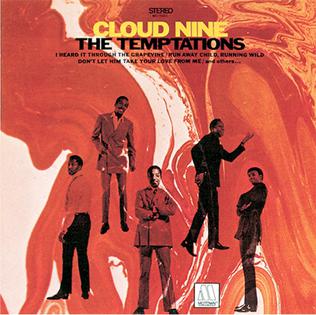
Best known for their silky soul vocals and smooth-stepping routines, the Temptations were firmly entrenched as the undisputed kings of Barry Gordy's Motown stable when cutting-edge producer Norman Whitfield walked into the studio and announced that it was time to shake things up. The resulting freakout became the first half of the stellar Cloud Nine, an album that would become one of the defining early funk sets, with songs that not only took Motown in a new direction, but helped to shape a genre as well. On one side and across three jams, Whitfield and the Temptations would give '70s-era funk musicians a broad palette from which to draw inspiration. The title track, with its funky soul bordering on psychedelic frenzy, was an audacious album opener, and surely gave older fans a moment's pause. Only two more songs rounded out side one: an incredibly fresh take on "I Heard It Through the Grapevine," which jazzed up the vocals, brought compelling percussion to the fore, and relegated the piano well into the wings, and "Run Away Child, Running Wild," an extravagant nine-minute groove where the sonics easily surpassed the vocals.
After shaking up the record-buying public with these three masterpieces, the Temptations brought things back to form for side two. Here, their gorgeous vocals dominated slick arrangements across seven tracks which included "Hey Girl" and the masterful "I Need Your Lovin'." Funk continued to percolate -- albeit subtly -- but compared to side one, it was Temptations business as usual. It was this return to the classic sound, however, which ultimately gave Cloud Nine its odd dynamic. The dichotomy of form between old and new between sides doesn't allow for a continuous gel. But the brash experimentation away from traditional Motown on the three seminal tracks which open the disc shattered the doorway between past and present as surely as the decade itself imploded and smooth soul gave way to blistering funk.
What spectral force, illusion, or trick of light has fooled so many erstwhile critics into apologizing for Robert Pollard over these long years since the broadly accepted twilight of Guided by Voices' reign over the (very nearly) barren kingdom of indie rock as we now know it? The sum of all the criticism heaped on GBV for years (excepting Do the Collapse-- universally agreed upon as the absolute nadir of the band's catalog), all the way back to Mag Earwhig!, has amounted to barely more than a weak-kneed "wait 'til next year." And we waited, and some of us are still waiting, while others have simply given up; critics have been crying wolf for years, so who can really blame folks for finally losing faith?
So how did he do it? Critics, notoriously, are jackals, trying, always trying, to thin the herd, to cull the sick and dying at the first sign of weakness; Pollard, it would seem, has been staggering around on his last legs for three or four not-so-hot-to-lukewarm albums (if that sounds like revisionist history, it's only 'cause history was wrong in the first place). And yet he still lives! How? His only defense, I now submit to you: pure enthusiasm, a forever-young charm; I can see no other explanation. There have been plenty of unlikely rock heroes, but after fifteen (!) albums, only Robert Pollard still sounds, for all the highs and lows, like an ex-schoolteacher trying to live the dreams of his idols, still trying to grow into Pete Townshend's arena-sized shoes. Deep down, I firmly believe, even Pollard's critics want him to succeed, or at least would rather forget him than be forced to say he failed.
By now, you've seen the ratings (go on, look) and if even the expectation of the phrase "better than the last few GBV albums" stirs only cynicism within your jaded insides, it might just be the case that you're in healthy working order. As a reformed Robert Pollard apologist, I will not ask you to see the promise of better things to come from here or wait 'til next year; I'll go one better: Earthquake Glue meets any GBV album that isn't named Bee Thousand or Alien Lanes. It sounds improbable, but all I'm asking you to believe is that Bob's year to finally make good on any incubating potential he's shown since the halcyon days of Tobin Sprout has finally arrived. A "Guided by Voices album" has meant too much, for too long, to too many (and if you need reasons, I just mentioned both of them), but this isn't a normal GBV album. This is Bob Pollard at his most direct, most natural, and finally ready to shake the stadiums down to their very foundations.
It's no secret that Bob Pollard's Who-caliber aspirations have been leaking into his work way back since he had a devil between his toes-- you can hear Roger Daltrey turning green with every swelling power chord of "Wished I Was a Giant" and earlier. He's masked it for a long time with whimsically beautiful lyrics, lo-fi production, and generally keeping the guitar windmilling to a minimum on soft-spoken classics like "Goldheart Mountaintop Queen Directory", but it's been fully silenced. It hardly needs to be said, but when folks describe you in terms like "whimsical," like a Dr.Seuss character-cum-pop superstar (the main character in Robert Hears The Who), filling Madison Square Garden ain't gonna be easy, probably impossible. But steadily, Bob's realized this and begun shedding the belovedly quirky trappings of his past; what's felt like "falling off" for so long was really gradual metamorphosis into a different beast entirely.
Earthquake Glue differs from any past incarnation of GBV; the anthems here are realized to the fullest height of their earthly majesty, with no real pretense of the muddy indie aesthetic GBV helped to usher in out of sheer fiscal necessity more than a decade ago. This is not the shiny, breezy pop rock and crunch of Isolation Drills; "I'll Replace You with Machines", "Beat Your Wings", "Apology in Advance"-- these are smoke machines, strobe lights, and pyrotechnics. And Bob, with his vaguely raspy, vaguely British lilt, sits center stage, twirling his microphone, pumping his fist with the practiced air of a rock star who truly has "been around the block," and in a nod to his various ups and downs, "even threw up one street over." He "keeps searching, turning on, equally frustrated," but without any hint of self-conscious indie antics, maybe no longer; whether brooding on the shiftless, railcar blues of "Dirty Water" or transcendent on "Dead Cloud", Pollard never struggles to find powerful vocal hooks. It finally seems effortless.
Even more surprisingly, it doesn't sound like it's just Bob's show anymore; GBV is no longer a euphemism for "Robert Pollard and his faceless, rotating cast of backing musicians"-- these guys actually sound like an honest-to-god-swear-on-some-bibles band. There's actual, intangible chemistry between Doug Gillard and Nate Farley's explosive chords and Kevin March's cymbal washes. Most importantly, Tim Tobias gives Pollard something he's lacked since Alien Lanes: a memorable bass melody that isn't devoured by jangling guitars. Think back to "Echoes Myron" or "My Valuable Hunting Knife" and it's easy to recognize how necessary those basslines are; for exactly one track, Tim Tobias almost single-handedly revives the old magic.
"The Best of Jill Hives" is a GBV classic by any measure, new or old, and, like the best of Pollard's lyrical work, is made even more meaningful by avoiding his effective, but impenetrable, stream-of-consciousness. "I know where you get your nerve/ I know how you choose your word," he calls out, and like the wounded beauty of "Game of Pricks", it doesn't sound like a clever fiction, but like something that happened between real people. It's a single, brilliant, bittersweet concession; contrast that "old" sound with the sheen of "Useless Inventions".
Some may mourn the change, but I contend that in its own way, "Inventions" is equally classic. Endlessly catchy, as tight and triumphant as anything Pollard has ever done, this song epitomizes the unfettered, imaginative re-invention of GBV, immersed in the hard rock tropes Pollard has until now only toyed with. Side by side (nearly), it's clear that GBV has subtly crossed over into truly uncharted (though nearby) territory; after playing into the same well-worn channels they've run for years, there's no more fuzz, no more elf-kicking to conceal Pollard's hard-rock dreams; as such, Earthquake Glue never languishes in the awkward lows that seem to plague almost everything else he's done.
In the end, it's fitting that the idea of soldiers and warriors recurs throughout the skewed landscape; GBV has been dumbcharging at the music industry for fifteen years, and Pollard and all his various lineups have the battle scars to prove it. In some ways, it's a shame that in order to revitalize the idea of GBV as a band it seems to have meant abandoning the very facets that made GBV a household name around only the hippest households so long ago, and that could be the deepest wound of all. But Pollard's perseverance has shown him to be a hell of a soldier, and if that cut still stings, he's not letting on. In fact, closer to the end of the battle now than the beginning, he and Guided by Voices still might be a long way from filling stadiums, but they're not going down without a fight.
A product of the tightknit Bronx underground posse D.I.T.C., Runaway Slave is a cornerstone album of hip-hop's middle school phase. Building on and borrowing from the layered, jazz-influenced sound of such contemporaries as Gang Starr and Pete Rock & C.L. Smooth, Showbiz & A.G. affixed a gangster mentality to grainy, fortified beats, etching their own unique style. While the crossover "Soul Clap" and "Party Groove" are club cuts, the rest of the album is more densely expressive. Showbiz and his talented peer Diamond shape their beats around simple, deep drum tracks -- but add subtle loops of chaotic horns, loose strings, or abrupt piano notes to create concise and hard-hitting overtures.
Tasteful flute swatches light up "Silence of the Lambs," an ear-ringing saxophone buzzes on "Still Diggin'," and the motor mouthed late legend Big L introduced himself on the classic down-the-line jam "Represent," pulling such punchlines as "MCs be braggin' about cash they collect/But them chumps is like Ray Charles 'cause they ain't seen no money yet." The young A.G. (aka Andre the Giant) flows effortlessly throughout this album, an MC whose skill and unique voice would only mature in the future. While some of the import of this album is muted by modern-day technological sound booth advancements, Showbiz & A.G. did it raw and undiluted and the resulting sound was fresh, innovative, and most of all satisfying for hip-hop heads.
A collection of all of Pavement's low-fidelity early singles and EPs, which feature considerably less melody than Slanted and Enchanted. It's nice to have this rare material on one CD, although the music is defiantly anti-CD. Those who boarded the train with the acclaimed Slanted and Enchanted should catch up on what they've missed.
This 1993 disc compiles all of Pavement’s pre- Slanted & Enchanted seven inches and EPs, including "Slay Tracks", "Demolition Plot J-7", "Perfect Sound Forever", and "Summer Babe", plus a couple of compilation tracks from their earliest stages. This is Pavement in all their dissonant, embryonic fury. Noisier than Slanted, more obtuse than Wowee Zowee, these long-out-of-print discs were a veritable hipster haven, until the world got to hear them, that is. Then they were just pretentious.
The moral: hipsters suck, Pavement rule. Take heed, kids, fuck The Fall, buy American.
After a stint learning the dub craft from innovator King Tubby in the late '70s, Scientist began mixing his own sessions, coming up with a more wide-ranging and effects-riddled sound than that of his mentor. One of a handful of choice Scientist albums on the Greensleeves label, Rids the World of the Curse of the Vampires (1981) not only ably displays the mix masters varied approach, but clocks in as one of his best outings. While Scientist heeds Tubby's minimalist call with "strictly drum and bass" cuts like "Night of the Living Dead" -- spotlighting tightly wound guitar and organ chords for body -- he also expands things with a sunny mix of horns and bubbly keyboards on "The Mummy's Shroud" (as hard as it is to imagine sunshine with a ghoulish title such as this).
Even without horns, Scientist keeps things lively with plenty of reverb and echo-treated percussion, ghostly piano parts, video game sound effects, and other various wobbly interjections from the mixing board. Pointing to his originality, Scientist doesn't just apply a few tweaks here and there, but heavily reworks the basic tracks -- here laid down by the fine Roots Radics band and produced by Henry "Junjo" Lawes (Don Carlos, Frankie Paul) -- then deftly integrates his panoply of effects into the cut-up mix.
And adding to the record's expert evocation of the Halloween spirit are some fiendishly voiced intros, the cover art's cartoon potpourri of horror film characters, and the dubious claim made in the liner notes that Scientist mixed it all at midnight on Friday the 13th (reach for the flashlights kids). Along with Keith Hundson's Pick a Dub and Lee Perry's Blackboard Jungle Dub, this excellent Scientist release is one of the essential dub albums available.
The blitzing "Pimp My Pyramid" scheme. The pulsing honeycomb. The tiny metal heads bobbing up and down. The Lite-Brite leather jacket reveal. The dude in front of me who wouldn't let a pair of crutches stop him from dancing as if the apocalypse were mere minutes away. The sensual explosion that was Daft Punk's Alive 2007 show is difficult to overstate-- or reproduce. Even with the biggest, flattest, sharpest HD set-up, there's no way to sufficiently recreate the most exuberant LED-laden music blowout ever staged. So Daft Punk didn't even try: There will be no Alive 2007 DVD.
Commenting on the decision, Daft Punk's Thomas Bangalter recently told Pitchfork, "The thousands of clips on the internet are better to us than any DVD that could have been released." And, in many ways, the Alive tour is a perfect match for YouTube-- the ancient Egypt by-way-of "The Jetsons" spectacle barrelling its way through shitty compression quality with blinding force. But still, even the most hectic web clip can't equal the French duo's visceral sound-and-vision assault, so the focus of Alive 2007 falls on the reason why Daft Punk were allowed to lug 11 tons of equipment around the world for the last 19 months in the first place: their music. Playing like a flawlessly sequenced and paced greatest hits album, this full-set Paris recording from June finds Bangalter and Guy-Manuel de Homem-Christo connecting the booms among their three albums while officially cementing one of the year's most rewarding and welcomed comebacks.
Lest we forget, before the out-of-nowhere debut of the now-iconic 3D triangle in April 2006, it seemed like Daft Punk lost the plot. The monster riffage and mind-numbing gloom of 2005's Human After All had our favorite party-starters turning downright nihilistic. And early screenings of their art-house opus, Electroma, evoked (unfortunately accurate) comparisons to Vincent Gallo's on-the-road/oral sex epic Brown Bunny (except with endless scenes of hunk-o-metal ennui filling in for the graphic oral sex). After the shattering pop breakthrough of 2001's Discovery, Daft Punk were going through an especially angsty adolescence-- their spit-shined heads way up their own asses. But then, amped-up with enough electricity to illuminate a black hole, French house's masked men upstaged Madonna, previous electronic pioneers Depeche Mode, and (ironically) Kanye West at 2006's Coachella. And now, they're everywhere (except Gap ads, thankfully)-- getting sampled on no. 1 hip-hop songs, filling magazine spreads, spawning worthy would-be successors and, of course, owning the internet (on Flickr, Daft Punk photos currently outnumber Justin Timberlake snaps 2:1). With a bounty of latent good will on their side thanks to the incredible re-playability of their first two albums, Daft Punk finally gave fans a million flashing reasons to fall in love with them all over again.
One of the most remarkable aspects of Alive 2007 is how well it recontextualizes career nadir Human After All, turning previously leaden songs into ebullient rock'n'roll manifestos; injected with Homework's air-tight Moroder-style anthems or Discovery's flamboyant funk, Human After All tracks are constantly improved and born anew. The live set doesn't simply run through the hits, mindlessly segueing from one smash to another. Instead, well-worn favorites are glued together, cut-up and mashed into pieces. The titular refrains of "Television Rules the Nation" and "Around the World" combine to form the globe's most dance-friendly TV station theme song before the Black Sabbath crunch of "Television" is sent down upon the impossibly buoyant "Crescendolls", resulting in the disc's most unlikely-yet-spectacular roller coaster peak. Meanwhile, the creepy hiss of "Steam Machine" is atomized and given space-age dynamics, turning it from a oddball bore into a fist-pumping celebration of the industrial age. Wisely, the duo also know when to let the bass be, allowing large portions of unfuckwithable classics like "Da Funk" and "Burnin'" to work their magic with little robo-meddling. Even without video, Alive 2007 is an exercise in exacting excess, from the blaring "Robot Rock" intro to a wide-eyed power-booster of a encore that layers "One More Time" atop "Music Sounds Better With You"-- a combination so "holy shit" ecstatic it would seem downright cocky if it wasn't so blissful.
Talking about the relationship between artist and audience, Bangalter told Paper, "Robots don't make people feel like there's an idol on stage. It's more like a rave party where the DJ isn't important. We are two robots in this pyramid with this light show, but everything is [meant] for you to have fun and enjoy yourself." He's absolutely right about the "have fun and enjoy yourself" bit, but the Alive tour separated itself from the millions of DJ parties before it by drawing attention to a fixed point while incorporating everything from KISS-esque pomp to Space Invaders retro-future shock. The results were massive-- the myriad "best show ever" kudos deserved. And, just as they hold back their identities at every chance, it makes sense for Daft Punk to hold back the Alive visuals; when more and more mystery is constantly being sucked out of popular music thanks to the insatiable hunger for fresh product and up-to-the-nanosecond information, the duo aren't about to release an imagination-stifling DVD filled with behind-the-scenes tour bus inanity. It's a noble choice, especially when the consolation prize happens to be the Ultimate Daft Punk Mixtape.
Of the countless New Jersey bands to emerge from the New York City underground during the post-punk era, few if any were as unique and influential as the Feelies; nerdy, nervous, and noisy, even decades later their droning, skittering avant-garde pop remains a key touchstone of the American indie music scene. Named in reference to Aldous Huxley's paranoid classic Brave New World, the Feelies formed in 1976 in suburban Haledon, NJ, where singers/guitarists Bill Million and Glenn Mercer first met while in high school; bassist John J. and drummer Dave Weckerman rounded out the original lineup, although they were replaced in 1977 by bassist Keith Clayton and drummer Vinny Denunzio. The revamped group soon made its N.Y.C. debut, quickly creating a buzz throughout the city's new wave circuit -- a Village Voice headline even dubbed them "The Best Underground Band in New York."
Drummer Anton Fier replaced Denunzio in 1978, and a year later the Feelies cut their debut single, "Fa Ce-La," for the British indie Rough Trade. Their refusal to work with outside producers jeopardized their immediate hopes for a major-label deal, however, and so their brilliant 1980 LP, Crazy Rhythms, instead appeared on another U.K. indie, Stiff; the record's manic melodies, jittery rhythms, and opaque lyrics made it a huge critical favorite, and although it made little impact outside of underground circles, many latter-day acts -- R.E.M. chief among them -- cited the album as a major influence. Still, Crazy Rhythms' commercial failure sat badly with Stiff, which began pressuring the Feelies to produce a hit single; the pressure ultimately forced the group into a kind of suspended animation, with Fier soon exiting to join the Lounge Lizards and later mounting the Golden Palominos.
Deep Fascination
With the Feelies out of action for the better part of the early '80s, the remaining members turned their focus to a variety of side projects -- in 1982, Million and Mercer reunited to compose the score to Susan Seidelman's film Smithereens, concurrently playing in a series of Jersey-area bands including Weckerman's new outfit Yung Wu, the Trypes (which issued the 1984 EP The Explorers Hold), and the instrumental Willies. Finally, Million and Mercer reactivated the Feelies banner in 1983, reuniting with Weckerman as well as two of their Willies bandmates, percussionist Stanley Demeski and bassist Brenda Sauter; still, the revitalized group's performance schedule was sporadic at best, limited primarily to holiday appearances. Finally, they entered the studio with producer Peter Buck of R.E.M., releasing the folky The Good Earth on Coyote in 1986.
That same year, the Feelies appeared in director Jonathan Demme's film hit Something Wild; combined with critical praise for The Good Earth, the group's raised media visibility caught the attention of A&M, which released the follow-up, Only Life, in 1988. Time for a Witness followed in 1991, but on July 5 of that year the Feelies played their final show at the Hoboken club Maxwell's -- soon after Million unexpectedly moved to Florida without telling any of his bandmates, not even leaving a forwarding address. In the months to follow Demeski began playing in Luna, Sauter worked with Speed the Plough and Wild Carnation, and Mercer and Weckerman re-teamed in Wake Ooloo; when that band fell apart in 1998 after three LPs for the Pravda label, the duo again joined forces to form another new unit, Sunburst.
Even the cover is a winner, with a washed-out look that screams new wave via horn-rimmed glasses, even more so than contemporaneous pictures of either Elvis Costello or the Embarrassment. But if it was all look and no brain, Crazy Rhythms would long ago have been dismissed as an early-'80s relic. That's exactly what this album is not, right from the soft, haunting hints of percussion that preface the suddenly energetic jump of the appropriately titled "The Boy With the Perpetual Nervousness." From there the band delivers seven more originals plus a striking cover of the Beatles' "Everybody's Got Something to Hide" that rips along even more quickly than the original. The guitar team of Mercer and Million smokes throughout, whether it's soft, rhythmic chiming with a mysterious, distanced air or blasting, angular solos. But Fier is the band's secret weapon, able to play straight-up beats but aiming at a rumbling, strange punch that updates Velvet Underground/Krautrock trance into giddier realms. Mercer's obvious Lou Reed vocal inflections make the VU roots even clearer, but even at this stage of the game there's something fresh about the work the quartet does, even 20 years on -- a good blend of past and present, rave-up and reflection. When the group's later label, A&M, finally got around to reissuing the album for the first time stateside, a curious bonus was included: a version of the Rolling Stones' "Paint It, Black," recorded by the later lineup of the band in 1990. Mercer's voice is noticeably different from his decade-old self, but it's an enthusiastic rendition not too far out of place.
"Compiled of demos the band recorded with John Cale in 1973, The Modern Lovers is one of the great proto-punk albums of all time, capturing an angst-ridden adolescent geekiness which is married to a stripped-down, minimalistic rock & roll derived from the art punk of the Velvet Underground. While the sound is in debt to the primal three-chord pounding of early Velvet Underground, the attitude of Jonathan Richman and the Modern Lovers is a million miles away from Lou Reed's jaded urban nightmares. As he says in the classic two-chord anthem "Roadrunner," Richman is in love with the modern world and rock & roll. He's still a teenager at heart, which means he's not only in love with girls he can't have, but also radios, suburbs, and fast food, and it also means he'll crack jokes like "Pablo Picasso was never called an asshole...not like you."
"Pablo Picasso" is the classic sneer, but "She Cracked" and "I'm Straight" are just as nasty, made all the more edgy by the Modern Lovers' amateurish, minimalist drive. But beneath his adolescent posturing, Richman is also nakedly emotional, pleading for a lover on "Someone I Care About" and "Girl Friend," or romanticizing the future on "Dignified and Old." That combination of musical simplicity, driving rock & roll, and gawky emotional confessions makes The Modern Lovers one of the most startling proto-punk records — it strips rock & roll to its core and establishes the rock tradition of the geeky, awkward social outcast venting his frustrations. More importantly, the music is just as raw and exciting now as when it was recorded in 1973, or when it was belatedly released in 1976.
With and without the Modern Lovers, Richman has produced an astounding body of work, which has streamed continuously from his start in the '70s. While one of the most underrated songwriters of our time, Richman's knack for writing clever, timeless, and most of all lovable pop tunes has prompted his embrace as one of history's greatest songsmiths by those even vaguely familiar with his catalog. His work is highly regarded among his peers-- David Bowie's cover of "Pablo Picasso" on last year's Reality being but the most recent example.
If you haven't, track down any of many early (through the '70s and '80s) Richman recordings-- Modern Lovers, Jonathan Richman and the Modern Lovers, or the seminal compilation Beserkely Years are good places to start-- and be reminded how it feels to fall in love with music."
"Kurt Cobain made a lot of mistakes in his life but loving the Vaselines was not one of them. Nirvana covered one of their songs for their MTV Unplugged session, two other covers show up on the Incesticide record and as Kurt might tell you if he were alive today, from 1986 to 1989 the Vaselines were the best pop band on the planet. Sub Pop was kind enough to cash in on the Nirvana connection and on The Way of the Vaselines: A Complete History, release everything the Vaselines recorded. From the stomping, singalong opener "Son of a Gun" to the distorted and nasty "Let's Get Ugly" 17 tracks later, this collection is the Holy Grail of indie pop music. It's unfailingly amateurish, almost completely silly, occasionally quite perverted, and always about sex. The music has the simplicity and ear-grabbing melodies of the best bubblegum, the loud and semi-competent guitars of punk, and some of the attitude and lo-fi sound of the noise rock scenesters like the Jesus & Mary Chain.
Throw in a bunch of religion and add simplistic choruses that will have you singing along the first time you hear the songs (as well as the thousandth) and you've got just about all the bases covered. It's near impossible to pick any songs as standouts since they are all so first-rate. A few moments that stand out though are Frances McKee's sweet schoolgirl vocal on "Molly's Lips" (she and co-leader Eugene Kelly both have great voices with a fleeting acquaintance to pitch but filled with humor, attitude, and style), the amazing lyrics to "Sex Sux (Amen)" including the immortal line "Father, Son, and the Holy Ghost/I'm the Sacred Host with the most," the rare serious beauty of "Jesus Wants Me for a Sunbeam," the meows on "Monsterpussy," the very rude bicycle horn on "Molly's Lips," and the loose vocal harmonies on "Lovecraft." The whole of their recorded output is lousy with one amazing moment after another. If by some strange kink of fate you are reading this and don't already own this CD, you have to get it. You've probably heard that a million times, but if you've never believed it before, please believe it now. You need the hilarious beauty of the Vaselines in your life and this album gives it to you in its complete glory."
"As David Byrne describes in his liner notes, My Life in the Bush of Ghosts placed its bets on serendipity: "It is assumed that I write lyrics (and the accompanying music) for songs because I have something I need to 'express.'," he writes. "I find that more often, on the contrary, it is the music and the lyric that trigger the emotion within me rather than the other way around." Maybe because it's so obviously the product of trial-and-error experimentation, Bush of Ghosts sounded like a quirky side project on its release in 1981; heck, it didn't even have any "songs." But today, Nonesuch has repackaged it as a near-masterpiece, a milestone of sampled music, and a peace summit in the continual West-meets-rest struggle. So we're supposed to see Bush of Ghosts as a tick on the timeline of important transgressive records.
It mostly holds up to that scrutiny. An album that's built on serendipity-- on Brian Eno fooling around with a new type of drum machine, on syncing the hook in a tape loop to a chorus, on finding the right horrors on the radio-- can't score 100%. But even if you cut it some slack, crucial parts of the album don't sound as intriguing today as they once did-- namely, all of the voices.
The sampled speech from various, mainly religious, sources ties the album into a long and prestigious history of artists who used found sound, which David Toop capably outlines in the liner notes. It's still the secret sauce that provokes a reaction from the listener. But what reaction you have lies outside of Byrne's, Eno's, or your control. On the first half, where the voices are least chopped up, it's difficult to divorce them from their origins. A couple of tracks read as satire-- "America Is Waiting" sounds like Negativland with a way better rhythm section-- and others as kitsch. "Help Me Somebody" pulls a neat trick by turning a preacher into an r&b singer, but the exorcist on "The Jezebel Spirit" doesn't raise as many hairs on the back of my neck now that taping a crazy evangelist has become the art music equivalent of broadcasting crank phone calls. We can't just hear them for their sound or cadences without digging into the meanings, and not everyone will find the meanings profound.
On the other hand, the rhythm tracks still kick ass 10 ways to Sunday, thanks both to the fly-by apperances of Bill Laswell, Chris Frantz, Prairie Prince, and a half dozen others, and to the inspired messing about of Eno and Byrne as they turned boxes and food tins into percussion. Tape loops are funkier than laptops, and the modern ear is so aware of the digital "noodging" of a sample to a beat that the refreshingly knocked-together arrangements of Bush of Ghosts are a vast improvement. At one stage of the project, they dreamed about documenting the music of a fake foreign culture. They largely pulled it off, and you can tell a lot about this far-off place from its music: It's a futuristic yet tribal town made of resonant sheets of metal and amplified plastic containers, that the populace has to bang constantly in perfect time to make the traffic move, and the stoves heat up, and the lights flicker on at night, and to coax mismatched couples into making love and breeding new percussionists.
The seven bonus tracks will provoke more arguments than they settle. The setlist of Bush of Ghosts has changed several times over the years, and the diehard fans will still have to swap left-out cuts that aren't resurrected here; most famously, "Qu'ran", an apparently sacreligious recording of Koran verses set to music, doesn't get anywhere near this reissue. The songs that are here include a few that sound almost finished, including "Pitch to Voltage", and others that would fit almost as well as anything in the second half of the disc. The last cut, "Solo Guitar with Tin Foil", features someone, presumably Byrne, playing a haunting tune on a guitar with an impossibly clean tone-- a fitting end to an album that, for all its transcontinental fingerprints, sounds strikingly free of impurities.
Though Bush of Ghosts was a link in the chain between Steve Reich and the Bomb Squad, I'm not convinced that this talking point helps us enjoy the album. However, Nonesuch made an interesting move that could help Bush of Ghosts make history all over again: they launched a "remix" website, at www.bush-of-ghosts.com, where any of us can download multitracked versions of two songs, load them up in the editor of our choice, and under a Creative Commons license, do whatever we want with them.
What matters is that they started the site and released these tracks, and by doing so, they put a stake in the ground-- not the first one, but an important one-- for Creative Commons licensing, Web 2.0 album releases ("this is an album where you participate!"), and the culture of remixing.
And by handing over their multitracks, Byrne and Eno also make a powerful acknowledgement of their own helplessness. It is a basic but real fact of our time that sampling can work both ways. In the 80s, you could fairly make an argument that Byrne and Eno were the Western white men appropriating all kinds of Others, be they domestic and primitive, or foreign and exotic. Now the world can return the favor: Anyone can rip this work apart and use it any way they please, and you can bet that if some kid in the Third World sends a killer remix to the right blogger, it'll travel faster and farther than this carefully curated reissue. Byrne and Eno counted on a certain amount of serendipity in their studio; today, they can witness the serendipity of what happens to their killer rhythm tracks-- the ones they released, and all the others that people will use anyway. And the strongest message they could send is not only that they've relinquished control, but that they admit they already lost it-- whether they like it or not."